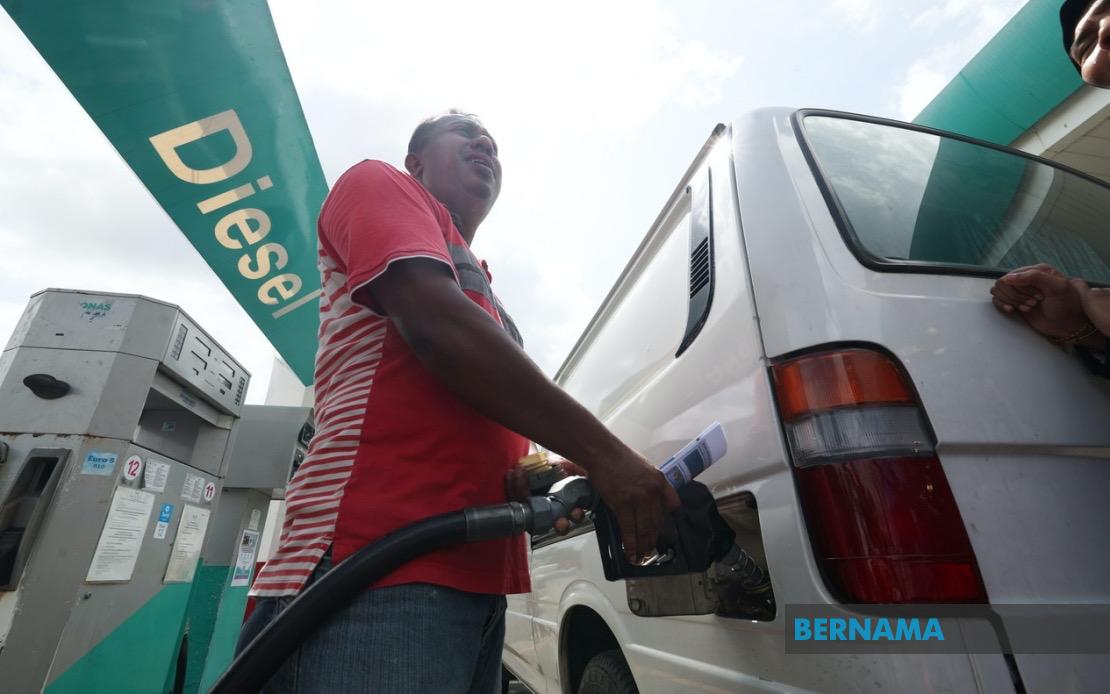
The Malaysian government will cap subsidised diesel at RM2.10 per litre beginning in July 2026, according to Prime Minister Datuk Seri Anwar Ibrahim. The announcement signals a continuation of the administration's fuel subsidy rationalisation strategy, which has become increasingly central to managing the country's fiscal pressures while attempting to shield lower-income Malaysians from energy cost volatility.
The new pricing structure represents a strategic pivot toward means-tested fuel support, moving away from universal subsidies that have strained public finances for decades. By implementing a verification system tied to MyKad identification, the government aims to ensure that fuel support reaches those most in need while reducing leakage to higher-income groups and smuggling operations across land borders. This approach mirrors the methodology deployed through the BUDI MADANI RON95 programme, which has successfully targeted petrol subsidies to eligible Malaysian citizens since its rollout.
The diesel subsidy reform carries significant implications for multiple economic sectors dependent on the fuel. Transport operators, particularly those running bus services and commercial trucks that form the backbone of Malaysia's supply chain, will benefit from predictable fuel costs. The fixed price point provides certainty for logistics companies planning operations and pricing strategies, potentially stabilising food and goods costs that fluctuate with fuel expenses. However, the implementation timeline of July 2026 suggests the government is allowing several months for business adjustment and regulatory preparation.
Finance Minister II Datuk Seri Amir Hamzah Azizan was scheduled to brief media representatives in Kuala Lumpur regarding implementation mechanics, signalling that detailed guidelines would soon become available for stakeholders. The announcement's technical aspects—including verification procedures, eligibility criteria, and rollout mechanisms—remain critical for ensuring smooth adoption. Past experience with subsidy reforms in Malaysia has demonstrated that clarity in implementation protocols and adequate communication reduce market disruption and public confusion.
The fiscal dimension of this policy merits careful examination. Maintaining diesel at RM2.10 per litre requires ongoing budgetary commitment, particularly if global crude oil prices spike significantly above current levels. The government's ability to sustain this price point depends on oil revenue from Petronas and careful expenditure management. The targeted approach theoretically reduces overall subsidy expenditure compared to universal subsidies, freeing fiscal space for other priorities such as infrastructure, healthcare, and education. This aligns with Malaysia's broader MADANI framework, which emphasises efficiency and inclusive growth rather than blanket support systems.
Regionally, Malaysia's diesel subsidy policy carries implications for neighbouring countries managing similar energy markets. Indonesia, Thailand, and Vietnam have all grappled with fuel subsidy sustainability. Malaysia's transition toward verification-based support systems may serve as a model for regional policymakers seeking to balance energy affordability with fiscal responsibility. The approach demonstrates that governments can maintain fuel support for vulnerable populations without necessarily bankrupting state finances through universal price caps.
For Malaysian consumers and businesses, the announcement provides welcome stability in a critical input cost. Diesel price uncertainty has created planning challenges for manufacturers, particularly those in automotive, food processing, and export-oriented sectors. Knowing that diesel will cost RM2.10 per litre from July 2026 enables more accurate cost projections and competitive pricing. Small and medium enterprises operating with tight margins benefit substantially from such predictability, as fuel costs often constitute significant operating expenses.
The MyKad verification mechanism introduces administrative complexity but addresses persistent subsidy abuse. Smuggling of subsidised fuel across maritime boundaries and land borders with Thailand has historically reduced government savings and distorted regional fuel markets. Tightening access through identity verification makes such operations more difficult while protecting genuine Malaysian consumers and businesses. This safeguard mechanism, borrowed from the successful BUDI95 petrol subsidy programme, has demonstrated effectiveness in controlling unauthorised fuel diversion.
The announcement also reflects evolving political economy dynamics within Malaysian governance. The MADANI administration has positioned targeted subsidies as a defining feature of its social contract, contrasting with previous blanket subsidy approaches. By linking fuel support to documented citizenship and household status, the government frames this policy as responsible stewardship benefiting actual Malaysians rather than wealthy consumers or foreign operators. This narrative resonates with middle-class voter concerns about fiscal sustainability and fairness in resource distribution.
Implementation timing assumes significance for energy market participants. Suppliers, retailers, and transport operators must adjust logistics, pricing models, and operational strategies before July 2026. Extended advance notice permits businesses to incorporate the subsidised price into medium-term planning, reducing adjustment shocks. Conversely, the timeline provides the government adequate opportunity to build administrative capacity and test verification systems before full nationwide rollout.
Longer-term considerations extend beyond the 2026 horizon. Global energy transitions toward renewable electricity and alternative fuels will eventually reduce diesel dependence across economies. Malaysia's approach to fuel subsidies should ideally incorporate gradual sectoral shifts toward cleaner energy sources, particularly in transport and logistics. The current subsidy framework, while addressing immediate affordability, requires complementary policies promoting fuel efficiency and renewable energy adoption to build genuine energy resilience.
The diesel subsidy announcement underscores the persistent tension between market forces and government intervention in Malaysia's energy sector. While subsidies provide short-term relief and social stability, they generate long-term distortions and fiscal pressures. The targeted approach represents pragmatic middle ground, acknowledging both the political imperative to support lower-income households and the economic necessity of rational resource allocation. Success ultimately depends on effective implementation, consistent government commitment, and complementary policies addressing underlying energy security challenges facing Malaysia's growing economy.