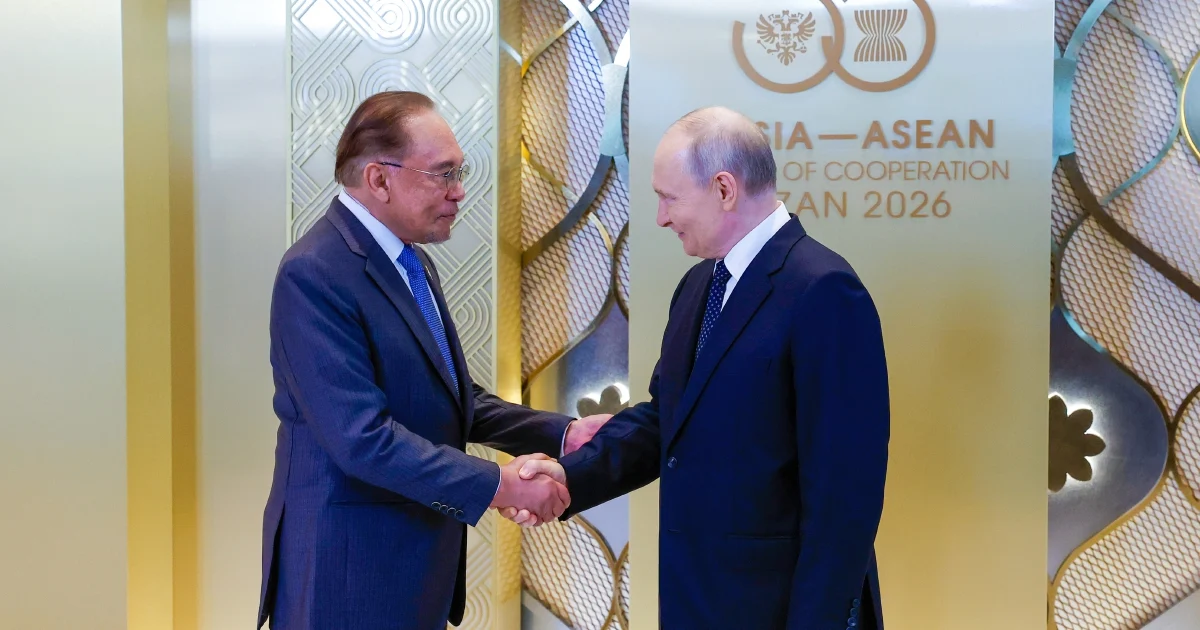
Malaysia is moving aggressively to fortify its energy independence through deliberate partnerships with the world's leading resource exporters, with Russian President Vladimir Putin providing explicit assurances of long-term supply commitments, Prime Minister Datuk Seri Anwar Ibrahim revealed during remarks in Bintulu today. The announcement underscores a broader Malaysian strategy to diversify energy sourcing and reduce vulnerability to supply disruptions in an increasingly volatile global marketplace.
Anwar's statement comes at a moment when Southeast Asia faces mounting pressure to secure adequate energy supplies amidst geopolitical tensions and shifting global trade patterns. Russia's willingness to pledge sustained energy cooperation represents a significant development for Malaysia, which has historically maintained pragmatic diplomatic and economic relationships across ideological divides. The Prime Minister's disclosure suggests that energy diplomacy is becoming central to Malaysia's foreign policy calculus, reflecting recognition that stable, predictable energy access underpins economic growth and regional stability.
The timing of Putin's assurances carries particular weight given Malaysia's expanding economic and infrastructure ambitions. As the nation pursues ambitious development projects and seeks to maintain its competitiveness as a manufacturing and services hub, reliable energy supplies remain fundamental. Fluctuations in global energy markets and geopolitical disruptions to supply chains have prompted Malaysian policymakers to actively cultivate relationships with multiple major producers, reducing dependence on any single source and building negotiating leverage.
Anwar's framing of energy security as a cornerstone of Malaysia's global engagement reflects mature statecraft. Rather than aligning exclusively with Western energy suppliers or exclusively with non-Western alternatives, Malaysia is positioning itself as a nation willing to engage substantively with all major energy-producing powers. This approach acknowledges that energy markets remain global and that Malaysia's strategic interests are best served through cultivation of multiple pathways and partnerships. The Russian engagement is one component of a broader diversification strategy.
The Bintulu location of Anwar's announcement carries symbolic significance, given the city's role as Malaysia's primary oil and gas hub. Bintulu hosts extensive petrochemical infrastructure, liquefied natural gas facilities, and energy production operations that form the backbone of Malaysia's energy sector. Announcing energy partnership developments in this location underscores the government's commitment to leveraging Malaysia's existing energy infrastructure and technical expertise while integrating new supply relationships into existing operational frameworks.
Russia's reassurance on energy supply availability addresses genuine Malaysian concerns about global supply continuity. Geopolitical tensions, particularly in Eastern Europe, have created uncertainty about resource flows and pricing across markets. For net energy importers and for nations heavily dependent on specific fuel types, such uncertainty poses real economic risks. Putin's pledge to Malaysian leadership demonstrates that despite international diplomatic tensions, major energy-producing nations recognise the mutual benefit of maintaining stable commercial relationships with reliable partners like Malaysia.
The strategic partnership approach also reflects Malaysia's role as an important Southeast Asian economy that commands respect in international forums. As ASEAN chair or participant, Malaysia's energy security directly influences regional economic stability. Securing long-term energy commitments from major global suppliers strengthens not only national energy independence but also Malaysia's ability to contribute to broader regional energy cooperation frameworks. Neighbouring nations, too, have vested interests in Malaysian energy security and economic dynamism.
For domestic audiences, Anwar's announcement represents tangible evidence of foreign policy delivering concrete economic benefits. Energy security translates directly into manufacturing competitiveness, electricity pricing stability, and investor confidence. By publicly highlighting Putin's commitments, the Prime Minister signals to Malaysian business communities and international investors that the government has secured the foundational conditions necessary for long-term economic planning and industrial expansion. Such reassurance proves valuable in attracting manufacturing investment and supporting energy-intensive industries.
The energy partnership framework also positions Malaysia as a sophisticated participant in global power dynamics rather than a passive spectator. By cultivating relationships with Russia alongside partnerships with traditional suppliers and other major producers, Malaysia demonstrates strategic autonomy and ability to manage complex, multi-polar energy relationships. This positioning enhances Malaysia's diplomatic credibility and creates opportunities for Malaysia to serve as a bridge between different geopolitical constituencies within Asia.
Looking forward, the implications extend beyond immediate energy supply considerations. As global energy markets undergo transition toward renewable sources and as nations grapple with energy security in an era of climate commitments, Malaysia's strategy of maintaining diverse partnerships becomes increasingly sophisticated. The nation is hedging across multiple scenarios—sustaining conventional energy supplies while positioning itself for participation in emerging clean energy frameworks. This dual approach reflects pragmatic recognition that energy transition will take decades and that Malaysia cannot afford vulnerabilities during the transition period.
Anwar's public emphasis on Putin's energy pledges also carries domestic political significance. Demonstrating effective foreign policy engagement and tangible benefits derived from international relationships validates government leadership and supports broader narratives about competent economic management. For Malaysian voters and business communities concerned about economic trajectory, evidence of secured energy supplies and international partnership stability provides reassurance about the nation's economic future and policy direction.