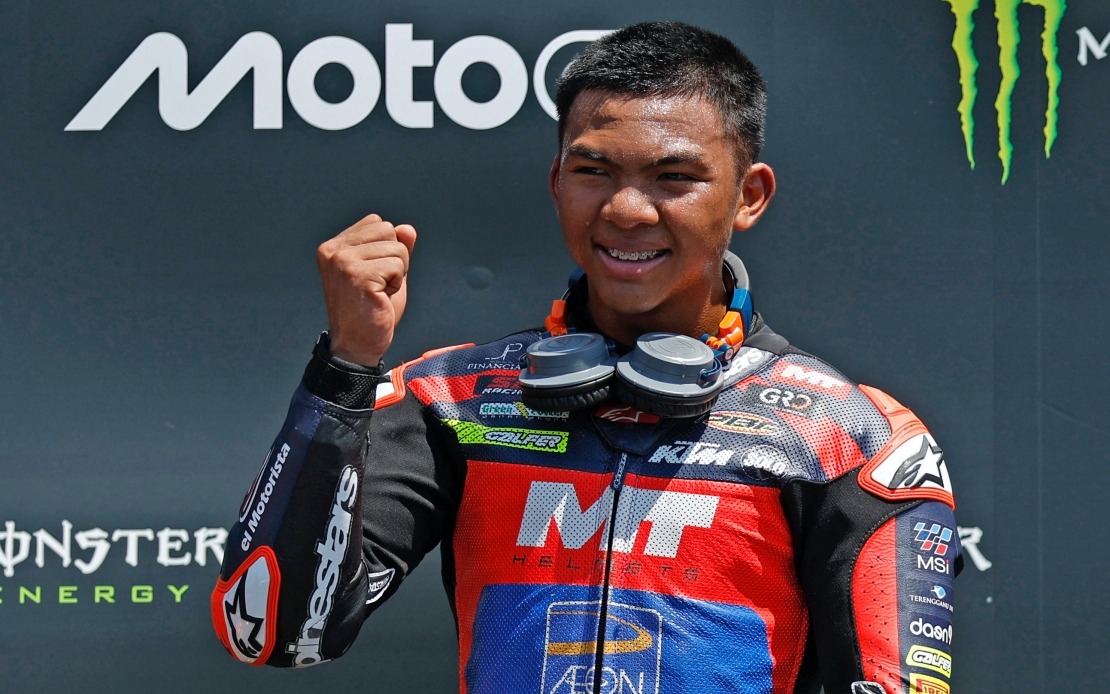
Prime Minister Datuk Seri Anwar Ibrahim has publicly celebrated the breakthrough achievement of teenage motorsport talent Hakim Danish Ramli, who secured victory at the Czech Moto3 Grand Prix held at Brno Circuit. The congratulatory message, posted on social media platform X, acknowledged both the significance of the win and encouraged the young rider to maintain his competitive momentum throughout the remainder of the season.
The 18-year-old AEON Credit-MT Helmets-MSi rider's triumph represents a watershed moment for Malaysian motorsport, concluding a significant dry spell that has stretched across the better part of a decade. Malaysia's motorsport community had been waiting since 2016 for another Moto3 victory, with the previous achievements secured by Khairul Idham Pawi at the Argentina Grand Prix and German Grand Prix during that year. The extended gap between victories underscores the competitive pressures within the Moto3 category, where numerous young riders from around the world compete for limited podium positions.
Hakim Danish's path to this landmark win has demonstrated steady progress throughout the current racing season. Prior to his Czech success, the Malaysian rider secured a podium finish at the Italian Grand Prix held at the Mugello circuit, where he crossed the line in third position. This result had already signaled his growing competitiveness within the field and suggested that victories might not remain distant prospects. The progression from a third-place finish to outright victory within the same calendar year highlights the development trajectory that elite junior racing requires.
The Moto3 category represents the entry-level class within the FIM Grand Prix motorcycle racing series, functioning as a crucial developmental pathway for aspiring riders seeking careers in professional motorsport. Competitors at this level are typically between 14 and 18 years old, making the physical and mental demands of international racing at such a young age substantial. Success at Moto3 level frequently serves as a launchpad toward the intermediate Moto2 class and ultimately toward the premier MotoGP championship, where the sport's greatest riders compete.
From a Malaysian sporting perspective, Hakim Danish's achievement carries significance beyond simple race results. Motorsport success at the international grand prix level generates considerable prestige for national sporting achievement and has historically contributed to broader enthusiasm for motor racing within Malaysia. The rider's accomplishment represents validation of Malaysia's motorsport development infrastructure and talent identification systems, suggesting that the nation's racing programs are producing competitors capable of succeeding against a global field.
The Prime Minister's endorsement of Hakim Danish reflects broader Malaysian governmental support for sporting excellence and youth achievement. Such recognition from national leadership serves multiple functions, raising the profile of individual athletes while simultaneously highlighting the importance that Malaysia places on its competitive sporting representation internationally. For a teenager competing in a highly demanding motorsport category, such acknowledgment from the country's highest political office provides meaningful encouragement and validation.
Hakim Danish's success must be understood within the context of motorcycle racing's intense competitive landscape. Moto3 features dozens of promising young riders from across Europe, Asia, and beyond, each supported by professional teams and backed by significant technical and financial resources. Individual victories demand not only raw talent and commitment but also consistent team performance, strategic decision-making, and the often-unpredictable element of racing fortune. A single victory can hinge on fractions of seconds across entire race weekends.
Looking forward, the pathway ahead for Hakim Danish extends considerably beyond this single achievement. Maintaining competitive performance across multiple races, accumulating championship points, and ultimately challenging for season-long honors represent the next phases of his racing development. The Moto3 season spans numerous rounds at circuits worldwide, each presenting fresh challenges and opportunities. Consistency becomes increasingly important as the campaign progresses, with championship contenders demonstrating sustained excellence rather than isolated strong performances.
The Czech Grand Prix victory also reflects positively on the Malaysian motorsport ecosystem more broadly. Young riders pursuing international racing careers require access to quality training facilities, experienced coaching, technical support, and competitive opportunities at junior levels. Hakim Danish's success suggests that Malaysia's motorsport development environment continues producing talent competitive at the highest junior levels, though sustaining this pipeline of emerging champions remains an ongoing priority.
For Malaysian racing enthusiasts, Hakim Danish's achievement provides cause for optimism regarding the nation's future motorsport representation. The absence of Malaysian victories at Moto3 level over the previous decade had created concerns about whether new generation riders would emerge capable of replicating earlier successes. This win demonstrates that talent continues developing within Malaysia, and given appropriate support and opportunity, contemporary Malaysian riders remain capable of succeeding against international competition at elite junior levels.
%22%2F%3E%3C%2Fpattern%3E%3C%2Fdefs%3E%3Crect%20width%3D%22100%25%22%20height%3D%22100%25%22%20fill%3D%22url(%23ph4q3pkg)%22%2F%3E%3Crect%20width%3D%22100%25%22%20height%3D%22100%25%22%20fill%3D%22url(%23ph4q3pkp)%22%2F%3E%3Ctext%20x%3D%2250%25%22%20y%3D%2250%25%22%20text-anchor%3D%22middle%22%20dominant-baseline%3D%22central%22%20fill%3D%22rgba(255%2C255%2C255%2C0.95)%22%20font-family%3D%22Georgia%2C%20'Times%20New%20Roman'%2C%20serif%22%20font-weight%3D%22700%22%20font-size%3D%22272%22%20letter-spacing%3D%22-0.02em%22%3EMITRA%3C%2Ftext%3E%3C%2Fsvg%3E)
%22%2F%3E%3C%2Fpattern%3E%3C%2Fdefs%3E%3Crect%20width%3D%22100%25%22%20height%3D%22100%25%22%20fill%3D%22url(%23ph1sg7mg)%22%2F%3E%3Crect%20width%3D%22100%25%22%20height%3D%22100%25%22%20fill%3D%22url(%23ph1sg7mp)%22%2F%3E%3Ctext%20x%3D%2250%25%22%20y%3D%2250%25%22%20text-anchor%3D%22middle%22%20dominant-baseline%3D%22central%22%20fill%3D%22rgba(255%2C255%2C255%2C0.95)%22%20font-family%3D%22Georgia%2C%20'Times%20New%20Roman'%2C%20serif%22%20font-weight%3D%22700%22%20font-size%3D%22320%22%20letter-spacing%3D%22-0.02em%22%3ERim%3C%2Ftext%3E%3C%2Fsvg%3E)