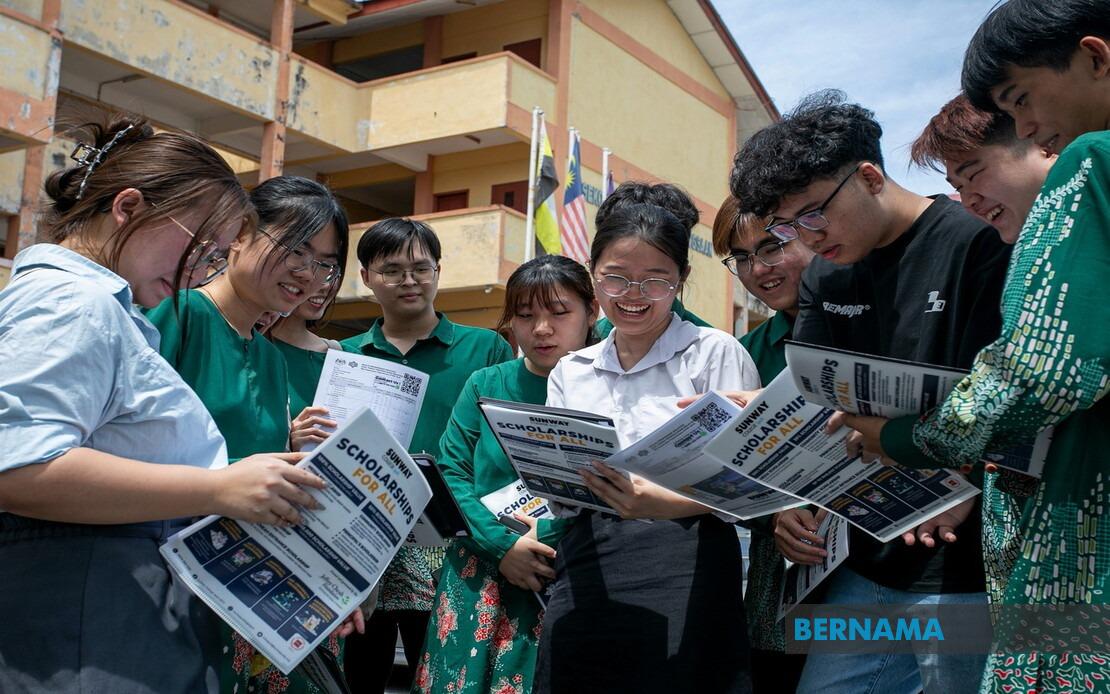
Malaysia's Sijil Tinggi Persekolahan Malaysia (STPM) continues to establish itself as a credible and accessible gateway to higher education, with the 2025 examination results showcasing how students from varied socioeconomic and ethnic backgrounds are excelling through the Form Six pathway. This year's cohort of top performers underscores a broader narrative of opportunity that challenges earlier perceptions of STPM as a less prestigious alternative to matriculation or pre-university programmes.
Hazaril Hakimi Hassan, an Orang Asli student from Kampung Paya Mendoi in Kuala Krau, Pahang, emerged as one of the standout performers by securing a perfect 4.00 Cumulative Grade Point Average. His achievement carries particular significance given the historical underrepresentation of indigenous students in Malaysia's higher education system. Hazaril attends SMK Temerloh and credits his success to a combination of factors: discovering the tangible benefits of the Form Six route, receiving consistent encouragement from educators, and enjoying family support. His trajectory demonstrates that when barriers to information and motivation are removed, capable students from marginalised communities can compete at the highest academic levels. Following his outstanding results, Hazaril has set his sights on pursuing Malay Language Education at Universiti Putra Malaysia, with aspirations to eventually serve as a university lecturer—a career path that would position him as a role model within his community.
Equally impressive is Ng Yu Yong from SMK Tsung Wah in Kuala Kangsar, Perak, who also achieved a perfect 4.00 CGPA while sitting five A-grade papers, notably in Physics and Biology. Ng's perspective on STPM carries weight because it reframes the qualification from an angle rarely emphasised in public discourse: financial accessibility. While matriculation programmes are government-funded, they remain competitive to enter. STPM presents a more economically viable option for families with limited resources, removing a significant barrier for capable students from lower-income households. Beyond cost considerations, Ng advocates for STPM on academic grounds, positioning the qualification as a superior framework for developing intellectual rigour. His confidence in this pathway stems from viewing STPM as the optimal platform for achieving his ambition in medicine, having already earned a place to study for a Bachelor of Medicine and Bachelor of Surgery degree at Universiti Malaya.
The inclusivity narrative extends further with Yeoh Chwen Yih, a visually impaired student from St John's Institution who also secured a perfect 4.00 CGPA. Yeoh's achievement illuminates how STPM institutions have adapted infrastructure and pedagogical approaches to accommodate students with disabilities—a critical consideration in Malaysia's ongoing efforts to mainstream inclusive education. The availability of screen-reading technology has fundamentally transformed learning accessibility for Yeoh, enabling faster access to study materials compared to traditional Braille methods and significantly boosting learning efficiency. Yeoh's experience suggests that Form Six colleges may be progressively addressing gaps in educational accessibility that persist elsewhere in Malaysia's system. With law school as the next destination, Yeoh represents the kind of talent that might otherwise have been sidelined due to infrastructural inadequacy.
These three students collectively illustrate how STPM has transcended its earlier image as a secondary-tier qualification. Each performer brings a distinct narrative—indigenous background, economic disadvantage, and disability—yet all achieved at the highest levels, suggesting systemic strengths within the Form Six ecosystem that deserve greater recognition. Their success challenges the persistent narrative that STPM students are somehow less academically capable than their matriculation or international pre-university counterparts.
The Malaysian Examinations Council's recognition of these achievers through excellence awards serves a dual purpose. It celebrates individual merit while simultaneously validating the institutional credibility of STPM within Malaysia's educational landscape. For prospective Form Six students and their parents weighing university entrance options, such recognition provides tangible evidence that this pathway leads to prestigious university places and facilitates entry into competitive professional programmes like medicine and law.
The broader significance of this cohort extends to how Malaysia conceptualises social mobility and educational opportunity. STPM's demonstrated ability to accommodate diverse learners—economically disadvantaged students, indigenous populations, and those with disabilities—positions it as genuinely inclusive in ways that more selective entry systems are not. The cost-effectiveness that Ng emphasised is particularly relevant in a Southeast Asian context where many families cannot afford expensive private pre-university institutions. This pricing advantage, combined with rigorous academic standards, creates a rare alignment of accessibility and excellence.
Looking forward, the success of this year's top performers should influence guidance counselling in secondary schools throughout Malaysia. Too often, Form Six is presented as a fallback option rather than a premier pathway, a framing that potentially discourages high-achieving students from considering it seriously. The evidence presented by students like Hazaril, Ng, and Yeoh suggests that guidance counsellors should actively highlight STPM's competitive advantages alongside its accessibility features.
It is worth noting that the international recognition Ng mentioned—STPM's standing in the eyes of overseas universities—represents an often-underappreciated asset. Malaysian students holding STPM qualifications have established successful entry records at leading universities throughout the United Kingdom, Australia, and other major education destinations, a credential that enhances the qualification's value proposition in an increasingly globalised educational landscape.
These outcomes also reflect efforts by Form Six institutions to modernise teaching methodologies and support systems over recent years. Improvements in teacher training, curriculum relevance, and student pastoral care have contributed to creating an environment where academically ambitious students can flourish. The structural changes enabling visually impaired students like Yeoh to thrive represent investments in accessibility that universities themselves will benefit from when these graduates enrol, bringing diverse perspectives and proven resilience.
The message emanating from the Malaysian Examinations Council headquarters is clear: STPM remains not merely relevant but genuinely competitive and demonstrably inclusive. For Malaysian students contemplating their educational futures, and for parents navigating the complex landscape of university preparation options, this year's cohort of perfect-scoring achievers offers compelling evidence that Form Six represents a pathway capable of unlocking excellence across all demographic segments of Malaysian society.