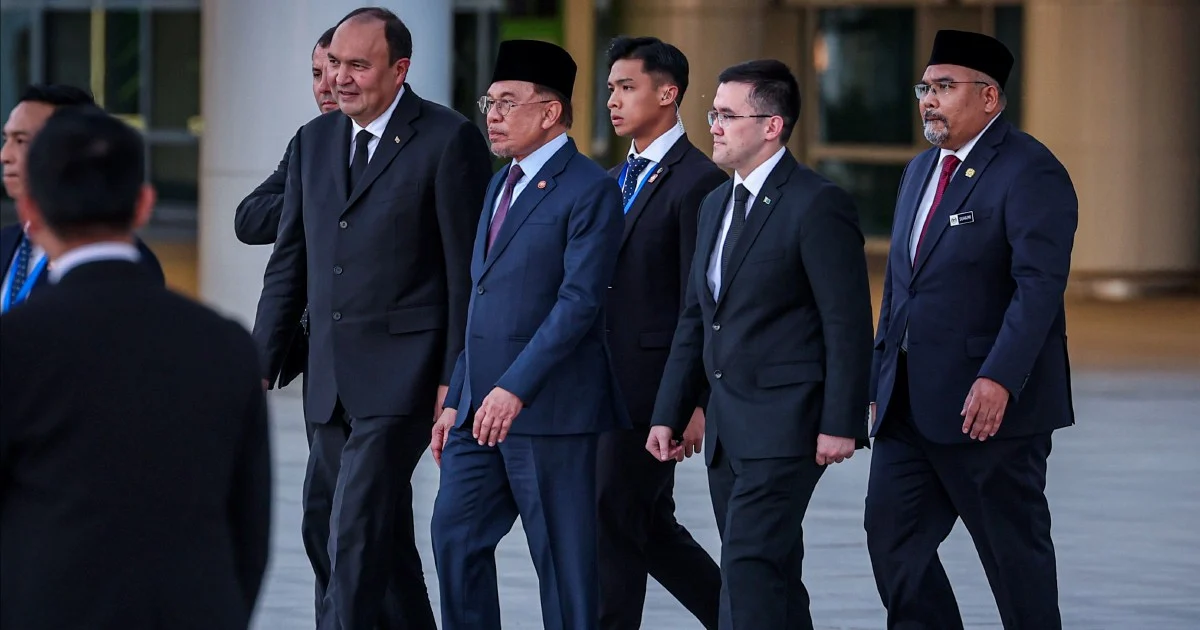
Prime Minister Datuk Seri Anwar Ibrahim's official visit to Turkmenistan reaches its conclusion today with an intensive schedule of high-level meetings designed to strengthen economic relations between Malaysia and this strategically positioned Central Asian state. The engagement represents a significant diplomatic and commercial initiative, as Ashgabat pursues deeper ties with regional and international partners across diverse sectors.
Turkmenistan's geographic positioning along the eastern shore of the Caspian Sea makes it a crucial gateway for trade flowing between South Asia, the Middle East, and East Asia. For Malaysia, engaging with Turkmenistan opens pathways to markets across Central Asia and beyond, offering opportunities for Malaysian companies in energy, manufacturing, and services. The bilateral discussions are expected to explore concrete mechanisms for deepening these connections, moving beyond ceremonial exchanges into actionable partnerships.
The final day of talks will bring together Malaysia's Prime Minister with Turkmenistan's president and senior government officials. These conversations typically cover multiple dimensions: direct investments in key sectors, cooperation frameworks for joint ventures, and enhanced trade flows between the two nations. Given Malaysia's established expertise in Islamic finance, technology, and petrochemicals, there are natural complementarities with Turkmenistan's economy, which relies heavily on energy exports and seeks diversification.
For Malaysian stakeholders, this engagement holds particular significance. Central Asia represents an underexplored market for many Malaysian businesses, and government-level initiatives can pave the way for corporate expansion. The energy sector looms large in discussions, as Turkmenistan possesses vast natural gas reserves and is constantly seeking partners for exploration, processing, and export infrastructure. Malaysian companies with expertise in oil and gas engineering could find opportunities within this context.
The timing of Anwar's visit reflects broader regional dynamics. Central Asian nations are actively rebalancing their international partnerships, seeking counterweights to traditional relationships with Russia and China. Malaysia, as a Southeast Asian middle power with respected diplomatic standing and Islamic credentials, represents an attractive partner for fostering multipolar engagement. This makes the bilateral talks significant not merely for commerce, but for the subtle recalibration of regional influence and partnership networks.
Turkmenistan's approach to economic development emphasizes selective opening while maintaining tight state control over key strategic sectors. Understanding these parameters is essential for Malaysian investors and businesses. The government typically channels foreign investment through approved mechanisms and prioritizes projects aligned with national development priorities. Consequently, discussions between the Prime Minister and Turkmen leadership will likely establish frameworks within which commercial cooperation can proceed smoothly.
Beyond immediate trade figures, these high-level conversations often establish institutional linkages that facilitate future business activity. Memoranda of understanding on economic cooperation, bilateral investment protection agreements, and working groups on specific sectors create scaffolding for sustained engagement. Such arrangements remove friction points and provide confidence for both governments and private sector actors to proceed with concrete ventures.
For Malaysia's broader geopolitical positioning, cultivating ties with Central Asian nations diversifies diplomatic weight and economic interest. While Southeast Asia remains the nation's primary regional focus, engagement with Central Asia reflects Malaysia's growing strategic outlook. This is particularly relevant as global supply chains shift and alternative trade routes gain importance. Building relationships now positions Malaysian interests favorably in longer-term regional reconfigurations.
The investment discussion component carries heightened importance given current global economic uncertainties. Both nations can benefit from structured capital flows: Malaysia seeks access to Turkmenistan's natural resources and markets, while Turkmenistan desires Malaysian capital, technical expertise, and market-access capabilities. Creating bilateral investment vehicles or establishing special economic zones for joint ventures could accelerate these flows and generate mutual gains.
Turkmenistan's nascent relationship with Southeast Asian economies means the visit also carries a broader signalling function. Success in Malaysia-Turkmenistan cooperation could encourage other Southeast Asian nations to deepen Central Asian engagement, creating momentum for regional connectivity. This demonstrates how bilateral initiatives sometimes generate wider regional effects, reshaping economic geography through accumulated partnerships.
As the visit concludes, the substantive outcomes—whether expressed as signed agreements, established task forces, or announced joint projects—will indicate the depth of commitment both sides bring to this partnership. While high-level political will matters, sustainable economic cooperation requires clear commercial logic and accessible implementation pathways. The final day's discussions will reveal whether the two nations can translate aspirations for partnership into mechanisms that drive genuine business activity and mutual prosperity.
Moving forward, monitoring implementation of any agreements signed during this visit will be crucial. Central Asia's development trajectory directly impacts global energy markets, supply chains, and geopolitical stability. Malaysia's engagement with Turkmenistan, therefore, extends beyond bilateral commerce to touch upon broader questions of regional development, connectivity, and the emergence of new economic networks across Asia.

%22%2F%3E%3C%2Fpattern%3E%3C%2Fdefs%3E%3Crect%20width%3D%22100%25%22%20height%3D%22100%25%22%20fill%3D%22url(%23ph2ej7eg)%22%2F%3E%3Crect%20width%3D%22100%25%22%20height%3D%22100%25%22%20fill%3D%22url(%23ph2ej7ep)%22%2F%3E%3Ctext%20x%3D%2250%25%22%20y%3D%2250%25%22%20text-anchor%3D%22middle%22%20dominant-baseline%3D%22central%22%20fill%3D%22rgba(255%2C255%2C255%2C0.95)%22%20font-family%3D%22Georgia%2C%20'Times%20New%20Roman'%2C%20serif%22%20font-weight%3D%22700%22%20font-size%3D%22272%22%20letter-spacing%3D%22-0.02em%22%3EAnwar%3C%2Ftext%3E%3C%2Fsvg%3E)