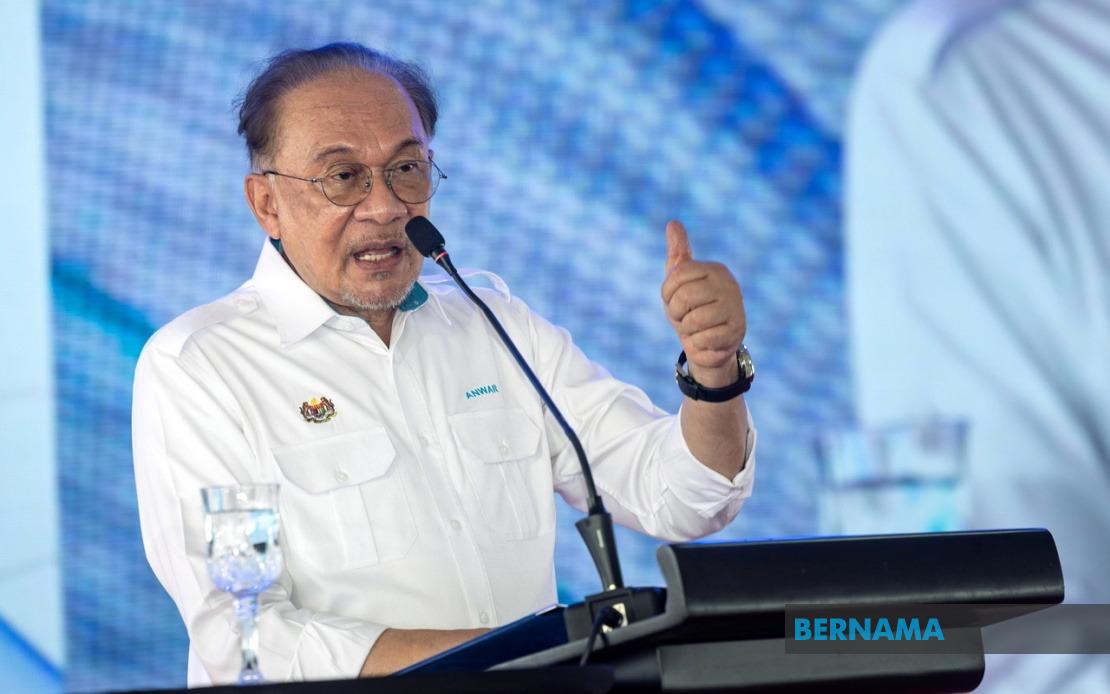
Malaysia's energy future has been substantially strengthened through diplomatic breakthroughs in Russia and Turkmenistan, according to Prime Minister Datuk Seri Anwar Ibrahim, who outlined the strategic significance of these partnerships during a public address at an industrial park groundbreaking ceremony in Kepala Batas. The twin agreements represent a deliberate shift in how Malaysia approaches its critical infrastructure needs, moving towards diversified supply chains that reduce dependence on traditional sources and create stability across multiple decades.
During his recent visit to Russia, Anwar secured assurances from President Vladimir Putin regarding a long-term supply framework encompassing crude oil, natural gas, and diesel products spanning at least two decades. The Prime Minister characterised this commitment as a tangible expression of the deepening relationship between Kuala Lumpur and Moscow, underscoring how bilateral relations translate into concrete economic benefits. This conversation occurred during official discussions in Kazan, signalling high-level engagement and the priority both nations attach to energy cooperation.
The Turkmenistan development appears even more consequential for Malaysia's strategic positioning in regional energy markets. Anwar's recent official visit to Ashgabat resulted in Turkmenistan granting Malaysia enhanced access rights within its petroleum and natural gas sectors. This breakthrough provides the nation with opportunities to tap into reserves that rank among the world's most substantial, a critical advantage for a country whose manufacturing and economic sectors depend heavily on affordable, reliable energy supply. The implications extend beyond domestic consumption into the realm of regional trade and competitive advantage.
Energy security has emerged as a defining concern for policymakers across Southeast Asia, particularly as manufacturing bases expand and electricity demand intensifies. Malaysia's manufacturing sector, which anchors the nation's export economy and employment base, requires predictable energy costs to remain competitive globally. By locking in long-term supply agreements with stable, major producers, the government insulates domestic industry from volatile spot market pricing and supply shocks that could disrupt production schedules or inflate operational costs. This stability becomes increasingly valuable as regional economies race to capture technology-intensive manufacturing moving away from China.
The ability to leverage these gas reserves for export becomes a secondary but substantial benefit. Anwar explicitly highlighted opportunities to supply high-demand markets in China, Japan, and South Korea, where energy consumption continues rising despite efficiency improvements and renewable energy expansion. These three economies represent the largest industrial and population centres in East Asia, with manufacturing sectors that consistently require natural gas for petrochemicals, electricity generation, and industrial heating. Malaysia's positioning as an energy exporter would generate substantial foreign exchange earnings and create additional revenue streams beyond domestic consumption.
The foundation for these breakthroughs was laid through persistent diplomatic engagement spanning recent years. Turkmenistan's President Serdar Berdimuhamedov visited Malaysia in December 2024, initiating discussions that culminated in the recent agreements. This sequencing illustrates how state visits create momentum for substantive negotiations on practical matters. The earlier reciprocal visit to Turkmenistan by Malaysian officials translated those initial conversations into concrete sectoral agreements. Such diplomacy requires patience and continuous dialogue rather than sporadic high-level encounters.
Anwar framed energy security as inseparable from broader national interests, encompassing employment generation, economic development, and citizen welfare. This perspective reflects an understanding that energy poverty or energy insecurity creates cascading economic inefficiencies. Industrial production becomes costlier, competitiveness erodes, and job opportunities diminish. Conversely, securing long-term supplies at predictable costs allows policymakers to focus on productivity improvements, skills development, and technological upgrading rather than constantly managing energy crises or price volatility. The Prime Minister's emphasis on leveraging international relations strategically suggests recognition that small and medium-sized nations cannot achieve energy independence alone but must build coalitions and partnerships.
The geopolitical context underpinning these agreements merits attention. Both Russia and Turkmenistan face international sanctions and trade restrictions that limit their ability to export to Western markets, creating incentives to deepen relationships with Asian partners. Malaysia, maintaining pragmatic foreign policy positions and avoiding explicit alignment with major power blocs, positions itself as a reliable partner for nations seeking diversified export markets. This mutual benefit creates stable foundations for long-term agreements less prone to abrupt termination or political disruption.
For Malaysian companies in downstream industries, including petrochemicals, fertilisers, and energy-intensive manufacturing, these agreements offer strategic advantages. Access to competitively priced natural gas inputs enhances profitability and competitiveness against regional rivals. Petrochemical producers in Southeast Asia compete fiercely for market share; reliable feedstock costs translate directly into pricing power and market capture. Similarly, fertiliser producers serving agricultural sectors across Asia benefit from stable feedstock availability and costs.
The timeline of supply agreements spanning twenty years or more represents multi-generational planning. Such frameworks provide confidence for domestic capital investment and industrial planning that might otherwise be constrained by uncertainty about input costs. Manufacturing facilities with expected operational lifespans of thirty or more years require assurance about fundamental input costs to justify capital expenditure. Long-term energy agreements reduce the risk premium businesses must otherwise embed in their pricing and expansion calculations.
Regional energy dynamics have shifted substantially over the past decade, with liquefied natural gas markets becoming more flexible and supplier relationships increasingly bilateral rather than dominated by major multinational corporations. Malaysia's bilateral negotiations reflect this evolution, allowing for customised terms reflecting specific national interests rather than accepting standardised offerings. The direct nature of these agreements also potentially offers better pricing than purchasing through intermediaries or spot markets.
Looking forward, these partnerships establish foundations for potential collaboration in broader economic sectors. Energy cooperation frequently leads to investments in related industries, technology transfer agreements, and people-to-people exchanges. Russian and Turkmen companies might establish operations in Malaysia to process or redistribute energy products, creating additional employment and technology transfer opportunities. The agreements thus represent entry points for deeper economic integration beyond the energy sector itself.
The emphasis on decades-long supply security reflects realistic assessment of Malaysia's development trajectory and industrial future. As the nation continues pursuing higher-value manufacturing and technological capabilities, energy requirements will likely increase substantially. Locking in supplies now, before competing Asian economies exhaust available reserves or sign their own long-term agreements, ensures Malaysia maintains competitive advantages in production costs and industrial reliability. This forward-thinking approach to energy procurement distinguishes sophisticated development strategy from reactive crisis management.