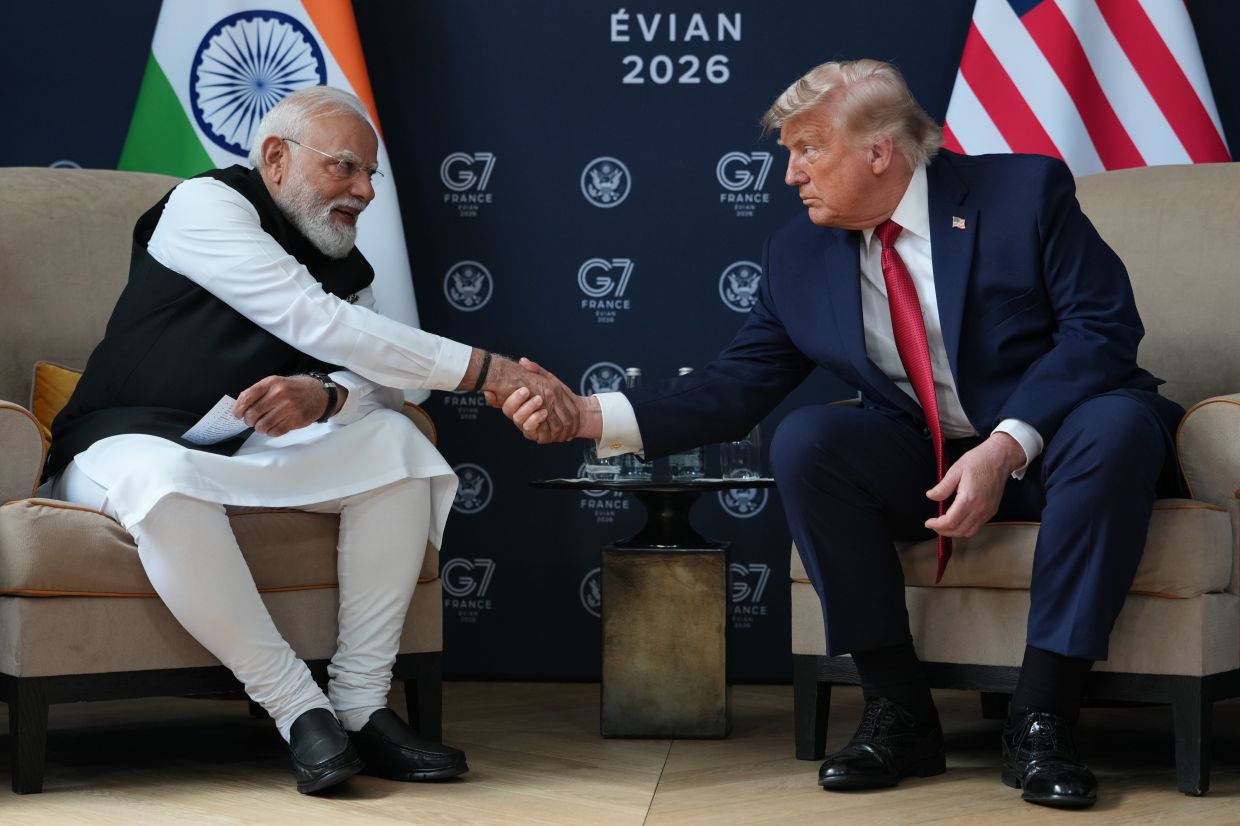
Donald Trump offered no condolences or expression of regret when addressing the deaths of three Indian sailors killed in a missile strike by US forces, according to remarks made following his first bilateral meeting with Prime Minister Narendra Modi in over a year. Speaking to journalists after their talks, Trump acknowledged awareness of the incident but reframed it as an occupational hazard inherent to commercial shipping, saying the profession remains "rough" and that such tragedies have "been happening throughout time." He pivoted quickly to emphasising that both nations "work together" on maritime matters and insisted on the strength of the bilateral relationship, though the studied absence of formal condolences underscored the underlying friction in what is publicly presented as a warm strategic partnership.
The missile strike that precipitated the controversy occurred when American forces attacked the Palau-flagged MT Settebello in the Strait of Hormuz, resulting in the loss of three Indian crew members. US Central Command justified the assault by pointing to alleged violations of its naval blockade on Iranian ports, a blockade not formally sanctioned by international law or United Nations mechanisms. The incident was not isolated; American forces also targeted two additional commercial vessels carrying Indian personnel on similar grounds, establishing a pattern of escalation that alarmed New Delhi's maritime community and broader public opinion.
Indian Foreign Minister S Jaishankar communicated what his office termed a "strong protest" during a telephone call with his American counterpart, signalling official displeasure at the highest diplomatic levels. However, the State Department's official account of the conversation revealed Washington's hardened stance. The American readout emphasised that "violations of the US blockade and the illicit transport of Iranian oil will not be tolerated," essentially doubling down on the justification for the military action rather than offering reassurance or apology. This tonal divergence between the Indian and American versions highlighted the yawning gap between public diplomatic pleasantries and the actual negotiations occurring behind closed doors.
Public sentiment in India swiftly turned against what many viewed as American overreach and Modi government acquiescence. Viral videos captured auto rickshaw drivers in Delhi removing promotional banners displaying Trump's image and patriotic messaging—part of an official US embassy campaign marking American national celebrations with slogans like "Happy Birthday America." The spontaneous acts of protest reflected genuine anger at what ordinary Indians perceived as their government's passive acceptance of American military actions that cost Indian lives. The symbolism was potent: citizens rejecting American iconography in response to perceived American disregard for Indian sovereignty and the safety of Indian nationals.
Opposition voices seized on what they characterised as governmental weakness. Rahul Gandhi, India's prominent opposition leader, launched a scathing critique of Modi, stating that "a free country would never tolerate such language" and accusing the Prime Minister of behaving as "an obedient servant" rather than defending national interests. His post on social media platforms reached millions and articulated a growing sentiment that India's celebrated strategic autonomy was being compromised in service of deepening ties with Washington. The criticism struck at the heart of Modi's carefully constructed image as a strong nationalist leader capable of standing up to global powers.
Despite these tensions, Trump sought to project continuity and warmth in his public remarks about the relationship. He asserted that despite lacking a formal mutual defence agreement, the United States would assist India if attacked, a statement that glossed over the present friction. Trump characterised his relationship with Modi as extremely close, suggesting that personal chemistry between the two leaders transcended policy disagreements. He announced plans to visit India at some unspecified future date and lauded Modi as both a "tough trader" and "great guy," language designed to project camaraderie while acknowledging India's assertiveness in commercial negotiations.
The Modi-Trump meeting represented a reunion after 16 months, with their previous encounter occurring in February 2025 in Washington, where discussions commenced on formalising a comprehensive bilateral trade agreement. That initial engagement positioned India among the first nations to enter formal trade negotiations with the Trump administration, a distinction reflecting Washington's strategic interest in courting New Delhi as a counterweight to Chinese influence in Asia. The trade discussions have since progressed haltingly, with officials from both sides continuing to negotiate the parameters of an interim trade deal even as geopolitical tensions flared.
Secretary of State Marco Rubio's subsequent visit to India underscored Washington's commitment to maintaining the relationship despite surface turbulence. Rubio explicitly characterised India as among America's "most important strategic partners," language designed to reassure a government that might worry about being pressured or taken for granted. His participation in various bilateral engagements signalled that the missile strike incident, while serious, would not derail the broader strategic architecture both nations had constructed. Nonetheless, the sequence of events—American military action, Indian official protest, public backlash, followed by diplomatic smoothing—revealed a relationship under genuine stress despite rhetoric to the contrary.
The Quad framework, which comprises the United States, India, Japan, and Australia and functions as an informal counterbalance to Chinese regional dominance, remained noticeably absent from Trump's detailed remarks. When pressed on the Quad during the press conference, Trump deflected, choosing instead to focus on bilateral relations with Modi. This sidestepping potentially signals American willingness to compartmentalise different aspects of engagement with India, pursuing trade advantages and bilateral partnership while potentially deprioritising the multilateral architecture that India and other regional powers had invested considerable political capital in developing.
For Malaysia and other Southeast Asian nations, the Trump-Modi meeting and its underlying tensions carry significant implications. India's strategic weight in regional calculations stems partly from its willingness to work with like-minded democracies to ensure freedom of navigation and lawful commerce in contested waters. However, if India feels constrained by American pressure or unwilling to challenge US military actions, the balance of regional security dynamics could shift. Malaysian interests in maintaining predictable maritime commerce and naval freedom are directly implicated in how seriously the major powers treat the legal frameworks governing shipping and military operations in shared waters.
The incident also illustrates the fragility of alignment politics in contemporary Asia. Nations pursuing hedging strategies—maintaining relationships across competing power blocs—face constant pressure to demonstrate commitment to one side or another. India's position as a nation simultaneously cultivating ties with Russia, engaging with China despite rivalry, and deepening partnership with America creates recurring friction points. Trump's casual dismissal of the sailor deaths and Modi's apparent acceptance of this posture suggests that commercial and strategic calculations may be overriding humanitarian and legal concerns in shaping bilateral policy. Whether this pattern establishes precedent for future incidents remains to be seen, but early indications suggest that the India-US relationship, despite being elevated to strategic priority status, operates within frameworks where American interests receive privileged consideration.
%22%2F%3E%3C%2Fpattern%3E%3C%2Fdefs%3E%3Crect%20width%3D%22100%25%22%20height%3D%22100%25%22%20fill%3D%22url(%23ph5mojig)%22%2F%3E%3Crect%20width%3D%22100%25%22%20height%3D%22100%25%22%20fill%3D%22url(%23ph5mojip)%22%2F%3E%3Ctext%20x%3D%2250%25%22%20y%3D%2250%25%22%20text-anchor%3D%22middle%22%20dominant-baseline%3D%22central%22%20fill%3D%22rgba(255%2C255%2C255%2C0.95)%22%20font-family%3D%22Georgia%2C%20'Times%20New%20Roman'%2C%20serif%22%20font-weight%3D%22700%22%20font-size%3D%22320%22%20letter-spacing%3D%22-0.02em%22%3EPM%3C%2Ftext%3E%3C%2Fsvg%3E)
%22%2F%3E%3C%2Fpattern%3E%3C%2Fdefs%3E%3Crect%20width%3D%22100%25%22%20height%3D%22100%25%22%20fill%3D%22url(%23phgab1g)%22%2F%3E%3Crect%20width%3D%22100%25%22%20height%3D%22100%25%22%20fill%3D%22url(%23phgab1p)%22%2F%3E%3Ctext%20x%3D%2250%25%22%20y%3D%2250%25%22%20text-anchor%3D%22middle%22%20dominant-baseline%3D%22central%22%20fill%3D%22rgba(255%2C255%2C255%2C0.95)%22%20font-family%3D%22Georgia%2C%20'Times%20New%20Roman'%2C%20serif%22%20font-weight%3D%22700%22%20font-size%3D%22170%22%20letter-spacing%3D%22-0.02em%22%3EMalaysia%3C%2Ftext%3E%3C%2Fsvg%3E)
%22%2F%3E%3C%2Fpattern%3E%3C%2Fdefs%3E%3Crect%20width%3D%22100%25%22%20height%3D%22100%25%22%20fill%3D%22url(%23ph1tju4g)%22%2F%3E%3Crect%20width%3D%22100%25%22%20height%3D%22100%25%22%20fill%3D%22url(%23ph1tju4p)%22%2F%3E%3Ctext%20x%3D%2250%25%22%20y%3D%2250%25%22%20text-anchor%3D%22middle%22%20dominant-baseline%3D%22central%22%20fill%3D%22rgba(255%2C255%2C255%2C0.95)%22%20font-family%3D%22Georgia%2C%20'Times%20New%20Roman'%2C%20serif%22%20font-weight%3D%22700%22%20font-size%3D%22170%22%20letter-spacing%3D%22-0.02em%22%3EMalaysia%3C%2Ftext%3E%3C%2Fsvg%3E)