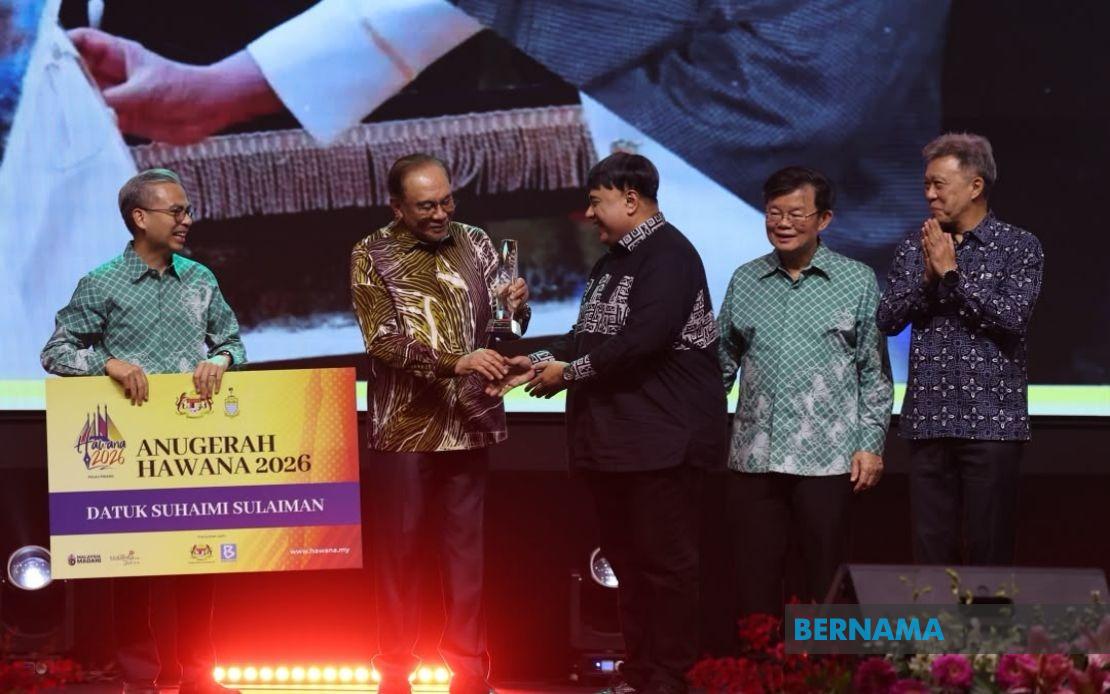
Datuk Suhaimi Sulaiman, a stalwart of Malaysia's broadcasting and journalism sectors, has been recognised with the prestigious National Journalists' Day (HAWANA) 2026 Award in acknowledgement of his extensive contributions spanning more than three decades. The ceremony took place on June 20 at PICCA @ Arena Butterworth Convention Centre in Butterworth, where Prime Minister Datuk Seri Anwar Ibrahim presented the honour to the veteran media professional, lending significant national weight to the occasion.
The award presentation brought together key figures from Malaysia's media and political establishment. Penang Chief Minister Chow Kon Yeow, Communications Minister Datuk Fahmi Fadzil, and Malaysian National News Agency (Bernama) chairman Datuk Seri Wong Chun Wai witnessed the proceedings at the HAWANA 2026 Grand Finale. The gathering underscored the importance placed on recognising excellence and dedication within the nation's journalism community, demonstrating that such contributions receive acknowledgement at the highest levels of government.
Suhaimi's career trajectory has been intimately tied to Malaysia's media evolution. His tenure as Broadcasting Malaysia (RTM) director-general positioned him at the helm of the nation's premier public broadcasting institution during a transformative period for Malaysian television and radio. His leadership during that phase helped shape the direction of national broadcasting and set standards for journalistic practice across the public media landscape. The accumulated experience from such a significant position has made him a respected voice in discussions about Malaysia's media future.
In his response to receiving the award, Suhaimi offered reflections that speak to the challenges facing contemporary journalists and media practitioners. He framed the recognition not merely as a personal accolade but as a reinforcement of his commitment to continuous learning and knowledge-sharing within the industry. This perspective reveals an understanding that media excellence is not static but requires constant evolution and adaptation as technological and societal conditions shift.
The veteran broadcaster highlighted the particular relevance of artificial intelligence to the media landscape, identifying it as a defining challenge and opportunity for contemporary journalism. Rather than viewing AI as a threat to journalistic practice, Suhaimi positioned it as an area requiring proactive engagement and skill development. His comments suggest that media professionals must intentionally acquire new technical knowledge and competencies to remain effective and competitive in an increasingly AI-mediated information environment.
Suhaimi's emphasis on learning reflects a broader reality within Southeast Asia's media sector. The region's news organisations are grappling with questions about how AI-assisted reporting, algorithmic content distribution, and automated news generation will reshape journalistic work. Malaysian newsrooms, in particular, are experiencing these pressures as digital platforms capture greater shares of audience attention and advertising revenue. Suhaimi's willingness to acknowledge this challenge publicly provides validation for journalists and editors wrestling with similar concerns about maintaining professional standards amid technological disruption.
The HAWANA 2026 award itself represents an important institutional recognition of journalistic excellence and service to Malaysia's information ecosystem. The National Journalists' Day framework allows the industry and government to honour practitioners whose work has significantly influenced public discourse and media standards. By selecting someone with Suhaimi's background, the award committee acknowledged that leadership within media institutions constitutes a valuable form of journalistic service, not merely frontline reporting or editorial decision-making.
Bernama's prominent role in organising the HAWANA 2026 Grand Finale and related festivities reflects the national news agency's position as a custodian of professional journalism standards in Malaysia. The presence of Bernama chief executive officer and HAWANA 2026 Working Committee chairman Datin Paduka Nur-ul Afida Kamaludin, alongside editor-in-chief Arul Rajoo Durar Raj, underscored the agency's commitment to elevating and celebrating journalistic excellence across the nation's media ecosystem.
For Malaysian journalists and media practitioners, Suhaimi's recognition carries symbolic importance. It validates the notion that long-term, consistent contribution to the media industry deserves acknowledgement and celebration. At a time when journalism globally faces challenges related to declining revenue, audience fragmentation, and declining trust in institutions, such public recognition helps reinforce the profession's dignity and social value. Particularly in Malaysia, where media landscape discussions often centre on political and regulatory questions, highlighting technical excellence and professional longevity provides a counterweight to more polarised debates.
The focus on AI adaptation in Suhaimi's remarks also signals how the conversation about media excellence is evolving in Malaysia and across Southeast Asia. Rather than debating whether technology should be adopted, the discussion increasingly centres on how professionals should equip themselves with the knowledge and skills to harness these tools responsibly. This represents a maturation of the regional media discourse, moving beyond rejection or passive acceptance toward active engagement with technological change.
Looking forward, Suhaimi's visibility as an award recipient may influence how Malaysian media organisations approach leadership transitions and knowledge transfer. Recognising leaders who have guided institutions through significant changes helps create mentorship pathways and encourages experienced professionals to remain engaged with the industry through teaching, consulting, and thought leadership roles. For smaller regional news organisations and emerging platforms, the lessons embedded in Suhaimi's three-decade career offer valuable guidance on maintaining professional standards while adapting to evolving audience expectations and technological capabilities.
%22%2F%3E%3C%2Fpattern%3E%3C%2Fdefs%3E%3Crect%20width%3D%22100%25%22%20height%3D%22100%25%22%20fill%3D%22url(%23ph5mojig)%22%2F%3E%3Crect%20width%3D%22100%25%22%20height%3D%22100%25%22%20fill%3D%22url(%23ph5mojip)%22%2F%3E%3Ctext%20x%3D%2250%25%22%20y%3D%2250%25%22%20text-anchor%3D%22middle%22%20dominant-baseline%3D%22central%22%20fill%3D%22rgba(255%2C255%2C255%2C0.95)%22%20font-family%3D%22Georgia%2C%20'Times%20New%20Roman'%2C%20serif%22%20font-weight%3D%22700%22%20font-size%3D%22320%22%20letter-spacing%3D%22-0.02em%22%3EPM%3C%2Ftext%3E%3C%2Fsvg%3E)
%22%2F%3E%3C%2Fpattern%3E%3C%2Fdefs%3E%3Crect%20width%3D%22100%25%22%20height%3D%22100%25%22%20fill%3D%22url(%23phgab1g)%22%2F%3E%3Crect%20width%3D%22100%25%22%20height%3D%22100%25%22%20fill%3D%22url(%23phgab1p)%22%2F%3E%3Ctext%20x%3D%2250%25%22%20y%3D%2250%25%22%20text-anchor%3D%22middle%22%20dominant-baseline%3D%22central%22%20fill%3D%22rgba(255%2C255%2C255%2C0.95)%22%20font-family%3D%22Georgia%2C%20'Times%20New%20Roman'%2C%20serif%22%20font-weight%3D%22700%22%20font-size%3D%22170%22%20letter-spacing%3D%22-0.02em%22%3EMalaysia%3C%2Ftext%3E%3C%2Fsvg%3E)
%22%2F%3E%3C%2Fpattern%3E%3C%2Fdefs%3E%3Crect%20width%3D%22100%25%22%20height%3D%22100%25%22%20fill%3D%22url(%23ph1tju4g)%22%2F%3E%3Crect%20width%3D%22100%25%22%20height%3D%22100%25%22%20fill%3D%22url(%23ph1tju4p)%22%2F%3E%3Ctext%20x%3D%2250%25%22%20y%3D%2250%25%22%20text-anchor%3D%22middle%22%20dominant-baseline%3D%22central%22%20fill%3D%22rgba(255%2C255%2C255%2C0.95)%22%20font-family%3D%22Georgia%2C%20'Times%20New%20Roman'%2C%20serif%22%20font-weight%3D%22700%22%20font-size%3D%22170%22%20letter-spacing%3D%22-0.02em%22%3EMalaysia%3C%2Ftext%3E%3C%2Fsvg%3E)