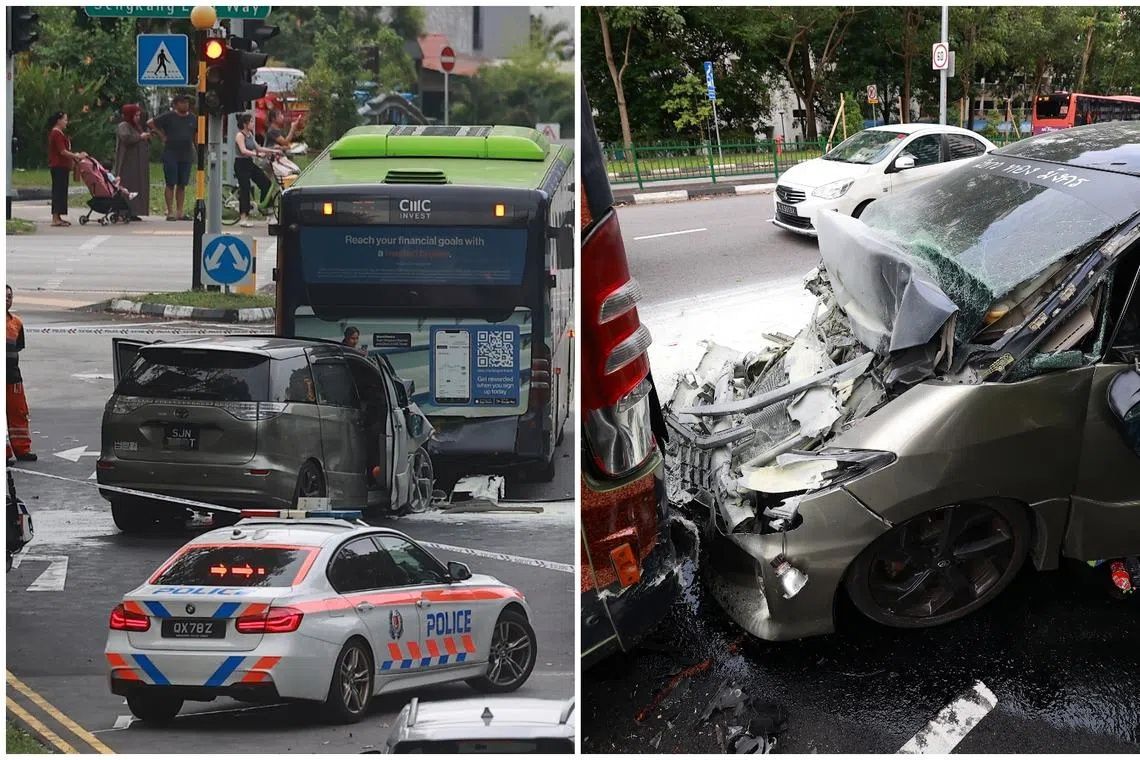
Singapore's roads have become increasingly perilous as substance-induced impaired driving claims more lives, prompting urgent warnings from medical professionals and authorities. In a single 12-day period during June, three separate motorists faced charges for driving while intoxicated by drugs — each incident discovered only after vehicular collisions had already occurred. The substances involved ranged from methamphetamine, commonly called Ice, to etomidate, an anaesthetic compound that has emerged as a significant public health threat through its use in electronic vaporising devices known as Kpods. These cases underscore a broader pattern of dangerous driving behaviour linked to controlled substances that authorities now acknowledge as a critical safety concern.
Dr Jonathan Tang, a clinical toxicologist at the National University Hospital's Emergency Medicine Department, has witnessed the devastating consequences firsthand. He reports treating trauma patients injured in road accidents where impairment from etomidate played a causal role. Drawing parallels to alcohol intoxication, Tang explains that etomidate fundamentally compromises the neurological functions essential to safe vehicle operation, creating hazards not only for drivers themselves but equally for passengers, pedestrians, and all other road users sharing Singapore's thoroughfares. The substance induces multiple cognitive deficits simultaneously—delayed reaction times, impaired hazard perception, and reduced vehicle control—rendering users acutely dangerous behind the wheel.
Parliamentary scrutiny of this escalating problem emerged in February when Member of Parliament Valerie Lee, representing Pasir Ris-Changi GRC, formally raised concerns about police protocols for detecting drug impairment in accident investigations. She sought clarification on whether the Traffic Police routinely screened motorists involved in collisions for evidence of vaping or drug consumption. Coordinating Minister for National Security K. Shanmugam responded with sobering data: between 2023 and 2025, authorities documented 38 traffic accidents directly attributable to drug and etomidate use, resulting in 19 deaths. The breakdown revealed a particularly troubling concentration: ten fatalities involved conventional drugs, while nine resulted from etomidate-specific impairment. The trend has accelerated dramatically this year, with 29 of the 38 accidents occurring in 2025 alone.
These statistics gain additional weight when contextualised within Singapore's broader road safety crisis. Traffic fatalities reached a decade-high of 149 deaths in 2025, surpassing 2016's toll of 141 and significantly exceeding 2024's 142 deaths. Simultaneously, injury figures climbed from 9,342 in 2024 to 9,955 in 2025, indicating that the problem extends beyond fatalities to encompass widespread harm across the driving population. The 38 substance-related accidents represent a meaningful proportion of these totals, suggesting that chemically-induced impairment constitutes an increasingly significant mortality factor on Singapore's roads.
Etomidate's particular danger extends beyond immediate driving impairment. Tang emphasises that regular users frequently experience psychiatric complications including depressed mood, heightened aggression, and heightened impulsivity—psychological effects that further compromise safe vehicle operation and potentially increase accident risk beyond the direct neurological impacts of intoxication. The combination of acute driving impairment coupled with potential psychiatric disturbance creates a compounding hazard profile that distinguishes etomidate-laced vaping from conventional substance abuse in traffic contexts.
A fatal collision in Punggal on May 13, 2025, exemplified these dangers with tragic consequences. A vehicle operated by a driver subsequently found to have etomidate in his bloodstream struck a bus, killing the 28-year-old female passenger aboard. Police investigation uncovered 42 vaporising devices and more than 1,200 pods within the vehicle, several containing etomidate, establishing clear causation between substance possession and the fatal outcome. The discovery highlighted how Kpod vaping has become sufficiently prevalent that motorists carry substantial quantities while operating vehicles.
Three recent prosecutions illustrate the diversity of substance-impaired driving cases now reaching courts. Mohamed Firdouz Mohamed Akram, 36, faced multiple charges on June 19 after a methamphetamine-fuelled collision with a taxi in Kallang injured both the cab driver and a passenger. His response to the accident—abandoning his vehicle and fleeing the scene—compounded the initial dangerous driving offence. Similarly, Puah Zhe Cong, 34, confronted seven charges on June 10, including causing death and injuries whilst driving under etomidate's influence, whilst Sivakandesh, 32, was charged on June 8 after his Mercedes-Benz crashed into a rubbish chute in Yishun Street, struck bollards and other vehicles, and left registration plates removed at the scene.
Legislative penalties for driving whilst impaired by intoxicating substances provide some deterrent effect. First-time offenders face potential imprisonment up to one year, fines reaching S$10,000, or both, with repeat offenders subject to two-year maximum sentences and S$20,000 penalties. Yet such statutory consequences, however severe, clearly have not prevented the surge in incidents occurring in 2025. The escalating problem suggests that enforcement capacity, user awareness of risks, and availability of these substances remain misaligned with legislative intent.
For Malaysian readers, Singapore's experience carries particular relevance. Cross-border traffic patterns mean Malaysian drivers frequently navigate Singaporean roads, whilst similar vaping products and drug availability exist throughout Southeast Asia. The specific emergence of etomidate in electronic vaporising devices represents a novel public health threat that surveillance systems in Malaysia and neighbouring countries may not yet fully monitor. The Singaporean case study demonstrates how chemically-enhanced vaping can rapidly transition from a personal consumption issue to a significant road safety emergency when users operate vehicles under impairment.
Singapore's Traffic Police have reinforced their commitment to systematic impairment assessment following accidents. When officers suspect drug or etomidate use, mandatory blood testing now occurs, with positive results triggering driving-under-influence charges. Yet detection remains reactive—contingent on collision occurrence rather than proactive identification of impaired drivers before accidents happen. The police statement of June 18 characterised substance-impaired driving as "extremely dangerous and irresponsible," acknowledging the severity whilst highlighting the mismatch between public health messaging and actual driver behaviour.
The confluence of rising fatality rates, documented substance-impairment causation, and accelerating incident frequency in 2025 suggests that Singapore faces a critical juncture in road safety management. Emergency departments absorb trauma consequences whilst courts process perpetrators, yet the underlying supply and demand dynamics driving substance-impaired driving remain insufficiently addressed. For neighbouring jurisdictions including Malaysia, the Singaporean trajectory provides early warning signals about emerging drug delivery systems and their traffic safety implications, warranting enhanced monitoring and public education before similar escalation occurs locally.
%22%2F%3E%3C%2Fpattern%3E%3C%2Fdefs%3E%3Crect%20width%3D%22100%25%22%20height%3D%22100%25%22%20fill%3D%22url(%23ph5mojig)%22%2F%3E%3Crect%20width%3D%22100%25%22%20height%3D%22100%25%22%20fill%3D%22url(%23ph5mojip)%22%2F%3E%3Ctext%20x%3D%2250%25%22%20y%3D%2250%25%22%20text-anchor%3D%22middle%22%20dominant-baseline%3D%22central%22%20fill%3D%22rgba(255%2C255%2C255%2C0.95)%22%20font-family%3D%22Georgia%2C%20'Times%20New%20Roman'%2C%20serif%22%20font-weight%3D%22700%22%20font-size%3D%22320%22%20letter-spacing%3D%22-0.02em%22%3EPM%3C%2Ftext%3E%3C%2Fsvg%3E)
%22%2F%3E%3C%2Fpattern%3E%3C%2Fdefs%3E%3Crect%20width%3D%22100%25%22%20height%3D%22100%25%22%20fill%3D%22url(%23phgab1g)%22%2F%3E%3Crect%20width%3D%22100%25%22%20height%3D%22100%25%22%20fill%3D%22url(%23phgab1p)%22%2F%3E%3Ctext%20x%3D%2250%25%22%20y%3D%2250%25%22%20text-anchor%3D%22middle%22%20dominant-baseline%3D%22central%22%20fill%3D%22rgba(255%2C255%2C255%2C0.95)%22%20font-family%3D%22Georgia%2C%20'Times%20New%20Roman'%2C%20serif%22%20font-weight%3D%22700%22%20font-size%3D%22170%22%20letter-spacing%3D%22-0.02em%22%3EMalaysia%3C%2Ftext%3E%3C%2Fsvg%3E)
%22%2F%3E%3C%2Fpattern%3E%3C%2Fdefs%3E%3Crect%20width%3D%22100%25%22%20height%3D%22100%25%22%20fill%3D%22url(%23ph1tju4g)%22%2F%3E%3Crect%20width%3D%22100%25%22%20height%3D%22100%25%22%20fill%3D%22url(%23ph1tju4p)%22%2F%3E%3Ctext%20x%3D%2250%25%22%20y%3D%2250%25%22%20text-anchor%3D%22middle%22%20dominant-baseline%3D%22central%22%20fill%3D%22rgba(255%2C255%2C255%2C0.95)%22%20font-family%3D%22Georgia%2C%20'Times%20New%20Roman'%2C%20serif%22%20font-weight%3D%22700%22%20font-size%3D%22170%22%20letter-spacing%3D%22-0.02em%22%3EMalaysia%3C%2Ftext%3E%3C%2Fsvg%3E)