The Rohingya Ulama Council has categorically denied suggestions that members of the displaced community are actively pursuing Malaysian citizenship, with council chairman Rahimullah Hussain characterising such allegations as deliberately constructed falsehoods designed to incite animosity toward Rohingya populations in the country.
The denial comes amid ongoing debates about the refugee community's status and future in Malaysia, a nation that has hosted one of the world's largest Rohingya populations outside Myanmar and Bangladesh. The Ulama Council's response underscores the sensitivity surrounding migration and citizenship issues in the region, where public sentiment can quickly polarise around refugee communities and questions of permanent settlement versus temporary refuge.
Rahimullah Hussain's statement reflects a broader pattern of how allegations—whether rooted in fact or conjecture—can rapidly circulate through social discourse and amplify tensions between host communities and displaced populations. By labelling the claims as fabrications, the council leadership is attempting to counter narratives that might fuel resentment and misconceptions about Rohingya intentions and integration into Malaysian society.
The timing of this denial is significant given Malaysia's complex relationship with refugee populations. The country has adopted a pragmatic approach to hosting Rohingya since the 2017 Myanmar military operations that triggered mass displacement, providing de facto protection while stopping short of granting formal resettlement or citizenship pathways. This liminal status—neither fully welcomed nor officially expelled—creates persistent uncertainty that fuels speculation about community aspirations and long-term plans.
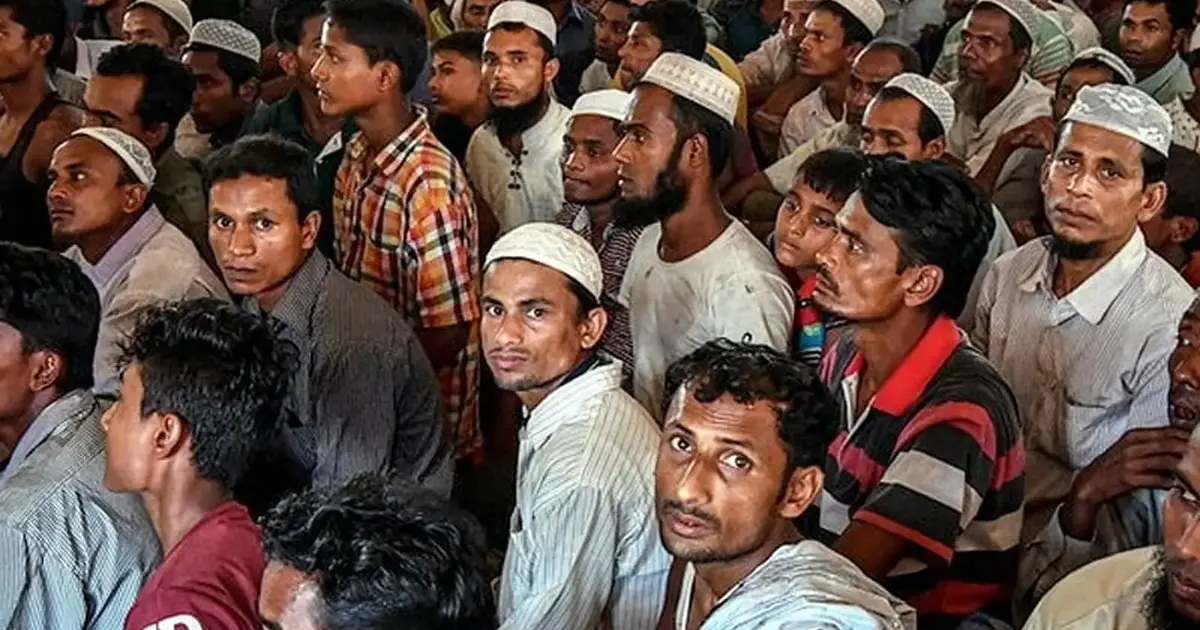
For context, Malaysia hosts approximately 180,000 registered Rohingya refugees according to UNHCR data, though unofficial estimates suggest the actual figure is considerably higher. The community has established educational institutions, mosques, and social networks across urban centres, particularly in Kuala Lumpur, Selangor, and Penang. This visible institutional presence has occasionally sparked concerns among certain segments of the Malaysian public about demographic shifts and resource allocation.
The Ulama Council's intervention suggests that leadership figures within the Rohingya community recognise the danger posed by unchecked narratives. By proactively rejecting citizenship-seeking allegations, the council seeks to reassure Malaysian authorities and the general public that the community understands and respects the current legal framework governing their presence. This defensive posture reflects a calculated strategy to maintain the precarious social equilibrium that allows Rohingya to survive and function within Malaysia without triggering policy reversals.
Historically, refugee-hosting nations have responded to citizenship rumours with policy hardening. The council's statement appears designed to forestall such outcomes by emphasising that the Rohingya community harbours no territorial ambitions or aspirations toward permanent settlement status. Whether this messaging will effectively counter existing prejudices remains uncertain, particularly in an information environment where social media can rapidly amplify unverified claims.
The distinction between temporary protection and citizenship remains fundamentally important for understanding Malaysia's approach. The government has maintained that Rohingya presence is exceptional and contingent, tied to the unresolved Myanmar situation. Any perception that refugee communities are seeking to transition from temporary to permanent status could trigger backlash and potentially prompt policy reconsideration at the governmental level.
The Ulama Council's denial also reflects internal community dynamics. Leadership figures must navigate between advocating for improved conditions and rights for community members while simultaneously assuring host nation authorities of the community's compliance with existing legal frameworks. This balancing act requires careful messaging that neither appears defiant nor excessively submissive.
For Malaysia, the Rohingya question sits at the intersection of humanitarian obligation, regional geopolitics, and domestic politics. ASEAN's non-interference doctrine complicates Malaysia's ability to pressure Myanmar on refugee repatriation or accountability for alleged atrocities. Consequently, the country remains committed to hosting displaced populations indefinitely, even without formal solutions. This reality necessitates regular clarification of expectations and boundaries between refugees and the host society.
The council's statement should be understood within Southeast Asia's broader migration landscape. Thailand, Indonesia, and Bangladesh also host significant Rohingya populations, and any perception that communities are seeking citizenship in Malaysia could create precedent anxieties across the region. Leadership statements like Rahimullah Hussain's thus serve a regional function beyond Malaysia's borders, signalling to neighbouring governments that refugee populations understand their subordinate legal position.
Going forward, the Rohingya community's relationship with Malaysia will likely remain defined by this tension between presence and acceptance, protection without permanence. The Ulama Council's proactive denial of citizenship-seeking represents an attempt to manage this fraught equilibrium, though whether such statements prove sufficient to counter structural prejudices and sporadic rumour-mongering remains to be seen. The community's long-term welfare ultimately depends not merely on its own messaging, but on sustained Malaysian and international commitment to humanitarian principles.