The Paris Vivatech festival is drawing global attention to a diverse array of technological breakthroughs that promise to reshape multiple industries and improve quality of life across continents. Among the most compelling innovations on display are solutions to longstanding medical challenges, advances in aerial robotics, and cutting-edge defences against emerging digital threats. For Southeast Asian markets and enterprises, these developments signal where global innovation is heading and offer potential pathways for regional healthcare providers, logistics operators and financial institutions to adopt next-generation technologies.
Berlin-based Blueprint Biomed is tackling one of orthopedic medicine's persistent problems: the complications and failures associated with bone grafts. Millions of patients worldwide undergo procedures requiring bone grafts each year, yet traditional approaches using the patient's own bone tissue frequently fail, necessitating additional surgeries or causing unexpected side effects. The company's breakthrough involves engineering artificial bone structures that eliminate the need for autologous grafts altogether. Chief executive Aaron Herrera explained to international media that this represents a fundamental shift in approach. Blueprint's innovation consists of a three-dimensional scaffold manufactured from polycaprolactone, a biodegradable polyester, which supports a collagen matrix. The beauty of this system lies in its biocompatibility: the collagen dissolves within three months, while the polycaprolactone scaffold breaks down over two years, allowing the patient's natural bone tissue to regenerate and integrate seamlessly. The artificial structures can be customized into various shapes, enabling surgeons to match patient-specific anatomical requirements precisely. As Blueprint advances towards human trials, the company is seeking US$2.5 million in funding, with ambitions to implant its products into patients by 2028. For Malaysia's growing healthcare sector and medical device industry, such innovations represent opportunities for technology transfer and potential manufacturing partnerships.
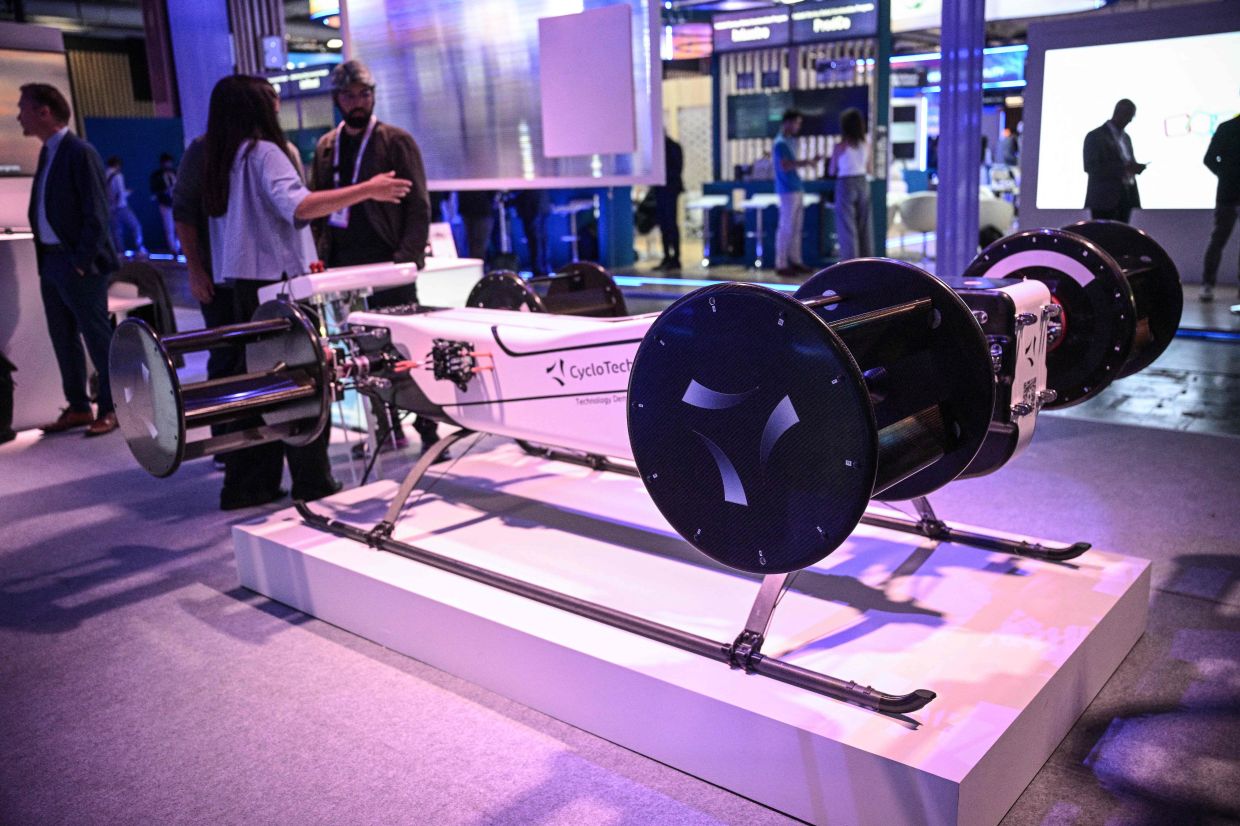
In the realm of aerial technology, Austrian startup CycloTech is fundamentally reimagining how drones maneuver through three-dimensional space. While quadcopter drones have already proven invaluable across coordinated aerial displays and military operations, including documented use in the Ukraine conflict, CycloTech argues there remains significant room for improvement in agility and versatility. The company's solution centers on a revolutionary motor design: a cylindrical structure with sides comprising multiple wing-shaped blades that enable unprecedented flight capabilities. Unlike conventional aircraft that must choose between hovering like a helicopter or flying forward, CycloTech's motors allow seamless transitions between all flight modes. A drone equipped with these motors can hover motionlessly, accelerate forward at speed, execute mid-air braking with precision, reverse direction, and land with remarkable accuracy. Marketing chief Andrea Marchsteiner outlined the breadth of potential applications, ranging from last-mile deliveries in congested urban environments to future urban air mobility solutions that could transport people. Military applications also remain relevant. The 65-member company has already secured €40 million in funding and is actively seeking additional capital and strategic partners willing to integrate its motors into existing aircraft platforms. For Southeast Asian cities grappling with congested streets and last-mile delivery challenges, this technology could prove transformative within the coming decade.
The rise of generative artificial intelligence has created new security vulnerabilities that traditional authentication systems struggle to address. French firm Whispeak, originally conceived as a voice recognition tool for confirming customer identity in banking and sensitive financial transactions, has pivoted to address a more urgent threat: deepfake audio. Voice synthesis technology has advanced to the point where anyone with less than ten seconds of recorded audio can create convincing imitations, often using freely available tools. This capability poses grave risks to financial institutions, vulnerable populations, and anyone receiving calls requesting sensitive information or actions. Whispeak's solution leverages the company's proprietary artificial intelligence systems, refined through three years of intensive development. Chief executive Florent Van Calster asserts that the company now possesses what he describes as the world's most effective audio deepfake detector, a claim supported by first-place finishes in multiple international competitions. The system achieves an average error rate below one percent on available training data, though Van Calster acknowledges that the technological arms race between deepfake creators and detectors remains perpetual, with fraudsters continuously improving their craft. The company is already collaborating with French telecommunications giant Bouygues to screen incoming calls for deepfake indicators and alert users when suspicious audio is detected. For Malaysian financial institutions, telecommunications providers, and government agencies handling sensitive citizen communications, this technology offers urgent protection against an escalating threat.
Sports science and athletic performance monitoring are experiencing their own technological revolution through non-invasive biometric sensing. Hong Kong-based startup PointFit has developed an adhesive patch approximately the size of a postage stamp that measures multiple performance biomarkers through perspiration analysis rather than blood samples. The patch's miniature sensor detects glucose levels, cortisol, and other physiological indicators directly from sweat on the skin's surface, providing real-time data without needles, blood collection, or laboratory processing. Chief executive Kenny Oktavius began developing this technology in 2019 while still a university student, demonstrating how breakthrough innovations can emerge from unexpected backgrounds. PointFit's proprietary software constructs a personalized artificial intelligence-driven "sweat index" for each athlete, calibrating expected values according to demographic factors, ambient temperature, and individual metabolic characteristics. The system addresses a critical gap in existing athletic monitoring: heart rate data, which elite athletes extensively track, provides an incomplete picture of physiological status. Oktavius pointed to a paradoxical reality: professional marathon runners wearing expensive, sophisticated monitoring equipment still occasionally collapse during competition, suggesting that conventional metrics miss crucial warning signs. When patients reach hospitals, clinicians invariably focus on biomarkers rather than heart rate alone, indicating that sweat-based biomarker monitoring aligns with medical best practices. PointFit has established relationships with Red Bull's Athlete Performance Centre and Puma's Nitro Labs innovation division. The company explicitly targets eventual expansion into consumer retail markets, exploring partnerships with sports retailers like Decathlon and the eyewear and optics giant EssilorLuxottica. For Southeast Asia's rapidly expanding fitness and wellness sector, this represents the next generation of performance monitoring technology that could appeal to both professional athletes and health-conscious consumers.