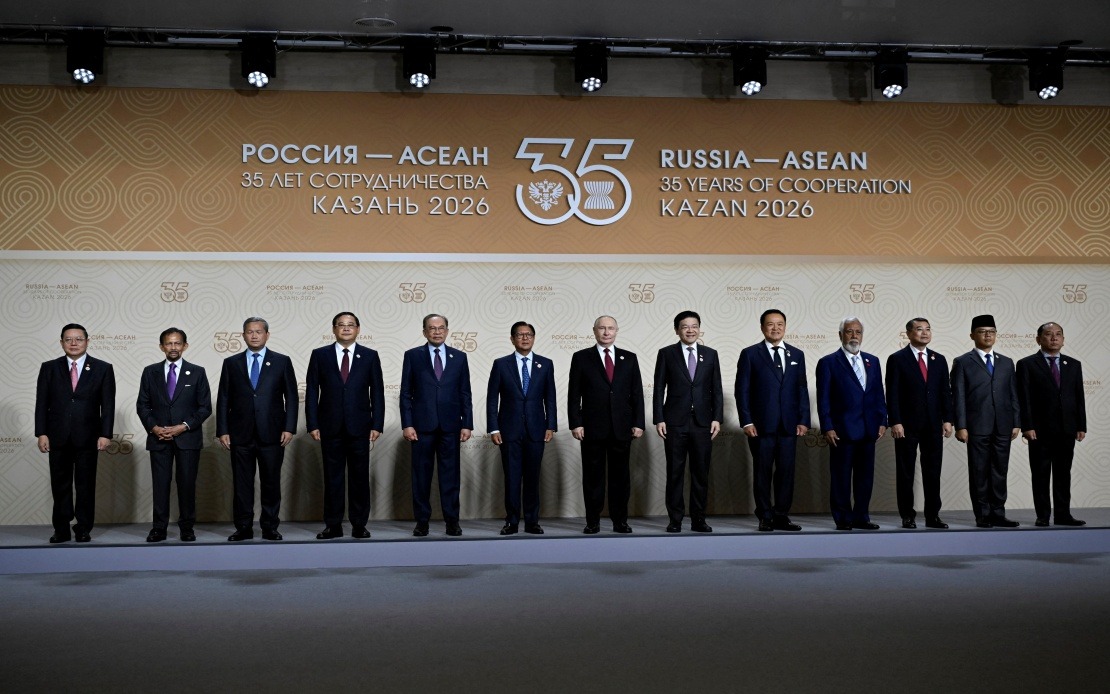
Philippine President Ferdinand R. Marcos Jr has signalled fresh momentum in relations between Southeast Asia's regional bloc and Russia, identifying technology and innovation as key drivers for deepening ties between the two geopolitical players. Speaking after attending the ASEAN-Russia Commemorative Summit in Kazan, Marcos emphasised that while the partnership has evolved steadily over more than three decades, neither side has yet capitalised on its full potential—particularly in sectors that did not exist when formal dialogue relations began in 1991.
The Philippine leader's remarks reflect a strategic recalibration underway across ASEAN as member states diversify partnerships in response to shifting global dynamics. Marcos acknowledged that growth in cooperation has been uneven across the bloc, with certain ASEAN nations pursuing deeper engagements with Moscow than others. This variation underscores the reality that ASEAN, as a consensus-based grouping of ten states with divergent foreign policy interests, cannot present a monolithic approach to external powers. However, Marcos framed this heterogeneity not as a weakness but as an opportunity for tailored bilateral and regional initiatives suited to each nation's strategic context.
The president highlighted artificial intelligence, advanced technology, data centre development, and power generation as frontier areas where ASEAN and Russia can build concrete collaboration. These sectors represent a departure from traditional commerce and diplomatic protocols that characterised earlier decades of bilateral engagement. Russia's growing technical capabilities in these domains, Marcos suggested, position Moscow as a relevant partner in the digital and energy transitions reshaping the region. For Southeast Asian economies still building their technological infrastructure, such partnerships could prove valuable in accelerating development without dependency on a single external actor.
Marcos framed ASEAN's evolving approach as part of a broader maturation process. He argued that the regional bloc is "growing up fast" in its capacity to negotiate with diverse partners and pursue interests independently of Cold War-era alignment patterns. This language resonates within Southeast Asia, where governments have long sought to maintain strategic autonomy by avoiding exclusive partnerships with any single great power. The pivot toward Russia in emerging technology sectors fits this logic: ASEAN states gain access to alternative expertise and capital flows, reducing vulnerability to pressure from any one direction.
The 35-year history of ASEAN-Russia dialogue provides institutional foundations for expansion. Beyond sporadic high-level visits and generic statements of friendship, however, the relationship has lacked the depth and economic integration seen in ASEAN ties with China, the United States, or Japan. Marcos's intervention suggests a deliberate effort to change this dynamic by channelling cooperation toward specific, high-value domains where mutual interest is most evident. The framework documents adopted at the Kazan summit—including the Kazan Declaration 2026 and the ASEAN-Russia Comprehensive Plan of Action for 2026–2030—represent formal commitments to this agenda, though their implementation will test the sincerity of both sides.
Energy cooperation deserves particular attention given Southeast Asia's rapid growth and rising power demands. Russia possesses substantial hydrocarbon reserves and technical expertise in energy infrastructure. ASEAN nations, especially Indonesia, Vietnam, and the Philippines, face mounting electricity requirements as industrialisation and urbanisation accelerate. Joint documents advanced at the summit specifically target cooperation in this sector, suggesting recognition that traditional supplier relationships could evolve toward technology transfer and capacity-building. Such partnerships might help ASEAN reduce reliance on single energy suppliers while simultaneously providing Russia with long-term market access in a dynamic region.
Data centres represent another pivotal domain. As digital services, artificial intelligence, and cloud computing become central to economic competitiveness, Southeast Asia's geographic position and growing tech talent pool make it an attractive location for regional data infrastructure. Russia has expertise in cybersecurity and server technology that could complement regional efforts. Moreover, developing data-centre capacity within ASEAN rather than relying on distant cloud providers in North America or Europe aligns with emerging concerns about digital sovereignty and data localisation across the region.
Marcos's emphasis on recognising opportunities that "simply did not exist" in earlier decades signals awareness that the global order is fragmenting in ways previous analysts did not anticipate. The multipolar dynamics he referenced extend beyond traditional great-power competition to include technological domains, supply-chain reshuffling, and the emergence of alternative development models. ASEAN's willingness to engage Russia in these spaces reflects pragmatism rather than ideological alignment—a posture consistent with the region's non-aligned traditions.
However, deepening ASEAN-Russia ties faces obstacles. Western sanctions imposed following Russia's invasion of Ukraine create friction in a region whose major trading partners and security guarantors largely support Western positions. Individual ASEAN members have taken differing stances on Russia in UN votes and other multilateral forums. Vietnam and Singapore maintain strong Western economic and security ties; Thailand has historic links to Russia but also substantial US military relationships. For cooperation in sensitive domains like energy infrastructure or advanced technology to flourish, these countries must navigate concerns about becoming entangled in geopolitical competition.
The timing of Marcos's statements also merits scrutiny. The Philippines under his leadership has sought to balance deepening US security commitments—particularly regarding the South China Sea—with broader regional partnerships. Elevating Russia's role in ASEAN cooperation, especially in technology and energy, may signal a desire to demonstrate independence from any single patron and to maximise the Philippines' own strategic flexibility. This approach aligns with broader Southeast Asian strategies of extracting benefits from multiple partners while avoiding exclusive commitments.
Looking forward, the tangible success of ASEAN-Russia cooperation will depend on translating diplomatic declarations into functional projects. Infrastructure development, joint research initiatives, and personnel exchanges in technology sectors would signal genuine commitment. Without such concrete steps, expanded rhetoric risks becoming merely symbolic, masking the deeper structural imbalances and strategic tensions that continue to define relations between an economically dynamic Southeast Asia and a geopolitically isolated Russia.
The summit documents adopted in Kazan establish a roadmap, yet the region's capacity to implement this agenda remains uncertain. ASEAN's decision-making by consensus, combined with members' varied relationships with Russia and the West, suggests that progress will likely be incremental and limited to non-controversial areas. Nonetheless, Marcos's framing of this moment as a "new day" reflects a genuine opening—one where both ASEAN and Russia see mutual advantage in exploring partnership domains that transcend Cold War categories and speak to contemporary challenges in technology, energy, and sustainable development.
%22%2F%3E%3C%2Fpattern%3E%3C%2Fdefs%3E%3Crect%20width%3D%22100%25%22%20height%3D%22100%25%22%20fill%3D%22url(%23ph4x2jvg)%22%2F%3E%3Crect%20width%3D%22100%25%22%20height%3D%22100%25%22%20fill%3D%22url(%23ph4x2jvp)%22%2F%3E%3Ctext%20x%3D%2250%25%22%20y%3D%2250%25%22%20text-anchor%3D%22middle%22%20dominant-baseline%3D%22central%22%20fill%3D%22rgba(255%2C255%2C255%2C0.95)%22%20font-family%3D%22Georgia%2C%20'Times%20New%20Roman'%2C%20serif%22%20font-weight%3D%22700%22%20font-size%3D%22226%22%20letter-spacing%3D%22-0.02em%22%3EExists%3C%2Ftext%3E%3C%2Fsvg%3E)
%22%2F%3E%3C%2Fpattern%3E%3C%2Fdefs%3E%3Crect%20width%3D%22100%25%22%20height%3D%22100%25%22%20fill%3D%22url(%23ph4yddrg)%22%2F%3E%3Crect%20width%3D%22100%25%22%20height%3D%22100%25%22%20fill%3D%22url(%23ph4yddrp)%22%2F%3E%3Ctext%20x%3D%2250%25%22%20y%3D%2250%25%22%20text-anchor%3D%22middle%22%20dominant-baseline%3D%22central%22%20fill%3D%22rgba(255%2C255%2C255%2C0.95)%22%20font-family%3D%22Georgia%2C%20'Times%20New%20Roman'%2C%20serif%22%20font-weight%3D%22700%22%20font-size%3D%22194%22%20letter-spacing%3D%22-0.02em%22%3ERefugee%3C%2Ftext%3E%3C%2Fsvg%3E)