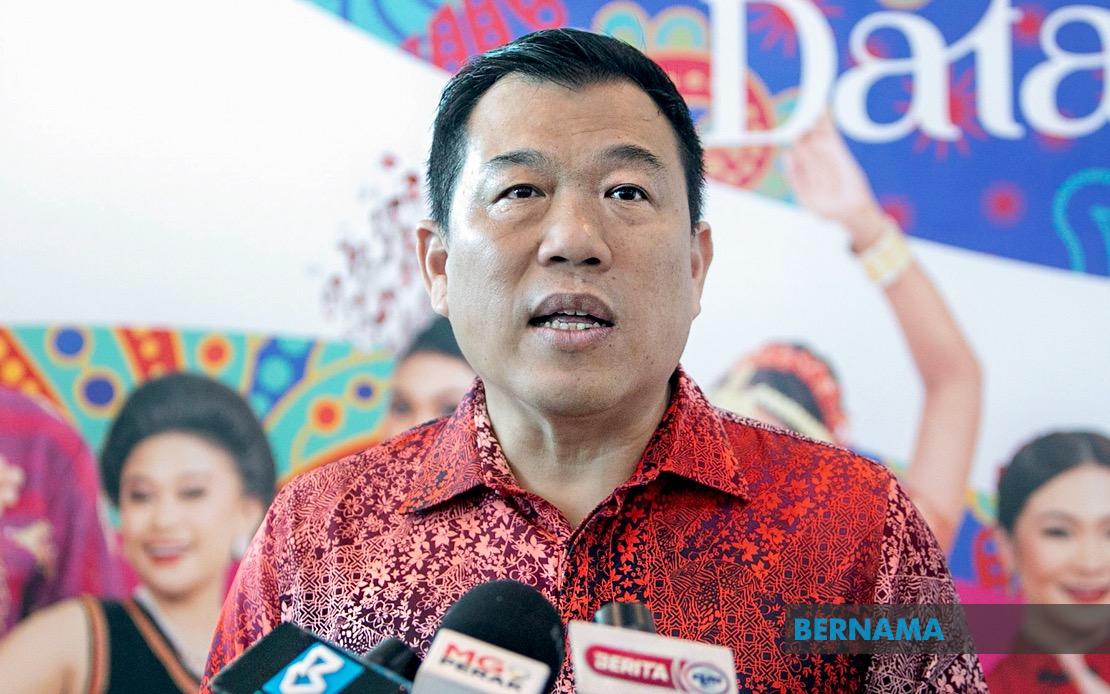
Perak's tourism sector is experiencing a mixed recovery, with strong domestic demand helping to offset declining international visitor numbers. Overnight domestic tourist arrivals in the state increased to 10.4 million last year, up from 10.2 million in 2024, according to Loh Sze Yee, chairman of Perak's Tourism, Industry, Investment and Corridor Development Committee. However, this domestic gains are being tempered by a contraction in foreign visitation, which dropped approximately 1.5 per cent during the same period, indicating broader headwinds affecting Malaysia's tourism industry.
The decline in international arrivals reflects structural challenges facing the aviation sector and regional connectivity. Loh identified the absence of regular flight services on the Singapore-Ipoh route as a significant factor constraining overseas visitor numbers, alongside turbulence in global energy markets that has rippled through the aviation industry. The lack of direct air connections from neighbouring Singapore, traditionally a key source market for Perak's tourism, represents a critical infrastructure gap that has undermined the state's capacity to attract long-haul leisure travellers. These challenges underscore how tourism recovery in Malaysia's tier-two destinations remains vulnerable to supply-side disruptions beyond the control of local tourism authorities.
Within Malaysia's domestic tourism landscape, Perak occupies a notable but secondary position relative to the country's primary destinations. According to Chief Statistician Datuk Seri Dr Mohd Uzir Mahidin, Selangor commanded the largest share of domestic visitors last year with 36.4 million arrivals, followed by Kuala Lumpur at 35.1 million. Perak ranked third with 23.6 million domestic visitors, a significant but considerably lower tally than the nation's leading tourism hubs. This ranking reflects the gravitational pull of Malaysia's urban centres and their established entertainment infrastructure, while highlighting the opportunity for regional destinations like Perak to deepen their appeal to domestic travellers seeking alternative experiences.
The Tourism Malaysia administration is leveraging Perak's geographic centrality to amplify the East Coast region's tourism profile. Ipoh was selected as the host city for the Pantai Timur Fest 2026, a strategic decision designed to position the Perak capital as a gateway for promoting Kelantan, Terengganu, and Pahang to domestic audiences across the northern, central, and southern zones of Peninsular Malaysia. Mohd Amirul Rizal, director-general of Tourism Malaysia, emphasized Ipoh's connectivity advantages and existing status as a primary tourist destination, suggesting that the city serves as an accessible hub through which to introduce the distinctive cultural and natural attractions of the East Coast states to a broader cross-regional audience.
The Pantai Timur Fest 2026 represents a coordinated approach to regional tourism promotion, assembling the tourism ecosystem of three states under a single showcase. The festival brings together thirty exhibition booths operated by tourism industry participants from Kelantan, Terengganu, and Pahang, spanning travel agencies, accommodation providers, entertainment attractions, and digital travel platforms. This clustering of suppliers creates opportunities for visitors to compare offerings and plan multi-destination itineraries while allowing tourism businesses to generate leads and build brand visibility across state boundaries.
Beyond commercial transactions, the festival incorporates experiential and cultural programming that differentiates East Coast tourism from mass-market alternatives. Attendees will encounter cultural performances and traditional craft demonstrations that showcase the intangible heritage of the region, alongside heritage food promotions that connect culinary identity to place-based tourism. These elements address a growing segment of Malaysian domestic travellers seeking enriched experiences beyond conventional leisure activities, particularly as post-pandemic tourism patterns show sustained interest in cultural immersion and artisanal discovery.
The festival aligns with Tourism Malaysia's broader Visit Malaysia 2026 campaign, which aims to establish that year as a focal point for domestic and international tourism promotion. By embedding the Pantai Timur Fest within this national framework, authorities are creating thematic coherence between state-level initiatives and federal tourism strategy. The campaign structure allows participating states to leverage national marketing resources and messaging while maintaining distinct regional identities, a coordination model that may prove instructive for other Malaysian regions seeking to amplify their visibility.
Interactive elements and promotional incentives embedded in the festival's programming are designed to convert curiosity into bookings and travel. Special offers and discounted travel packages on display create immediate purchase incentives, while interactive activities engage visitors and extend dwell time at the exhibition. These mechanisms recognise that modern tourism decision-making integrates information gathering, price comparison, and purchase completion within compressed timeframes, and that point-of-engagement incentives can substantially influence destination selection among domestic travellers evaluating competing options.
For Perak specifically, the growth in domestic overnight arrivals suggests that the state is successfully capturing share of Malaysia's expanding domestic leisure market, particularly among travellers seeking alternatives to overcrowded primary destinations. The 0.2 million increase in overnight domestic arrivals, while modest in absolute terms, compounds with existing visitation to indicate sustained attractiveness. However, reversing the international visitor decline requires attention to both aviation connectivity and global marketing, challenges that extend beyond state-level tourism authorities and demand federal coordination and private sector engagement.
The divergence between robust domestic tourism and contracting international visitation reflects a broader pattern emerging across Southeast Asian destinations in the post-pandemic period. Affluent and mobile domestic populations in Malaysia, Singapore, Thailand, and Indonesia are increasingly choosing regional holidays over international travel, while global tourism recovery remains uneven and sensitive to macroeconomic conditions. For Malaysian destinations like Perak, this bifurcation creates opportunities to build sustainable domestic market share while awaiting stabilisation of international tourism flows and restoration of critical air routes.
Looking forward, Perak's tourism trajectory will likely depend on progress in three domains: infrastructure development to support increased domestic demand, recovery and expansion of international connectivity particularly from Singapore and Thailand, and continued innovation in experiential tourism products that differentiate East Coast attractions from competitors. The Pantai Timur Fest represents a meaningful initiative on the experiential front, though addressing the structural deficit in regional air connectivity will require coordination at federal and multinational levels that transcends state tourism governance.
%22%2F%3E%3C%2Fpattern%3E%3C%2Fdefs%3E%3Crect%20width%3D%22100%25%22%20height%3D%22100%25%22%20fill%3D%22url(%23ph4x2jvg)%22%2F%3E%3Crect%20width%3D%22100%25%22%20height%3D%22100%25%22%20fill%3D%22url(%23ph4x2jvp)%22%2F%3E%3Ctext%20x%3D%2250%25%22%20y%3D%2250%25%22%20text-anchor%3D%22middle%22%20dominant-baseline%3D%22central%22%20fill%3D%22rgba(255%2C255%2C255%2C0.95)%22%20font-family%3D%22Georgia%2C%20'Times%20New%20Roman'%2C%20serif%22%20font-weight%3D%22700%22%20font-size%3D%22226%22%20letter-spacing%3D%22-0.02em%22%3EExists%3C%2Ftext%3E%3C%2Fsvg%3E)
%22%2F%3E%3C%2Fpattern%3E%3C%2Fdefs%3E%3Crect%20width%3D%22100%25%22%20height%3D%22100%25%22%20fill%3D%22url(%23ph4yddrg)%22%2F%3E%3Crect%20width%3D%22100%25%22%20height%3D%22100%25%22%20fill%3D%22url(%23ph4yddrp)%22%2F%3E%3Ctext%20x%3D%2250%25%22%20y%3D%2250%25%22%20text-anchor%3D%22middle%22%20dominant-baseline%3D%22central%22%20fill%3D%22rgba(255%2C255%2C255%2C0.95)%22%20font-family%3D%22Georgia%2C%20'Times%20New%20Roman'%2C%20serif%22%20font-weight%3D%22700%22%20font-size%3D%22194%22%20letter-spacing%3D%22-0.02em%22%3ERefugee%3C%2Ftext%3E%3C%2Fsvg%3E)