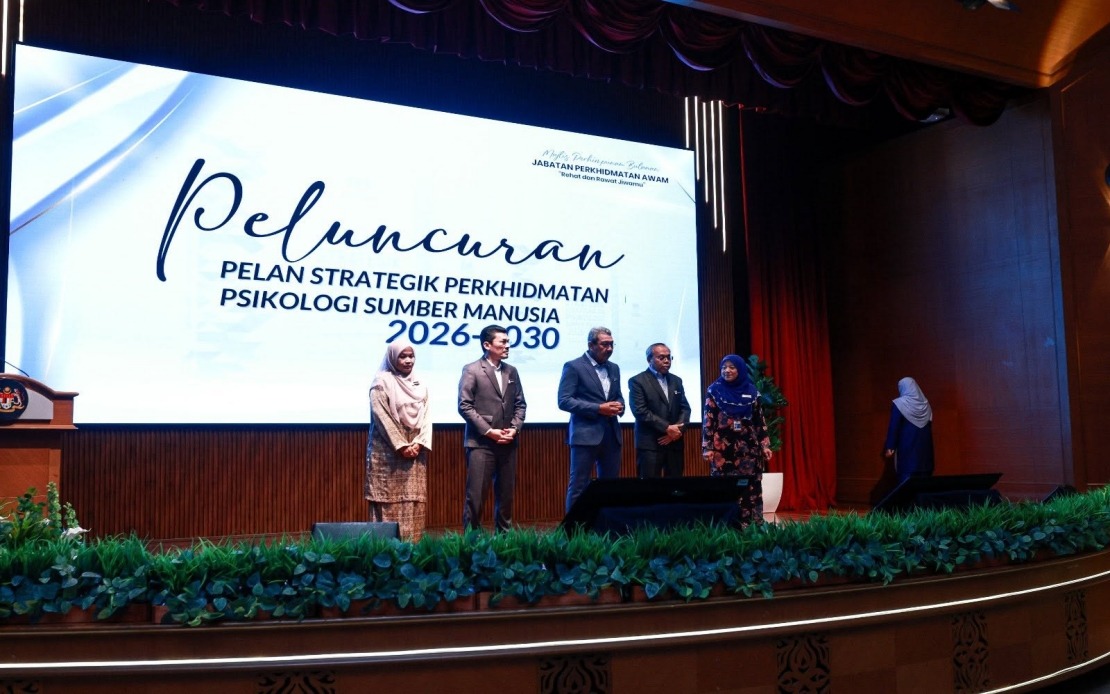
The Public Service Department unveiled its Human Resources Psychology Services Strategic Plan 2026-2030 this month, marking a significant institutional commitment to mental health within Malaysia's sprawling bureaucracy. Launched during the PSD Monthly Assembly in Putrajaya, the framework encompasses 12 strategic pillars, 22 distinct programmes, and 48 key performance indicators designed to systematically strengthen the psychological resilience and well-being of civil servants nationwide. The initiative reflects growing recognition that organisational effectiveness hinges fundamentally on employee mental health—a principle that remains relatively nascent in traditional public service cultures across Southeast Asia.
Tan Sri Wan Ahmad Dahlan Abdul Aziz, the Public Service Department's Director-General, officiated the launch under the thematic banner "Rest and Treat Your Soul," a deliberately accessible framing that seeks to normalise conversations around mental wellness in professional settings. The directive represents more than symbolic messaging; it signals an institutional pivot toward proactive psychological intervention rather than reactive crisis management. Wan Ahmad Dahlan's emphasis on the "Treat" concept specifically encouraged civil servants to abandon traditional reticence about seeking professional support, positioning psychological services as routine employee wellness infrastructure rather than indicators of personal failure or weakness.
Central to the strategy is the concept of "Rawat"—a Malay term signifying careful, nurturing intervention—which complements existing public sector reform initiatives. The PSD has deliberately positioned psychological well-being within its broader H.E.M.A.T work culture transformation programme, which encompasses governance modernisation, public empathy, progressive thinking, innovation integration, and administrative transparency. This holistic approach acknowledges that mental health outcomes cannot be isolated from organisational culture, management practices, and systemic working conditions. By linking psychological services to concurrent governance reforms, the department recognises that burnout, anxiety, and stress among civil servants often stem from structural inefficiencies and outdated administrative models rather than purely individual vulnerabilities.
The elimination of stigma surrounding mental health support emerges as perhaps the plan's most consequential objective. In traditional hierarchical public administrations across Malaysia and the region, psychological struggles often remain invisible and unaddressed, compounding into chronic dysfunction that undermines both individual well-being and institutional productivity. The strategic plan explicitly identifies stigma-dismantling as a prerequisite condition for behaviour change. Unless civil servants feel psychologically safe voicing struggles and accessing intervention programmes, even well-designed support infrastructure will remain underutilised. This recognition places the cultural transformation work—management training, peer support systems, and leadership communication—at the strategy's foundation.
The framework's specific performance indicators suggest a data-driven approach to implementation. With 48 distinct KPIs across 22 programmes, the PSD has committed to measurable accountability rather than aspirational goal-setting. This methodology enables tracking of participation rates in psychological services, satisfaction metrics among service users, retention improvements in affected departments, and broader employee engagement scores. For Malaysian readers familiar with previous public sector reform initiatives that faltered through vague objectives and inconsistent monitoring, the emphasis on concrete measurement offers some assurance of systematic execution. The metrics also create baseline data that can reveal which departments and demographic cohorts experience greatest mental health challenges, enabling targeted resource allocation.
The strategic timeline through 2030 positions mental health as a multi-year institutional transformation rather than a temporary programme. Malaysia's civil service encompasses approximately 1.6 million employees across federal, state, and local governments, making this initiative potentially one of Southeast Asia's most extensive organisational mental health initiatives. The five-year horizon allows for phased implementation, staff training, infrastructure development, and iterative refinement based on feedback and outcome data. However, it also presents sustainability challenges; maintaining programme momentum across successive political cycles and competing budgetary priorities historically proves difficult in Malaysian governance.
The context for this initiative reflects broader demographic and labour-market pressures affecting public sector workforces regionally. Younger civil servants, particularly those in digital or specialised roles, increasingly expect employers to address mental health proactively. Retention challenges in competitive sectors have prompted government recognition that outdated workplace cultures undermine recruitment and stability. Additionally, COVID-19's legacy of remote work, job insecurity, and social isolation has normalised discussions around employee psychological support across private and public sectors alike. The PSD's formal strategy represents institutional adaptation to these changed expectations.
Implementation success will depend substantially on middle management and departmental leadership. Direct supervisors, human resources teams, and union representatives must function as frontline champions of psychological support rather than gatekeepers maintaining traditional stigma. Training programmes addressing mental health literacy, intervention protocols, and confidentiality protections will require careful design. The strategy's emphasis on civil servants courageously voicing problems assumes organisational structures genuinely receptive to such disclosure—an assumption that demands deliberate cultural reinforcement.
Regionally, Malaysia's approach offers a template for other Southeast Asian governments grappling with civil service modernisation and employee well-being. Thailand, Indonesia, and the Philippines face similar challenges of ageing bureaucracies, generational expectation shifts, and recognition that outdated management models undermine both individual welfare and institutional performance. The PSD's comprehensive framework, linking psychology services to broader governance reform while establishing concrete accountability mechanisms, demonstrates a sophistication often lacking in regional public sector initiatives. Nevertheless, its ultimate success will be measured not by strategic elegance but by genuine adoption—whether millions of Malaysian civil servants actually access support services, stigma genuinely dissipates, and psychological well-being measurably improves across the bureaucracy.