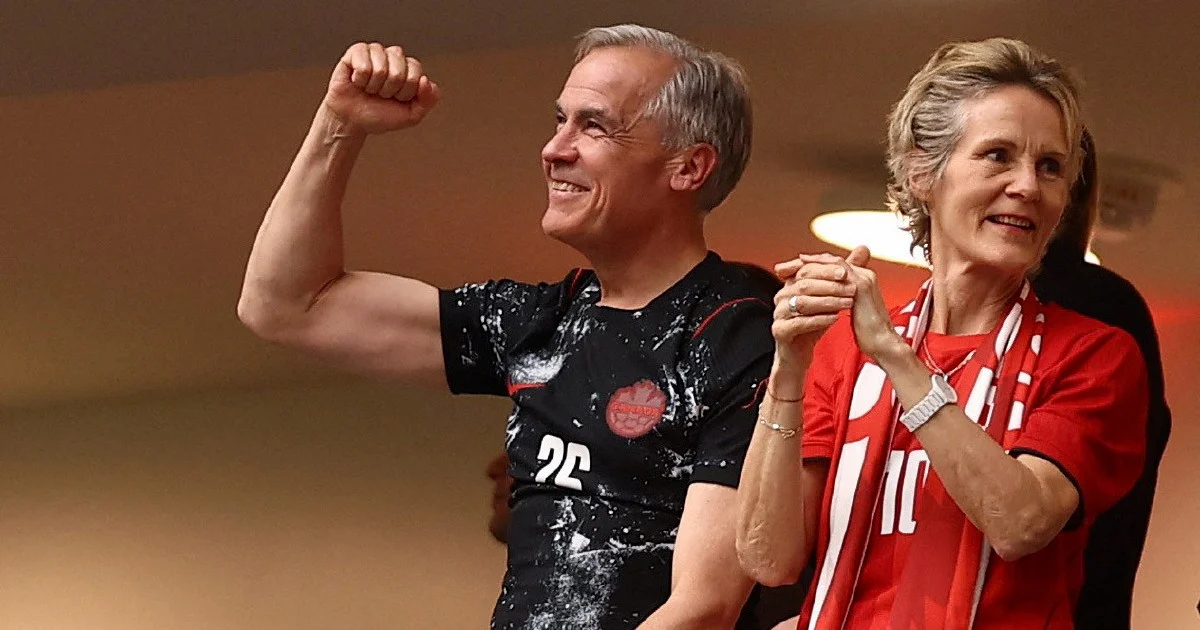
Canadian Prime Minister Mark Carney made an unscheduled appearance at the team's dressing room in Vancouver following the nation's football squad achieving a landmark victory at the World Cup finals—a watershed moment in the country's footballing history that has not previously been realised on the tournament's grandest stage. His visit underscored the significance of the achievement beyond the sporting realm, positioning the team's success as a matter of national pride and collective accomplishment.
Carney's remarks focused substantially on the composure and fortitude demonstrated by the players throughout the fixture, particularly in circumstances that tested their mental resilience. The Canadian side persevered after sustaining a significant setback when one of their key players suffered a serious leg fracture during active play, an occurrence that might have derailed the momentum and confidence of a less cohesive unit. The timing of such an injury in a critical match created genuine adversity that the squad had to navigate.
The broken leg suffered by the teammate represented not merely a physical challenge but a psychological test for the entire team. In elite international football, such incidents can disrupt concentration, lower morale, and shift tactical balance immediately. That the Canadian players rallied collectively to complete their assignment and secure victory suggests a level of emotional maturity and team unity that transcends routine preparation and reflects deeper cultural values within the squad's structure.
Carney's acknowledgment of this character dimension reveals how national leaders frequently connect sporting achievement to broader narratives about identity and national capability. For Canada, a nation with considerable footballing ambitions but limited success at the highest competitive levels, this inaugural World Cup finals victory represents validation of long-term investment in player development and infrastructure. The Prime Minister's presence in the dressing room served to crystallise this accomplishment as something worthy of direct state recognition.
The visit itself carries symbolic weight in Canadian political culture, where high-profile politicians often engage directly with successful sports teams to reinforce the connection between athletic excellence and national values. By entering the intimate space of the locker room rather than conducting remarks at a formal public venue, Carney emphasised solidarity with the players and validated their efforts through personal engagement rather than ceremony.
For Malaysian readers and the broader Southeast Asian sporting community, Canada's breakthrough carries instructive implications. Many regional nations harbour similar aspirations for their football programmes, seeking to compete effectively at World Cup tournaments while building sustainable domestic leagues. Canada's achievement suggests that patience, institutional commitment, and player development strategies can eventually yield results even for nations without deeply embedded football traditions.
The injury setback that occurred during the match also underscores the unpredictable nature of international football and the importance of squad depth. Canadian football authorities and other developing football nations would recognise that relying on individual star players creates vulnerability; success requires systems that function effectively when key personnel are unavailable. The team's ability to adapt and continue performing effectively after losing a player to serious injury demonstrates tactical flexibility and preparation.
Carney's public recognition of the team's resilience following adversity also highlights how sporting narratives intersect with national discourse. In Canada, as in Malaysia and other nations, football matches are increasingly understood not merely as athletic contests but as reflections of national character and capability. The Prime Minister's commendation positioned the team's grit and determination as expressions of Canadian identity, elevating the match beyond entertainment into cultural significance.
The broader context of Canada's footballing development has involved substantial investment in youth academies, improved coaching infrastructure, and better integration with international competitions. This inaugural World Cup finals victory represents the culmination of these systematic efforts rather than a fortuitous outcome. Carney's visit acknowledged both the individual achievement of the players and the institutional groundwork that enabled their success.
For Southeast Asian football federations observing from the region, Canada's pathway offers both encouragement and cautionary lessons. Sustained commitment to player development across multiple years, strategic recruitment and retention of coaching talent, and creation of competitive domestic structures all contribute to eventual World Cup competitiveness. However, such progress requires political support at the highest levels—a factor that Carney's visible endorsement emphasises.
The incident of the broken leg during such a pivotal match also illustrates the physical demands and inherent risks of elite football. Southeast Asian clubs and national associations similarly grapple with injury management and player welfare considerations, particularly during compressed tournament schedules. Canada's medical and support staff handling of the incident, combined with the team's subsequent mental fortitude, provides a template for crisis management in competitive contexts.
Looking ahead, this victory establishes new baseline expectations for Canadian football and will likely influence recruitment patterns, sponsorship opportunities, and public interest in the domestic league. Other nations in comparable developmental positions, including some within Southeast Asia, stand to benefit from studying how Canada converted institutional investment and strategic planning into tangible World Cup success. The Prime Minister's recognition signals that this achievement will enjoy sustained governmental attention and support.
%22%2F%3E%3C%2Fpattern%3E%3C%2Fdefs%3E%3Crect%20width%3D%22100%25%22%20height%3D%22100%25%22%20fill%3D%22url(%23phs7qdg)%22%2F%3E%3Crect%20width%3D%22100%25%22%20height%3D%22100%25%22%20fill%3D%22url(%23phs7qdp)%22%2F%3E%3Ctext%20x%3D%2250%25%22%20y%3D%2250%25%22%20text-anchor%3D%22middle%22%20dominant-baseline%3D%22central%22%20fill%3D%22rgba(255%2C255%2C255%2C0.95)%22%20font-family%3D%22Georgia%2C%20'Times%20New%20Roman'%2C%20serif%22%20font-weight%3D%22700%22%20font-size%3D%22151%22%20letter-spacing%3D%22-0.02em%22%3EPerikatan%3C%2Ftext%3E%3C%2Fsvg%3E)