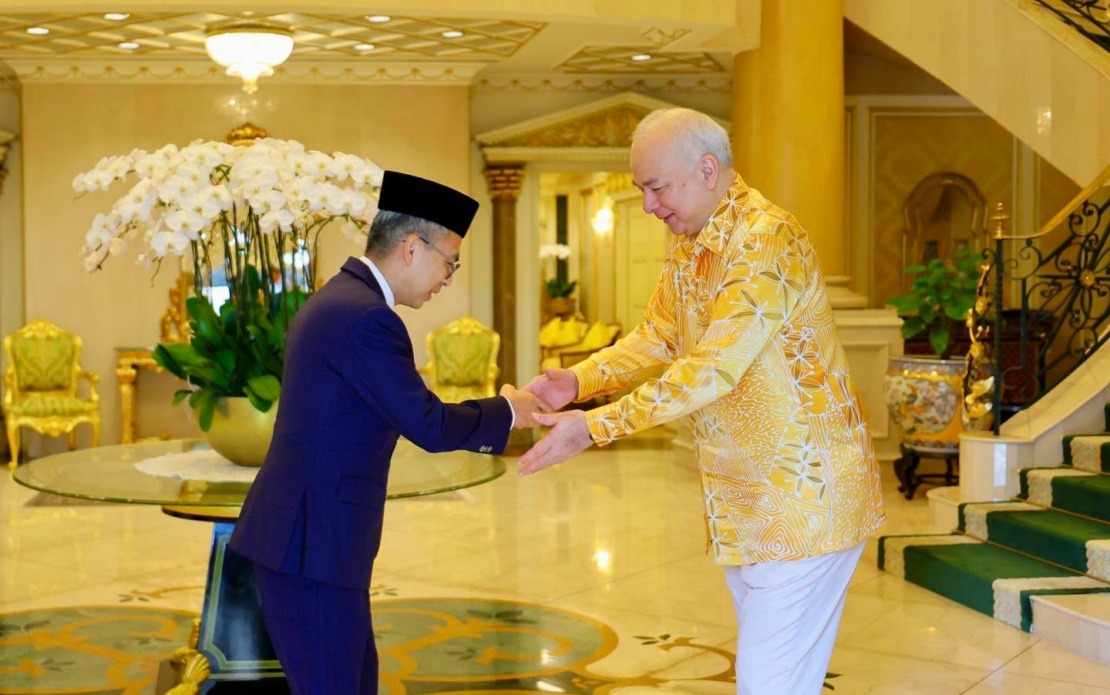
Communications Minister Datuk Fahmi Fadzil has updated the Sultan of Perak, Sultan Nazrin Shah, on the government's comprehensive programme to fortify communication infrastructure development and widen access to digital services throughout the state. The briefing took place during a formal audience granted to the minister, reflecting the growing importance placed on digital connectivity at the highest levels of state governance.
During their meeting, Fahmi highlighted the administration's commitment to systematically upgrading telecommunications systems and expanding network coverage across Perak, a state where bridging the digital divide remains a key challenge. The minister's presentation underscored how improved communication infrastructure serves as a foundation for economic development, educational advancement, and improved access to government services across both urban and rural communities.
Beyond infrastructure development, the discussion also encompassed concerns around online safety—a topic that resonated strongly with Sultan Nazrin. This indicates growing recognition among Malaysia's leadership that digital expansion must be accompanied by robust safeguards to protect citizens from cyber threats, misinformation, and harmful online content. The emphasis on online safety reflects international best practices and the government's multifaceted approach to digital governance.
The state of Perak has long grappled with uneven telecommunications coverage, particularly in its more remote districts. Infrastructure investment in states like Perak remains critical for Malaysia's broader digitalization agenda, especially as the nation works toward Vision 2050 and aims to achieve high-income status. Improved connectivity in peripheral areas can unlock economic opportunities through e-commerce, digital entrepreneurship, and remote work capabilities that were previously inaccessible to residents.
Fahmi's engagement with the Perak ruler demonstrates the government's recognition that state-level stakeholders must be kept informed of major digital development initiatives. The Sultan's involvement in communications matters reflects the constitutional role of state rulers in overseeing development within their territories and suggests active coordination between federal and state authorities on critical infrastructure projects.
The briefing also carries implications for private sector telecommunications operators in Malaysia, which bear responsibility for implementing network expansion programmes in tandem with government policy objectives. Companies operating in Perak will likely face expectations to accelerate rural deployment and service quality improvements in line with government commitments conveyed at such high-level discussions.
Online safety has emerged as an increasingly pressing policy area across Southeast Asia, where rapid digital adoption has outpaced regulatory frameworks in some instances. Malaysia's focus on this dimension reflects lessons learned from other markets and positions the country as thoughtful about managing the social externalities of digital transformation. Educational initiatives, platform accountability measures, and consumer protection mechanisms will all likely feature in the government's comprehensive approach to online safety.
The audience with Sultan Nazrin also provides an opportunity for the government to align its communications strategy with royal priorities and values. State rulers in Malaysia serve as custodians of their territories' interests and well-being, and their endorsement of digital development initiatives can facilitate smoother implementation and public acceptance of infrastructure projects.
Looking ahead, the momentum from this high-level engagement may accelerate specific projects within Perak, whether through accelerated broadband rollouts, establishment of digital hubs in towns and villages, or targeted programmes to boost digital literacy among vulnerable populations. The state's geographic characteristics, including mountainous terrain in some districts, may require innovative solutions such as satellite connectivity or mobile tower networks to achieve universal coverage targets.
Fahmi's closing remarks, expressing prayers for the Sultan's health and well-being and that of the Perak Royal Family, underscore the respectful tone and collaborative spirit with which the government approaches state-level engagement. This relationship-building is essential for executing nationwide programmes that require state cooperation and support for long-term success.
The briefing represents part of a broader pattern of the Communications Ministry actively engaging all stakeholders—federal and state authorities, private sector players, and civil society—in advancing Malaysia's digital infrastructure agenda. As competition among regional economies intensifies and digital capabilities increasingly determine economic competitiveness, such coordinated efforts across governance levels will prove vital to Malaysia's continued progress in the global digital economy.
%22%2F%3E%3C%2Fpattern%3E%3C%2Fdefs%3E%3Crect%20width%3D%22100%25%22%20height%3D%22100%25%22%20fill%3D%22url(%23phs7qdg)%22%2F%3E%3Crect%20width%3D%22100%25%22%20height%3D%22100%25%22%20fill%3D%22url(%23phs7qdp)%22%2F%3E%3Ctext%20x%3D%2250%25%22%20y%3D%2250%25%22%20text-anchor%3D%22middle%22%20dominant-baseline%3D%22central%22%20fill%3D%22rgba(255%2C255%2C255%2C0.95)%22%20font-family%3D%22Georgia%2C%20'Times%20New%20Roman'%2C%20serif%22%20font-weight%3D%22700%22%20font-size%3D%22151%22%20letter-spacing%3D%22-0.02em%22%3EPerikatan%3C%2Ftext%3E%3C%2Fsvg%3E)