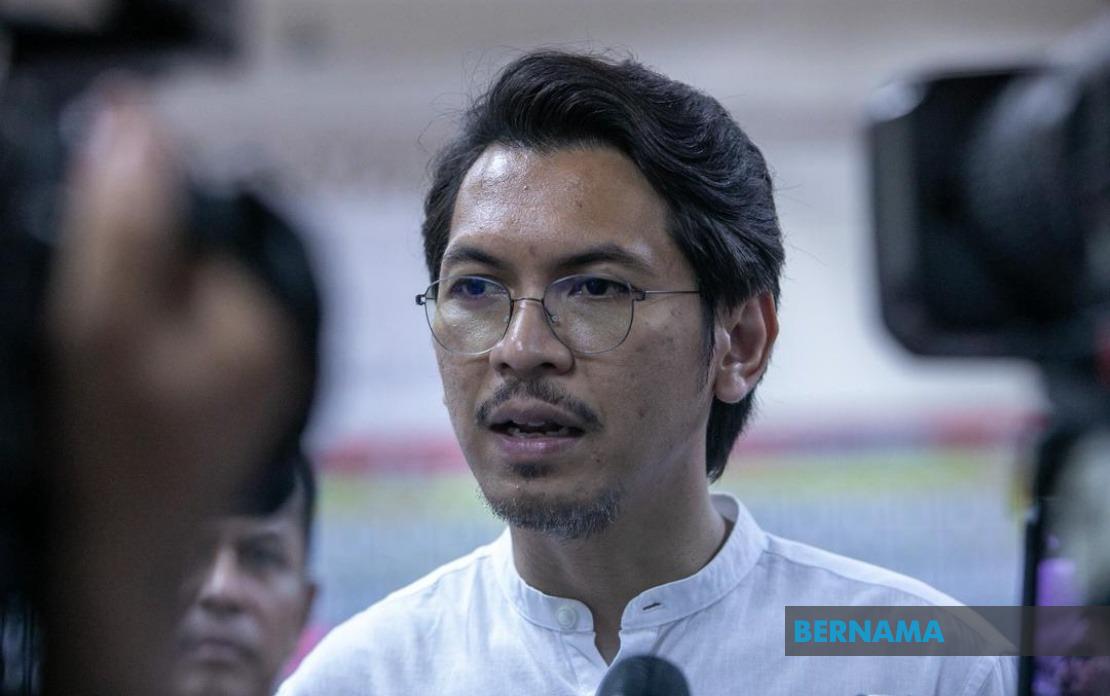
A memorandum of understanding between the United States and Iran on resolving their standoff carries significant implications for Malaysia's energy security and inflation outlook, according to Muhammad Kamil Abdul Munim, Political Secretary to the Minister of Finance. Speaking at a government ceremony in Kuala Kangsar on June 19, he outlined how the tentative peace framework could reshape regional oil dynamics, though he cautioned against expecting immediate relief at the pump.
The potential agreement represents a watershed moment for global energy markets. The Strait of Hormuz, one of the world's most critical shipping chokeways, has been a flashpoint of geopolitical tension that disrupted energy flows and raised insurance premiums for vessels navigating the region. A stabilization of US-Iran relations would remove a significant risk premium that has been baked into crude prices and freight rates. For Malaysia, which imports most of its fuel needs and relies on stable energy costs to maintain economic competitiveness, such developments carry outsized weight.
Yet Muhammad Kamil stressed that expectations must be tempered. Global oil price stability cannot materialize overnight, he explained, because the crisis has left lasting scars on supply chains. Even if tensions ease immediately, the accumulated costs incurred throughout the confrontation—elevated insurance premiums, diverted shipping routes, and higher transportation expenses—will continue to weigh on energy markets for months. This lag between political resolution and economic normalization is a pattern seen repeatedly in commodity markets, where sentiment shifts faster than physical realities.
Prime Minister Datuk Seri Anwar Ibrahim had previously expressed optimism about the negotiations, though he acknowledged that a final, binding agreement between Washington and Tehran must be concluded within 60 days. This timeline underscores the provisional nature of the current understanding and the risk that negotiations could falter, leaving uncertainty intact. For Malaysian policymakers, this ambiguity necessitates contingency planning rather than premature celebration.
The Malaysian government has already taken defensive measures to shield consumers from energy price volatility. Most notably, the subsidy on RON95 petrol has been locked at RM1.99 per litre, a policy that diverges from many regional neighbours who have allowed fuel prices to float more freely. This price cap serves multiple objectives: it protects low-income households from sudden shocks, supports small businesses and transport operators, and maintains political stability by avoiding the resentment that fuel price hikes typically provoke. However, such subsidies impose a fiscal burden on the state budget, making their sustainability contingent on global market conditions improving.
Beyond the immediate fuel subsidy framework, Muhammad Kamil indicated the government is preparing broader support mechanisms. He signalled that the Economic Action Council will periodically reassess whether additional relief measures are warranted over the next four to six months—a timeframe that aligns with expectations for how long elevated logistics costs will persist. This suggests the government is thinking in terms of a graduated normalization rather than a sharp V-shaped recovery.
The BUDI MADANI initiative, which provides targeted petrol subsidies capped at 200 litres monthly, exemplifies Malaysia's shift toward means-tested rather than universal fuel subsidies. This approach is fiscally prudent but administratively complex and sometimes politically contentious, as it raises questions about equity and implementation. Muhammad Kamil indicated the government would re-evaluate whether to expand this quota based on how global oil markets behave, reflecting a pragmatic willingness to adjust course as circumstances evolve.
Beyond the immediate energy equation, Muhammad Kamil touched on the government's broader strategic calculus. Prime Minister Anwar's planned visit to Russia was framed as part of a diversification strategy, particularly in energy supplies and resources. This reflects Malaysia's recognition that relying on a single or narrow set of energy sources creates vulnerabilities. Russia, despite international sanctions and geopolitical isolation, remains a major hydrocarbon producer with substantial reserves. For Malaysia, engagement with Russia signals a desire to maintain flexible diplomatic and economic relationships that transcend Western-centric alignments—a posture consistent with Malaysia's long-standing non-aligned tradition.
The energy security dimension of Malaysia's Russia engagement carries particular weight in the context of potential US-Iran détente. If oil flows normalize through the Strait of Hormuz, the strategic importance of diversifying supply sources becomes somewhat less acute but no less prudent. Over the medium to long term, Malaysia will need reliable energy partnerships across multiple geographies to insulate itself from regional shocks. Engagement with Russia on energy cooperation, even amid broader geopolitical tensions, reflects this calculus.
For Malaysian businesses and consumers, the implications are mixed. If the US-Iran agreement holds and negotiators reach a final accord within the stated 60-day window, global oil prices should trend downward, providing some relief to companies and households already grappling with elevated living costs. However, the lag between political agreement and market normalization means that benefits will accrue gradually rather than dramatically. The government's subsidy and support mechanisms appear calibrated to navigate this transition period.
The broader context worth noting is that energy markets remain vulnerable to numerous other shocks beyond US-Iran tensions—from weather disruptions to geopolitical flare-ups elsewhere or demand fluctuations from slowing global growth. A US-Iran agreement, while meaningful, addresses only one source of volatility. Malaysia's policymakers will need to maintain flexibility and vigilance on multiple fronts to ensure energy security and price stability remain within acceptable parameters for economic health and social stability.
%22%2F%3E%3C%2Fpattern%3E%3C%2Fdefs%3E%3Crect%20width%3D%22100%25%22%20height%3D%22100%25%22%20fill%3D%22url(%23phs7qdg)%22%2F%3E%3Crect%20width%3D%22100%25%22%20height%3D%22100%25%22%20fill%3D%22url(%23phs7qdp)%22%2F%3E%3Ctext%20x%3D%2250%25%22%20y%3D%2250%25%22%20text-anchor%3D%22middle%22%20dominant-baseline%3D%22central%22%20fill%3D%22rgba(255%2C255%2C255%2C0.95)%22%20font-family%3D%22Georgia%2C%20'Times%20New%20Roman'%2C%20serif%22%20font-weight%3D%22700%22%20font-size%3D%22151%22%20letter-spacing%3D%22-0.02em%22%3EPerikatan%3C%2Ftext%3E%3C%2Fsvg%3E)