Malaysia's long-awaited Port Klang 3 development remains firmly on the government's infrastructure agenda, with Transport Minister Anthony Loke signalling that groundbreaking could occur within the current calendar year if outstanding property matters are satisfactorily addressed. The declaration marks a significant milestone for a project that has undergone multiple reviews and planning cycles, suggesting that the nation's maritime expansion strategy is entering a more concrete phase after years of preliminary work.
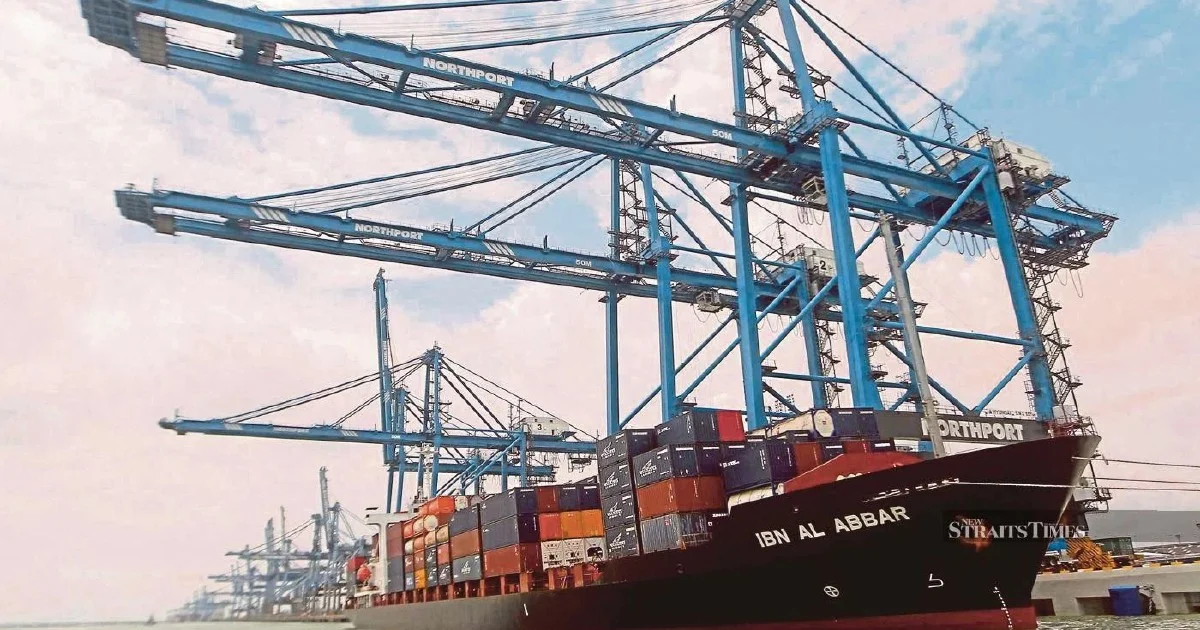
The Port Klang Authority initiative ranks among Southeast Asia's most strategically important port augmentations, designed to accommodate rapidly growing container volumes and position Malaysia as a critical node in regional and global supply chains. As the country's primary maritime gateway, Port Klang currently processes the bulk of Malaysia's containerized trade, and capacity constraints have become increasingly apparent as regional commerce recovers and intensifies post-pandemic. Port Klang 3 represents the authority's response to these mounting pressures, with the facility intended to significantly enhance throughput capabilities and maintain competitive advantages against rival ports across the region.
Loke's remarks underscore the administration's determination to accelerate infrastructure projects that underpin economic competitiveness. The port expansion aligns with broader national development priorities that recognize maritime commerce as fundamental to Malaysia's prosperity, particularly given the country's geographic positioning along one of the world's busiest shipping corridors. Enhanced port capacity translates directly into reduced vessel waiting times, lower logistics costs for exporters and importers, and improved attractiveness for shipping lines considering Southeast Asian hubs for regional distribution networks.
However, the land resolution challenge highlighted by the Transport Minister reflects the complex intersection of federal transport policy with state-level property governance that characterizes major infrastructure development in Malaysia's federal system. Selangor, as the location of Port Klang, retains significant authority over land matters, requiring harmonized coordination between Transport Ministry objectives and state government interests. These negotiations encompass not merely the acquisition of suitable acreage but also considerations around compensation, alternative land utilization, and environmental clearances that state authorities must scrutinize.
The timeline for bringing Port Klang 3 online carries implications extending well beyond the port operator itself. Shipping lines, freight forwarders, warehouse operators, and the constellation of port-adjacent service providers all depend on predictable capacity expansion to plan their own investments and operational strategies. Similarly, Malaysia's manufacturing exporters—particularly those in sectors like electronics, petrochemicals, and automotive components—require reliable, efficient maritime gateways to remain competitive in international markets. Delays in port expansion can inadvertently push cargo volumes toward competing ports in Singapore, Thailand, or Indonesia, eroding Malaysia's share of regional trade flows.
The particular urgency surrounding Port Klang 3 reflects structural shifts in global trade patterns and the intensifying competition for container traffic that characterizes modern port operations. South Chinese ports, while geographically closer to major manufacturing centres, face congestion and rising operational costs that create opportunities for well-positioned Malaysian facilities. Simultaneously, supply chain diversification initiatives by multinational corporations, partly driven by geopolitical considerations and trade tensions, are creating demand for alternative Southeast Asian logistics hubs. Port Klang, with its established infrastructure, skilled workforce, and strategic location between the Indian Ocean and the South China Sea, stands to capture disproportionate benefits from these structural shifts—provided capacity constraints do not impede its ability to handle surging volumes.
Loke's confirmation that land matters are progressing toward resolution signals that state-federal negotiations have reached productive stages, though the minister's qualification—that construction depends on successful final settlement—suggests important details remain unresolved. The distinction between government projections and actual groundbreaking dates has historical significance in Malaysian infrastructure contexts, where numerous projects have experienced delays between announcement and commencement. Nonetheless, the explicit mention of potential construction within the current year, rather than more distant timeframes, suggests substantive progress rather than aspirational rhetoric.
The Port Klang 3 project also carries workforce development implications for Malaysia's logistics and maritime sectors. Port operations require specialized labor, from heavy equipment operators to container handling technicians, and expanding capacity typically drives employment growth in complementary services. Training institutions and vocational colleges have begun aligning curricula with anticipated demand from major port developments, recognizing that infrastructure investments generate human capital opportunities alongside physical asset expansion.
International shipping lines monitoring port development across the region will likely view Loke's statement as an encouraging signal regarding Malaysia's commitment to maintaining competitive maritime infrastructure. Several major container shipping alliances have expressed interest in establishing permanent berthing arrangements and feeder service networks at expanded Malaysian ports, but such decisions depend on demonstrated capacity availability and operational reliability. Port Klang 3's advancement thus carries reputational consequences for Malaysia's broader infrastructure governance and investor confidence.
As negotiations with Selangor authorities continue, the Transport Ministry faces the challenge of balancing development urgency with legitimate state concerns regarding land utilization, environmental impact, and community considerations. Successful resolution will depend not on either party overwhelming the other through political pressure but on identifying creative solutions that address underlying interests of both government levels while maintaining public support for the project. Whether construction indeed begins this year will serve as a concrete measure of how effectively Malaysia's federal system can mobilize large-scale infrastructure development when coordinated action is required.