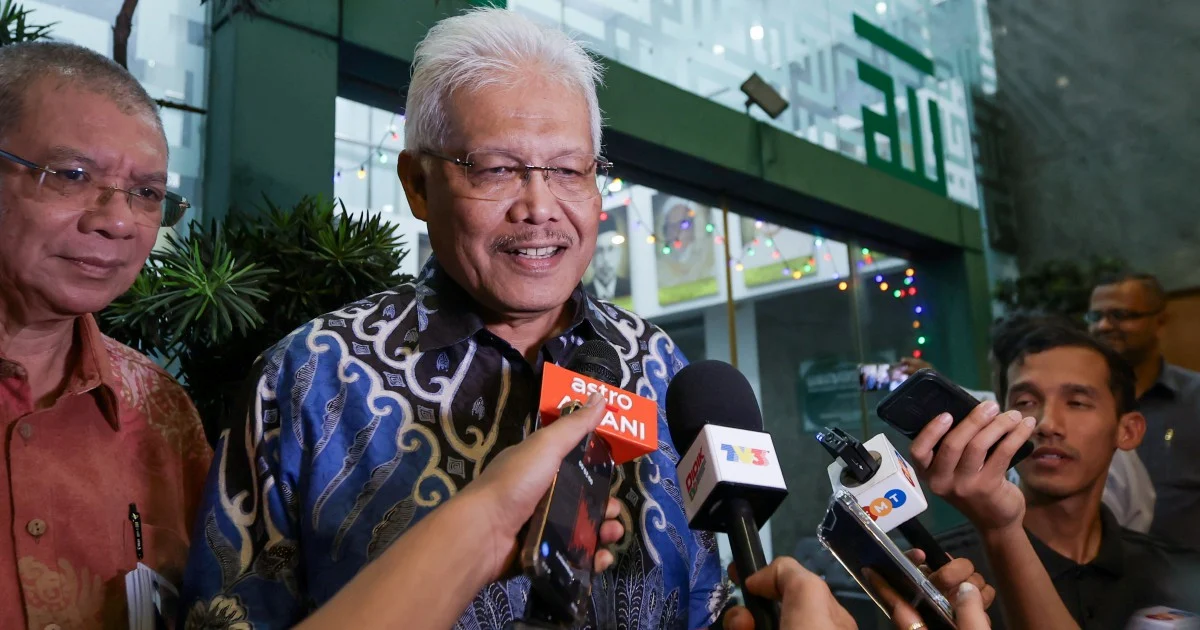
Datuk Seri Takiyuddin Hassan, serving as chief whip for the Perikatan Nasional coalition, has submitted official documentation to the Speaker of the Dewan Rakyat's office to formally recognise Datuk Seri Hamzah Zainudin's reappointment to the position of opposition leader. The procedural notification represents a key administrative step in confirming parliamentary leadership roles and establishes the formal record of the appointment within the legislature's institutional framework.
The reappointment underscores Perikatan Nasional's consolidation of its opposition stance following the 2023 general election, which restructured Malaysia's political landscape significantly. The move reflects the coalition's internal alignment and its strategic positioning as it navigates parliamentary dynamics in the current legislative term. Hamzah Zainudin, a senior figure within the opposition benches, brings considerable legislative experience to the role, having held various ministerial and parliamentary positions throughout his political career.
This formal notification carries procedural weight within parliament's governance structure, as the Speaker's office maintains official records of all parliamentary leadership positions. The documentation ensures transparency and provides the legislative body with verified confirmation of who holds responsibility for opposition coordination and representation. Such notifications follow parliamentary convention and establish the official chain of command within the opposition caucus.
Hamzah's reappointment signals continuity in opposition leadership at a time when parliamentary stability and clear institutional roles carry significant importance for Malaysia's governance. The opposition leader's position carries substantial responsibilities, including coordinating legislative responses to government bills, articulating alternative policy positions, and mobilising opposition members for parliamentary business. These functions prove essential to the checks-and-balances system that underpins parliamentary democracy.
For Malaysian readers, the formal confirmation of opposition leadership carries implications beyond procedural formality. The clarity of opposition structure enables more effective parliamentary scrutiny of government actions and policy decisions. When opposition leadership positions are unambiguous and officially confirmed, the legislature functions more efficiently, as members understand reporting lines and can coordinate positions effectively during legislative sessions.
The Perikatan Nasional coalition's decision to reappoint Hamzah reflects its confidence in his continued stewardship during a period when opposition unity remains a complex balancing act. Multiple parties comprise the coalition, each with distinct interests and constituencies, making the opposition leader's coordinating role particularly demanding. Hamzah's retention suggests the coalition's satisfaction with his performance in managing these diverse elements while maintaining coherent opposition strategies.
Within the broader Southeast Asian context, Malaysia's opposition structures and parliamentary procedures remain relatively well-defined and transparent compared to some regional counterparts. The formal notification process exemplifies this institutional clarity, allowing observers to track leadership changes and understand parliament's organisational structure with precision. This transparency strengthens democratic accountability and public confidence in legislative institutions.
Takiyuddin's submission of the notification demonstrates the procedural discipline that PN maintains regarding parliamentary affairs. The chief whip position itself represents a crucial coordinating role, responsible for ensuring coalition members' attendance during parliamentary sessions and managing parliamentary tactics. By promptly submitting reappointment notifications, the chief whip ensures that all administrative requirements are met and avoids potential disputes over legitimacy or procedures.
The opposition leader role in Malaysia's Westminster-derived parliamentary system carries specific expectations and privileges. Opposition leaders typically receive extended speaking time during parliamentary debates, exercise significant influence over opposition calendar items, and serve as the primary spokesperson articulating opposition perspectives on major national issues. Hamzah's formal reappointment restores these institutional prerogatives and establishes his official authority to exercise these functions throughout the current parliamentary session.
As Malaysia continues managing its political transition following recent electoral results, the clarity provided by formally confirming opposition leadership positions becomes increasingly valuable. Parliamentary effectiveness depends substantially on members understanding the institutional framework, the lines of responsibility, and the official capacity in which various leaders operate. The Speaker's office, by maintaining comprehensive records of such appointments, preserves the institutional memory that ensures parliamentary continuity and proper functioning across multiple administrations.