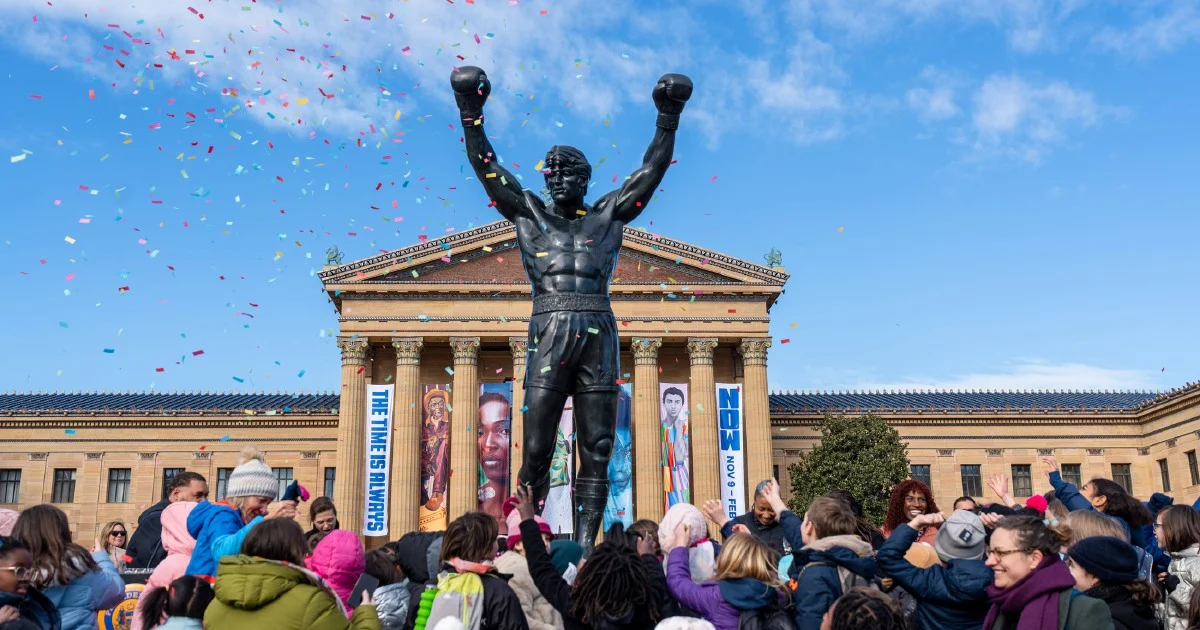
Ahead of France's World Cup campaign, supporters have been explicitly cautioned against a tradition that has become something of a superstitious minefield in Philadelphia: adorning the city's cherished Rocky Balboa statue with national colours. The warning, issued on Saturday, stems from a curious pattern of sporting mishaps that have supposedly befallen teams whose passionate fans engaged in the practice of dressing the iconic monument.
The Rocky statue, located in Philadelphia and immortalizing the fictional boxer from the beloved film series, has acquired an unexpected reputation as a potential source of athletic bad luck when tampered with by travelling supporters. What began as a lighthearted tradition among visiting football fans has evolved into a cautionary tale circulating through World Cup contingents, raising questions about how superstition influences modern sports culture and fan behaviour at major tournaments.
The phenomenon reflects deeper patterns in sports fandom across the globe. Superstitions, whether rooted in folklore or constructed through selective memory, play a significant role in how supporters experience tournaments. For French fans, already carrying the weight of expectations for their national team, additional warnings about potentially jinxing their campaign add another layer of psychological complexity to the pre-tournament atmosphere. The message essentially turns a spontaneous celebration into a calculated risk that could theoretically undermine collective hopes.
Philadelphia's Rocky monument has become an unofficial checkpoint for international sports delegations visiting the city. The statue's location and cultural significance make it an attractive target for supporters seeking memorable photo opportunities and symbolic gestures of team spirit. However, the accumulating narrative of misfortune creates a deterrent effect—one that authorities and local observers are now actively promoting to prevent the cycle from continuing.
From a psychological perspective, such warnings can become self-fulfilling prophecies. When teams and their supporters are explicitly told that a particular action might bring bad luck, the anxiety generated by potential non-compliance can paradoxically influence performance and morale. French supporters now face an internal conflict: should they honour the tradition, risking supernatural consequences, or resist the urge to leave their mark on a symbol of American sports culture?
The irony lies in how prohibition itself can amplify the perceived power of the curse. By officially warning against the practice, authorities inadvertently validate the superstition, suggesting that the threat is serious enough to warrant preventative action. This dynamic transforms a local quirk into a legitimate concern within the competitive atmosphere of international football.
For Malaysian and Southeast Asian observers, the Rocky statue phenomenon offers an interesting window into how Western sports culture intertwines with superstition and ritual. Similar patterns exist throughout Asian football, where charms, omens, and symbolic gestures influence fan behaviour before crucial matches. The French situation demonstrates that superstition transcends cultural boundaries, affecting supporters from sophisticated, secular societies just as powerfully as traditional beliefs influence fans elsewhere.
The practical implications for tournament organizers are significant. Managing crowd behaviour at monuments and cultural landmarks becomes more complex when supernatural narratives attach meaning to fan interactions. Authorities must balance respecting spontaneous expressions of team pride with preventing damage to valued civic property and managing the psychological dimension of sporting competition.
World Cup hosting presents opportunities for cultural exchange, but also moments of friction when visiting supporters treat local landmarks as extensions of their team's identity. The Rocky situation exemplifies how tourism, fandom, and superstition converge in unexpected ways. Philadelphia's relationship with its most famous cultural export—a fictional boxer who has somehow acquired real consequences in international sports folklore—illustrates how cities become entangled in the global theatre of major tournaments.
Whether the curse carries genuine predictive power remains empirically unverifiable, yet its existence as a shared belief creates tangible effects on behaviour and morale. French supporters receiving this warning must now navigate the complex intersection of tradition, superstition, and competitive anxiety. Their choice to respect or ignore the cautionary advice will itself become part of the tournament narrative, potentially influencing how they process their team's eventual performance.
The broader lesson extends beyond football. In an era when rational analysis dominates sports preparation and team strategy, the persistence of superstitious thinking reveals the enduring human need for meaning-making and ritual, particularly during moments of high stakes and collective identity. For France's campaign at the World Cup, the Rocky statue becomes more than a tourist attraction—it transforms into a symbol of the psychological complexities that accompany international sporting competition, where belief systems and supernatural anxieties compete alongside tactical formations and player fitness.
As the tournament approaches, French fans will make individual decisions about whether to approach the statue, and their collective choices will add another layer to the evolving mythology surrounding Philadelphia's most famous sporting monument. The warning has been issued, the precedent established, and now the burden of decision rests with supporters themselves.