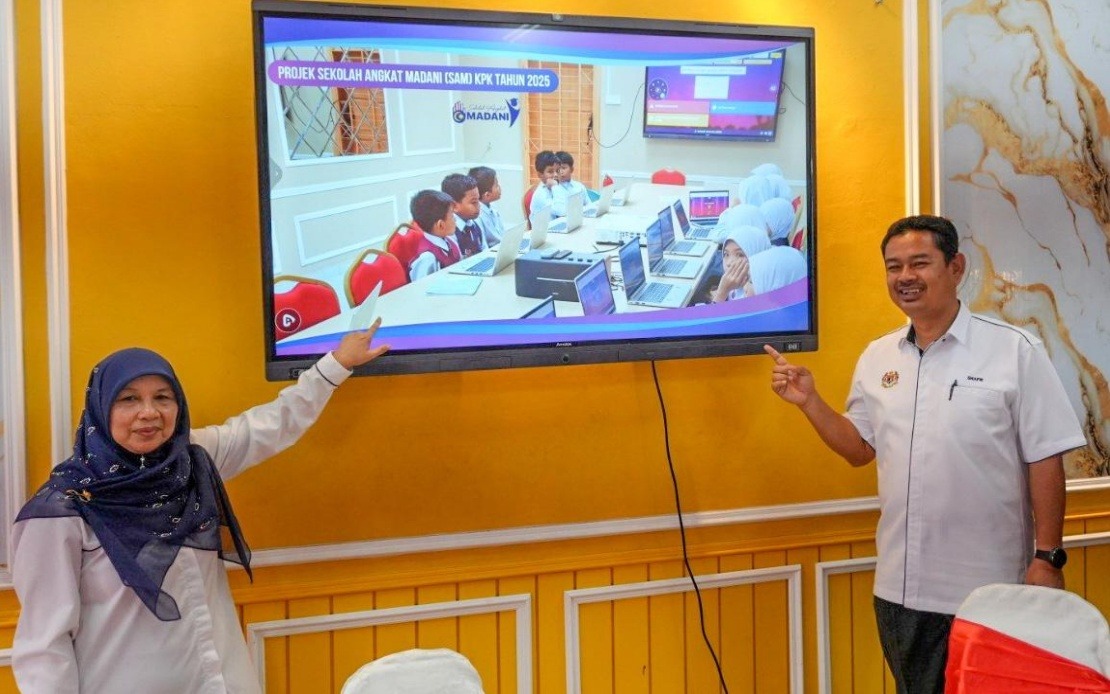
The Ministry of Plantation and Commodities has invested RM100,000 in upgrading SK Bendang Kering, a primary school in Kuala Kangsar, Perak, as part of a broader initiative to strengthen educational infrastructure in rural communities. The handover ceremony, held in Ipoh on June 19, was officiated by Shafie Taib, the ministry's deputy secretary-general for Strategic Planning and Management, underscoring the government's commitment to levelling the educational playing field across the nation.
The funding represents a targeted intervention in a school adoption programme coordinated by the Malaysian Rubber Board, which serves as the implementing partner for this component of the Ministry of Plantation and Commodities' educational development strategy. This approach, where government agencies adopt specific schools, has become an increasingly common method for distributing resources beyond the traditional federal budgeting mechanisms, allowing individual ministries to address infrastructure deficits in their designated regions.
The physical infrastructure improvements funded through this allocation demonstrate a comprehensive approach to modernising the learning environment. The assembly area and main hall have undergone renovation, while dedicated reading corners have been established to encourage literacy engagement among students. Preschool classrooms—often neglected in rural upgrades—have received particular attention, reflecting growing recognition of early childhood education's foundational importance. The investments extend beyond basic renovation, incorporating air conditioning systems that create more comfortable conditions for learning and teaching, especially critical in Malaysia's tropical climate where heat and humidity can impair concentration and classroom productivity.
Technology integration forms a significant pillar of the upgrade. Interactive smartboards have been installed throughout the facility, enabling educators to employ modern pedagogical methods that engage students through multimedia content and interactive learning modules. This technological injection addresses a persistent rural disadvantage, where schools historically lack access to the same educational tools available in urban counterparts. Educational signage has also been enhanced, creating an environment that reinforces learning objectives throughout the campus. Complementing these additions, new classroom furniture provides ergonomic support for young learners, a seemingly modest but meaningful improvement that affects daily comfort and learning concentration.
Beyond physical plant improvements, the programme emphasises academic acceleration and human development. An academic performance scheme targeting Malay, English, Science, and Mathematics—the core subjects determining student trajectory in the Malaysian education system—has been introduced with incentive structures to reward excellence. This focused approach recognises that infrastructure alone cannot drive academic outcomes; motivation and targeted support are equally essential. Students achieving outstanding results receive recognition and encouragement, fostering a culture of academic aspiration within the school community.
Character development and leadership cultivation represent the programme's equally important dimension. The Student Leadership Motivation Camp and Student Talent Development Camp represent investments in soft skills and personal growth that extend beyond conventional academic metrics. In an era where employers increasingly value leadership, communication, and creative problem-solving abilities, these programmes position students from rural schools to compete effectively in competitive tertiary and employment markets. The emphasis on producing a generation that is not merely knowledgeable but also skilled and competitive reflects contemporary understanding of what constitutes genuine educational development.
The selection of SK Bendang Kering carries symbolic weight in national educational policy discourse. Rural schools frequently suffer from chronic under-resourcing, teacher retention challenges, and limited access to contemporary learning resources. By singling out this Kuala Kangsar institution, the ministry signals that rural students deserve parity with urban peers in facility standards and educational quality. This adoption model potentially serves as a replicable template, where sectoral ministries leverage their mandates and resources to address education gaps in their operational areas.
The initiative aligns with Malaysia's broader human capital development strategy, particularly relevant given regional economic competition. Southeast Asian neighbours are intensifying investments in educational infrastructure and quality, and Malaysia's ability to provide competitive educational experiences across all communities—not merely in privileged urban zones—will influence workforce competitiveness. Rural students who receive quality education and facility access are more likely to pursue higher qualifications and contribute productively to the economy, reducing rural-urban skill disparities that currently constrain development.
The Malaysian Rubber Board's role as implementing agency exemplifies how sectoral agencies can contribute meaningfully to social development beyond their primary commercial mandates. This model demonstrates that corporate-government partnerships need not be limited to urban or industrial contexts but can extend genuine development benefits to peripheral communities. The arrangement also distributes implementation responsibility beyond the Education Ministry, potentially accelerating project completion and enabling more tailored approaches suited to specific school contexts.
Looking forward, the success of SK Bendang Kering's transformation will likely influence whether the Ministry of Plantation and Commodities and other agencies expand their school adoption commitments. Should the initiative demonstrate measurable improvements in academic performance, student retention, and community satisfaction, it could catalyse similar programmes across the government apparatus. For Malaysian educators and policymakers, this intervention represents an acknowledgment that closing educational disparities requires sustained investment, multi-dimensional support spanning facilities and human development, and genuine commitment to ensuring that geographical location does not determine educational opportunity.