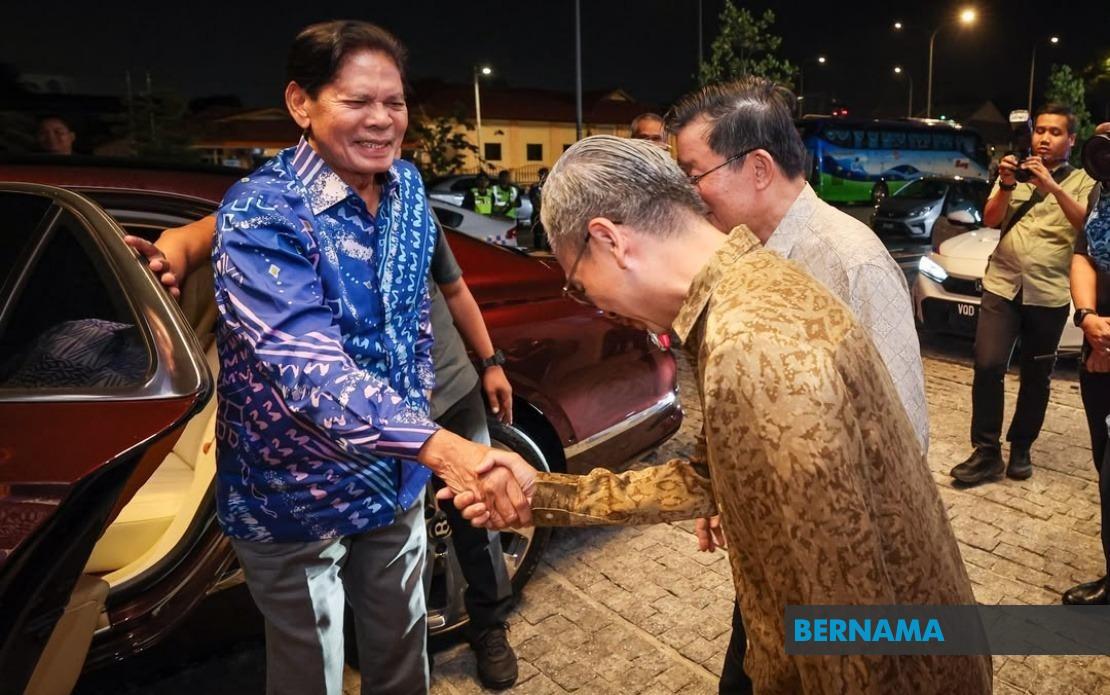
Penang Governor Tun Ramli Ngah Talib brought together nearly 350 journalists, editors and broadcasting executives from across Southeast Asia at a state dinner in Butterworth on June 19, honouring the media's indispensable contribution to national progress. The gathering, organised in advance of National Journalists' Day (HAWANA) 2026, reflected growing regional momentum around professional journalism and media standards, with delegates arriving from Malaysia, Timor-Leste, Indonesia and other ASEAN nations to participate in the landmark conference.
The event showcased the stature of Malaysia's media establishment, drawing top leadership from the country's most influential news organisations. In attendance were Penang Chief Minister Chow Kon Yeow and Communications Minister Datuk Fahmi Fadzil, alongside heads of Malaysia's largest media groups including editors and executives from Media Prima Bhd, Sin Chew Daily, Star Media Group, Astro Awani and Daily Express Sabah. This cross-section of newsroom leadership underscored the government's commitment to strengthening ties with the journalism community at a time when media credibility faces mounting international scrutiny.
International representation at the dinner signalled the expanding profile of HAWANA as a forum for professional exchange across the region. Attending were senior journalists and agency officials from neighbouring countries, including the President of Timor-Leste's news agency TATOLI, Noemio Mateus Soares Falcao, and ANTARA Bureau Chief Rangga Pandu Asmara Jingga from Indonesia. This diplomatic dimension reflects an emerging regional conversation about journalism standards, digital transformation and the role of media in governance—issues that resonate particularly for Southeast Asian newsrooms navigating similar pressures around misinformation and political polarisation.
The centrepiece event, HAWANA 2026, opens June 20 at the PICCA Convention Centre in Butterworth, where approximately 1,000 journalists from Malaysia and several ASEAN countries will convene. Prime Minister Datuk Seri Anwar Ibrahim will officiate the proceedings, signalling executive-level endorsement of the conference's central theme: 'Media Integrity Strengthens Credibility'. This framing arrives amid regional concerns about falsehoods and propaganda, making the choice of theme particularly timely for Malaysian readers navigating an increasingly complex information ecosystem.
The three-day gathering represents one of the region's largest professional journalism conferences, drawing practitioners from print, broadcast and digital media. For Malaysian journalists, the event provides a rare opportunity to engage with peers across Southeast Asia on shared challenges—including economic pressures on newsrooms, the rise of artificial intelligence in reporting, and balancing editorial independence with commercial viability. The scale of attendance also underscores journalism's institutional weight in Malaysia despite the sector's well-documented financial strains.
Parallel to the main conference, organisers are launching the RIUH Pi HAWANA Carnival, a three-day public-facing festival that opens June 19 at the same venue. Expected to draw approximately 30,000 visitors, the carnival bridges professional journalism with public engagement through interactive workshops and creative programming. This approach—combining industry-focused professional development with grassroots media literacy—reflects broader recognition that rebuilding journalistic credibility requires both improved professional standards and greater public understanding of journalism's role.
The carnival programme features more than 24 Malaysian creative brands alongside 20 food and beverage vendors, creating a festival atmosphere that makes media and creative industries accessible to general audiences. The inclusion of 16 stage performances by local artists including Bunkface, Masdo and other contemporary acts suggests organisers are deliberately positioning journalism not as an isolated professional domain but as part of Malaysia's broader cultural and creative ecosystem. This cultural framing may help younger audiences develop appreciation for quality journalism as essential infrastructure rather than a declining legacy industry.
The Communications Ministry's prominent role in organising HAWANA, with Bernama serving as implementing agency, reflects government recognition that media stability serves broader national interests. For Malaysian readers, this partnership suggests official policy emphasis on strengthening journalistic institutions, though questions about editorial independence and state influence on coverage remain perennial tensions in Malaysian media discourse. The ministry's involvement does signal commitment to supporting the journalism sector during economically difficult times.
Tun Ramli's hosting of the gala dinner carries particular significance for Penang, positioning the state as a hub for intellectual discourse and professional exchange within Malaysia. As a venue for convening regional media leadership, Penang reinforces its image as an open, cosmopolitan jurisdiction—an identity Governor Ramli has cultivated through hosting international forums and cultural exchanges. For business and tourism stakeholders in the state, the HAWANA conference represents an opportunity to demonstrate Penang's capacity to host sophisticated, large-scale professional gatherings.
The international participation, particularly from Timor-Leste and Indonesia, hints at embryonic regional media collaboration frameworks. ASEAN member states increasingly recognise journalism standards as relevant to regional stability and economic cooperation, though formal mechanisms for coordinating press freedom advocacy remain limited. Malaysian participation in these conversations positions the country as a potential leader in articulating standards for responsible journalism across the region, though this must be balanced against critiques of Malaysia's own media environment.
For Malaysian newsrooms facing ongoing economic pressures and the existential challenge of digital disruption, HAWANA 2026 arrives as a moment of professional affirmation. The gathering validates journalism as socially essential while providing forums to discuss survival strategies and business model innovation. Editors and reporters attending will encounter colleagues grappling with identical problems—declining print circulation, competition from social media, audience fragmentation—suggesting collective learning opportunities around sustainable journalism.
The conference also arrives amid broader Southeast Asian conversations about misinformation, election integrity and the role of independent media in democracy. With Malaysia having navigated contested elections and polarised public discourse in recent years, the conference theme of media integrity carries urgent domestic relevance. Attendees will likely exchange experiences and strategies for maintaining editorial standards while operating in politically charged environments—conversations that address fundamental pressures affecting Malaysian newsrooms.