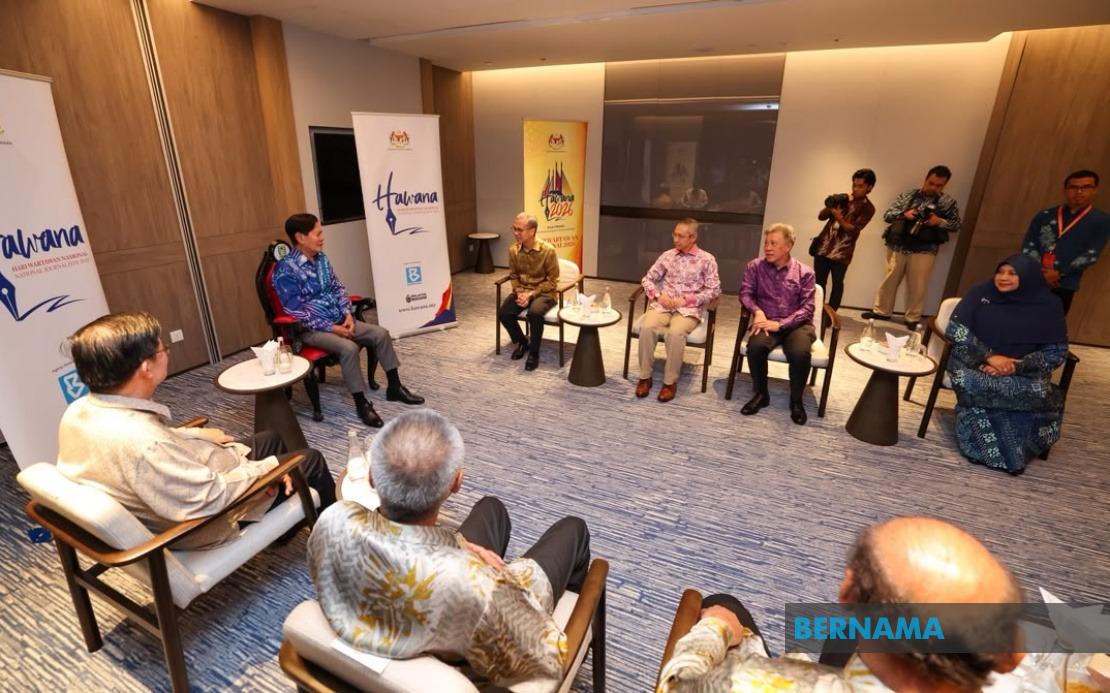
Datuk Fahmi Fadzil, Malaysia's Communications Minister, has made an urgent appeal to journalists and media organisations throughout Southeast Asia to deepen their collaborative efforts in tackling the growing challenge of misinformation. Speaking at a state government dinner in Butterworth on June 19 in conjunction with National Journalists' Day celebrations, Fahmi emphasised that cross-border media partnerships have become essential for maintaining the integrity of information flows in an increasingly interconnected region.
The appeal comes at a time when news cycles have accelerated dramatically and competing narratives vie relentlessly for public attention. Fahmi articulated a vision of journalism that remains anchored in truth, integrity and professional responsibility—qualities he suggests have become even more vital as information spreads across digital platforms at unprecedented speeds. His remarks underscore a fundamental tension in modern media: while technology has democratised information access, it has simultaneously created vulnerabilities that bad actors exploit to spread false or misleading content.
Fahmi framed the role of media in distinctly systemic terms, describing journalism as a connective tissue that links citizens to reality and creates communication channels between policymakers and those who implement their decisions. Beyond these operational functions, he positioned accurate reporting as essential infrastructure for public understanding. This perspective reflects broader regional concerns about how misinformation can undermine social cohesion and democratic processes, particularly in diverse, multi-ethnic societies like those found throughout ASEAN.
The HAWANA 2026 celebration, which Penang is hosting, serves purposes beyond ceremonial recognition of the journalism profession. According to Fahmi, the event functions as a platform to reinforce commitment to elevating journalism standards during a period of significant professional challenges. The choice to hold this regional gathering in Penang signals Malaysia's intention to position itself as a convener for discussions about media quality and professional standards across Southeast Asia. This geographical and symbolic choice carries weight, as Penang has historically been an important media hub within Malaysia.
A key dimension of Fahmi's call involves knowledge-sharing and the exchange of best practices among media communities. This approach acknowledges that different ASEAN nations face contextually specific challenges—from resource constraints in developing media organisations to varying regulatory environments and digital literacy levels among audiences. By formalising mechanisms for professional exchange, media outlets can learn from one another's successes and failures rather than each organisation independently navigating similar obstacles.
The attendees at the dinner reflected the official importance placed on this initiative. The gathering included Penang Chief Minister Chow Kon Yeow, Bernama chairman Datuk Seri Wong Chun Wai, and representatives from ASEAN Communications Ministers, suggesting this issue commands attention at both national and regional ministerial levels. This high-level participation indicates that governments throughout Southeast Asia view media collaboration as relevant not merely to journalism itself but to broader questions of regional stability and prosperity.
For Malaysia specifically, the initiative aligns with broader strategic objectives. As a middle-income nation with sophisticated media infrastructure and significant digital adoption, Malaysia can potentially serve as a model for media development while learning from other ASEAN neighbours' experiences. The country's own vulnerabilities to misinformation—particularly during elections and around sensitive social issues—make investment in robust regional information standards directly relevant to domestic interests.
The challenge Fahmi identifies extends beyond simple falsehoods to encompass the structural problem of information abundance coupled with uncertainty about credibility. When audiences face overwhelming information flows and lack clear signals about which sources merit trust, misinformation flourishes not necessarily because people are gullible but because discerning truth becomes cognitively demanding. Stronger regional collaboration could theoretically address this by establishing commonly understood quality markers and verification standards that media organisations across ASEAN could adopt.
However, meaningful collaboration faces real obstacles that Fahmi's remarks do not explicitly address. Media organisations compete for audience attention and advertising revenue, creating tensions that can undermine collaborative efforts. Different governments throughout ASEAN maintain varying relationships with media freedom, and some state actors view certain types of information control as legitimate policy tools. Additionally, resource constraints affect many regional outlets, making participation in collaborative initiatives potentially burdensome for smaller publications.
The framing of misinformation as a regional rather than purely national problem represents an important conceptual shift. In an era of digital information networks, falsehoods originating in one ASEAN country can rapidly spread across borders, affecting public discourse in neighbouring nations. A coordinated regional response potentially offers economies of scale in fact-checking infrastructure, training programmes and audience education initiatives that individual nations might struggle to finance independently.
Fahmi's appeal implicitly recognises that journalism's traditional gatekeeping role has been fundamentally disrupted. Media organisations can no longer simply control what information reaches public audiences; instead, they operate within an environment where anyone with internet access can broadcast content to potentially millions. In this context, establishing professional networks and shared commitment to standards becomes a form of collective self-regulation that might complement or partially substitute for government regulation.
The Malaysian government's willingness to host and champion this initiative also reflects pragmatic recognition that misinformation poses genuine risks to social stability and informed democratic participation. By positioning itself as a leader in promoting regional media collaboration, Malaysia potentially enhances its diplomatic standing while addressing genuine domestic concerns about information integrity. The success of such initiatives, however, ultimately depends on whether individual media organisations perceive sufficient mutual benefit to justify the organisational effort required for meaningful collaboration across languages, regulatory systems and competitive contexts.