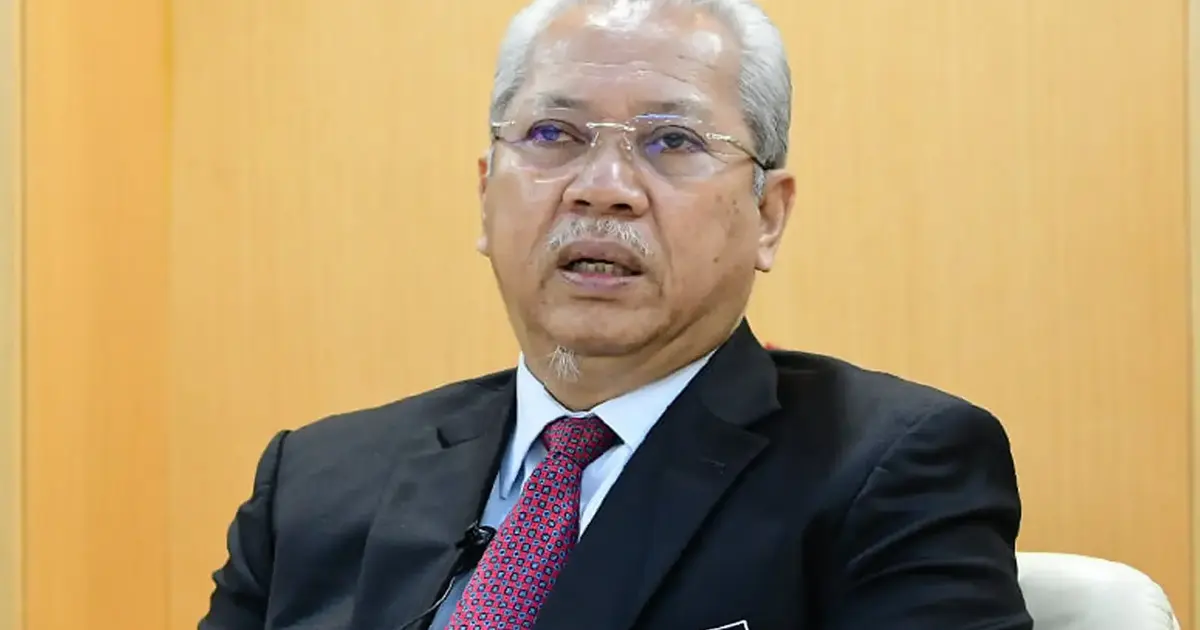
Perikatan Nasional is preparing to tackle a significant internal dispute over branding rights and parliamentary seat distributions at a critical Supreme Council meeting scheduled for Monday. Information chief Annuar Musa has indicated that the session will serve as the definitive forum for resolving contested matters that have threatened coalition cohesion in recent weeks, with particular focus on whether Bersatu can continue utilising the PN logo and its ongoing membership status within the broader political alliance.
The logo controversy has emerged as a focal point of tension within the coalition, representing deeper concerns about party autonomy and the terms of PN's operational structure. Bersatu's position within the alliance has come under scrutiny, with questions surrounding its eligibility to deploy the coalition's electoral symbol and the conditions governing its continued participation. These issues carry substantial implications for the credibility and unified presentation of PN ahead of state-level contests that will test the alliance's grassroots support and organisational capacity.
The Monday gathering will also determine how parliamentary seats will be contested and distributed across PN-linked candidates in both Johor and Negeri Sembilan. These allocations have proven contentious among component parties, each seeking to maximise their electoral prospects and influence within their respective state politics. The resolution of these seat distribution questions will directly influence campaign momentum and the messaging strategy PN adopts in these two crucial state battlegrounds.
For Malaysian political observers, the internal mechanics of PN's decision-making have become increasingly important. Unlike the Barisan Nasional model, which operates with well-established hierarchical traditions spanning decades, PN remains a relatively newer coalition still establishing its institutional norms. The way PN resolves disputes through its Supreme Council will shape perceptions of the alliance's stability and coherence among voters considering whether to back the coalition at the ballot box.
Johor and Negeri Sembilan represent strategically important territories for PN's broader political ambitions. Johor, as Malaysia's second-largest state by population and a traditional stronghold of varying political factions, offers significant symbolic and practical electoral value. Negeri Sembilan, though smaller, provides an opportunity for PN to consolidate support in the central region and demonstrate administrative competence. Success in these contests would validate PN's appeal beyond its established strongholds in Kedah and Terengganu.
Bersatu's role within PN has remained somewhat precarious since the alliance's formation. The party, led by Muhyiddin Yassin, brings substantial representation and grassroots networks but has occasionally pursued initiatives that appeared to diverge from broader coalition positioning. The question of whether Bersatu maintains full rights to PN's institutional symbols and resources thus carries significance beyond mere technical procedure—it reflects fundamental questions about party parity and coalition governance that extend to other member organisations as well.
Muhyiddin's strategy has generally emphasised PN as a unifying force capable of transcending the traditional Umno-PAS divide that has characterised Malaysian coalition politics. However, this positioning requires demonstrable commitment to inclusive decision-making processes and equitable treatment of component parties. The resolution of the logo dispute will either reinforce or undermine perceptions of PN as a genuinely collaborative alliance rather than a vehicle for any single dominant party's interests.
The timing of this Supreme Council meeting assumes additional weight given Malaysia's compressed political calendar and the frequency of state-level elections. Political movements within PN during this interim period before Johor and Negeri Sembilan contests will be scrutinised by opposition parties and independent analysts seeking to identify weaknesses or vulnerabilities. Any appearance of prolonged internal wrangling could provide opposition coalitions with opportunities to frame PN as organisationally fragile or prone to chronic infighting.
For voters in Johor and Negeri Sembilan, the outcome of Monday's deliberations will determine the precise configuration of candidates and symbols they encounter during campaigning and at polling stations. A swift, decisive resolution that stakeholders view as fair may enhance PN's unified presentation and campaign effectiveness. Conversely, if component parties perceive the decisions as biased or favour certain members disproportionately, residual resentment could translate into reduced campaign enthusiasm and organisational friction that hampers performance in these crucial contests.
Annuar Musa's public statement indicating that Monday provides the appropriate constitutional venue for these determinations suggests the PN leadership views this meeting as possessing the legitimacy and authority necessary to settle matters definitively. This framing aims to forestall further public disputes and establish clear parameters governing coalition conduct moving forward. Whether component parties accept this resolution as binding and genuinely final will significantly influence PN's ability to project unified strength during the upcoming state campaigns and beyond.
The broader implications of Monday's decisions extend to Southeast Asia's regional political landscape. PN's evolution as a stable, internally coherent political force affects Malaysia's governmental predictability and policy continuity, matters of interest to neighbouring countries and international partners. A coalition that successfully manages internal disputes through transparent institutional processes strengthens Malaysia's overall political stability, whereas visible factionalism raises questions about governmental sustainability and policy direction.