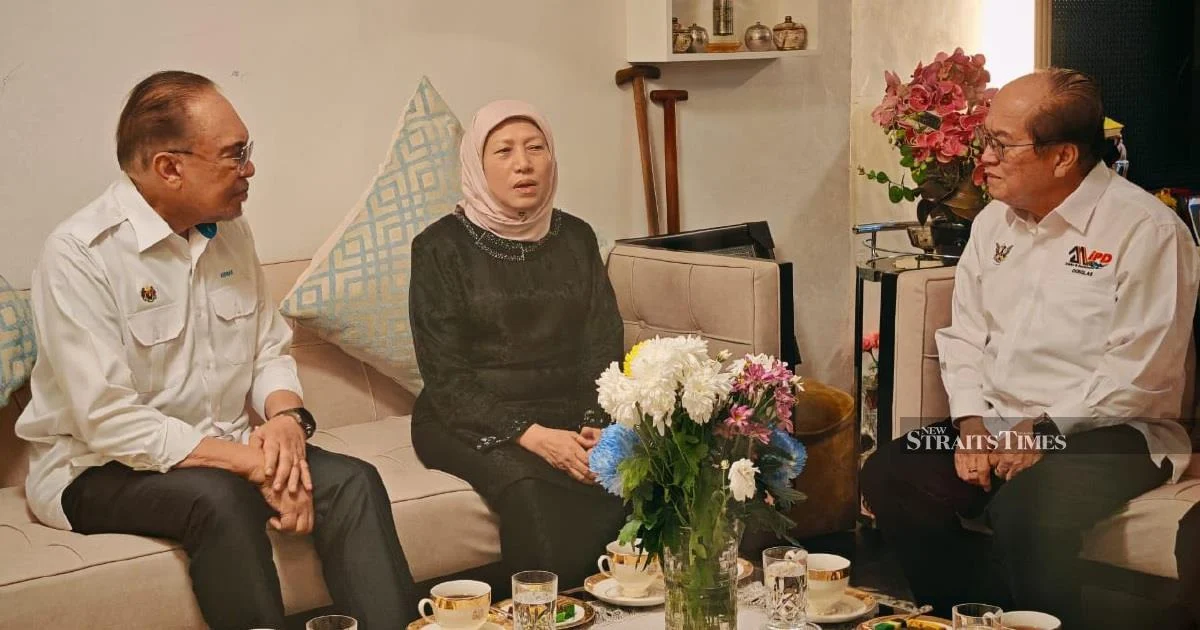
Prime Minister Datuk Seri Anwar Ibrahim made his way to Kuching today to offer personal condolences to Women, Family and Community Development Minister Datuk Seri Nancy Shukri, whose husband, Datuk Kamil Misuari, recently passed away. The gesture reflects the customary practice within Malaysia's political establishment of senior government figures paying respects during times of bereavement affecting fellow ministers and their families.
The visit underscores the close-knit nature of Malaysia's federal leadership, where personal gestures of sympathy play an important role in maintaining camaraderie within the cabinet. Such condolence visits are particularly significant in Malaysian political culture, where respect for personal loss and family grief is considered a fundamental aspect of professional courtesy among government officials at the highest levels.
Nancy Shukri has served as the Women, Family and Community Development Minister, a portfolio that addresses critical social issues affecting Malaysian families and communities nationwide. Her work in this ministerial position has involved overseeing policies and initiatives related to family welfare, community development programmes, and support systems for vulnerable populations across the country.
As a senior member of the federal cabinet, Nancy Shukri has maintained a prominent profile in Anwar's administration. Her presence in government reflects the broader commitment within the current cabinet to ensure diverse representation and perspectives in decision-making processes affecting Malaysian society.
The Prime Minister's decision to travel personally to Kuching—Sarawak's capital city—demonstrates the priority placed on acknowledging the personal difficulties faced by cabinet members during challenging times. Such visits often involve lengthy journeys for sitting prime ministers, whose schedules are typically filled with official duties and engagements.
Bereavement and loss remain universal experiences that transcend political and professional hierarchies. The visit also highlights how Malaysian government institutions maintain human connections alongside their formal administrative functions. In a nation where family values hold significant cultural importance, the acknowledgment of personal tragedies by senior leadership carries particular weight.
Sarawak, as one of Malaysia's largest states, holds considerable importance within the federal framework. The Prime Minister's presence in Kuching for this personal matter signals respect not only to Nancy Shukri but also to her constituents and the broader Sarawak community she serves.
The timing and nature of such condolence visits often become part of the broader narrative surrounding a government's internal cohesion and the personal relationships that bind cabinet members together. In an era when political relationships can be scrutinised through various media channels, these traditional gestures of respect remain important markers of solidarity and mutual support within the leadership structure.
For Nancy Shukri, balancing ministerial responsibilities with personal grief presents significant challenges. The loss of a spouse while holding high office requires tremendous resilience, and supportive actions from colleagues and the Prime Minister can provide meaningful acknowledgment during such difficult periods.
The women and family development portfolio addresses some of Malaysia's most sensitive and important social issues, from domestic welfare to community cohesion. Ministers in this position often work closely with diverse stakeholder groups and communities, making their accessibility and personal credibility particularly valuable to their work.
Within the Malaysian cabinet system, such interpersonal gestures help maintain the collegial atmosphere necessary for effective governance. While ministers may come from different political backgrounds or represent different constituencies, shared moments of human connection reinforce the common purpose that binds them within the federal government.
The visit reflects broader patterns in Malaysian political culture where protocol and tradition remain important, even as the nation navigates contemporary governance challenges. Customary observances around death and bereavement have remained largely consistent across different administrations and political eras, suggesting their deep cultural roots within Malaysian society.