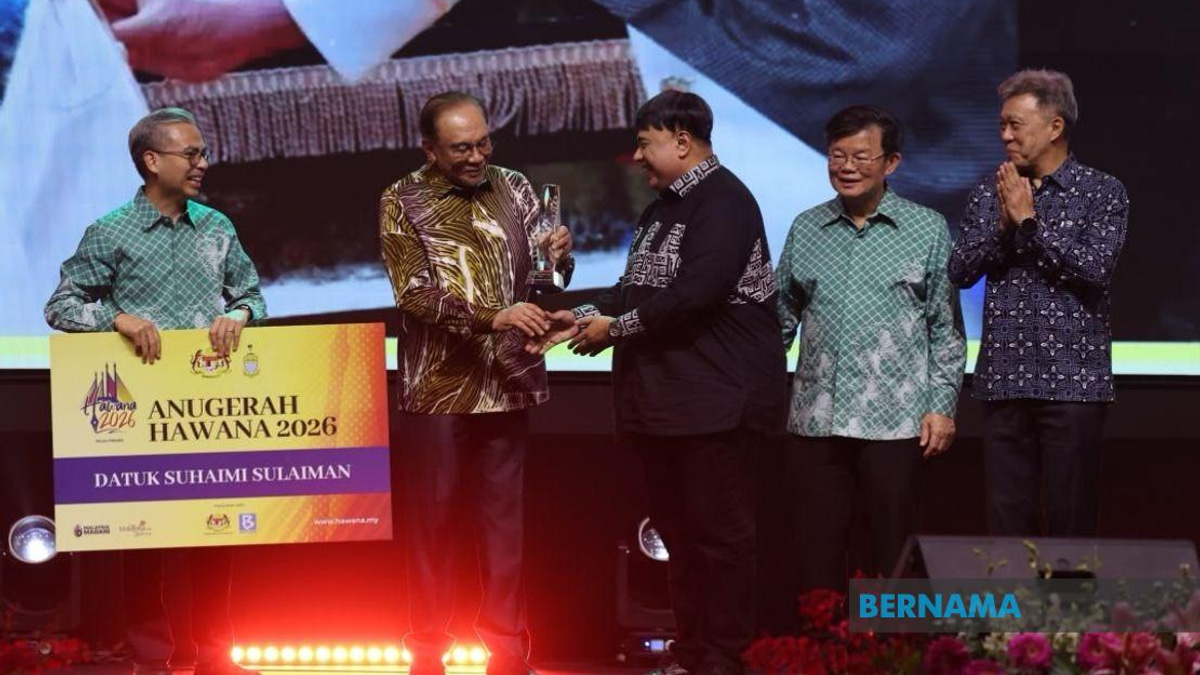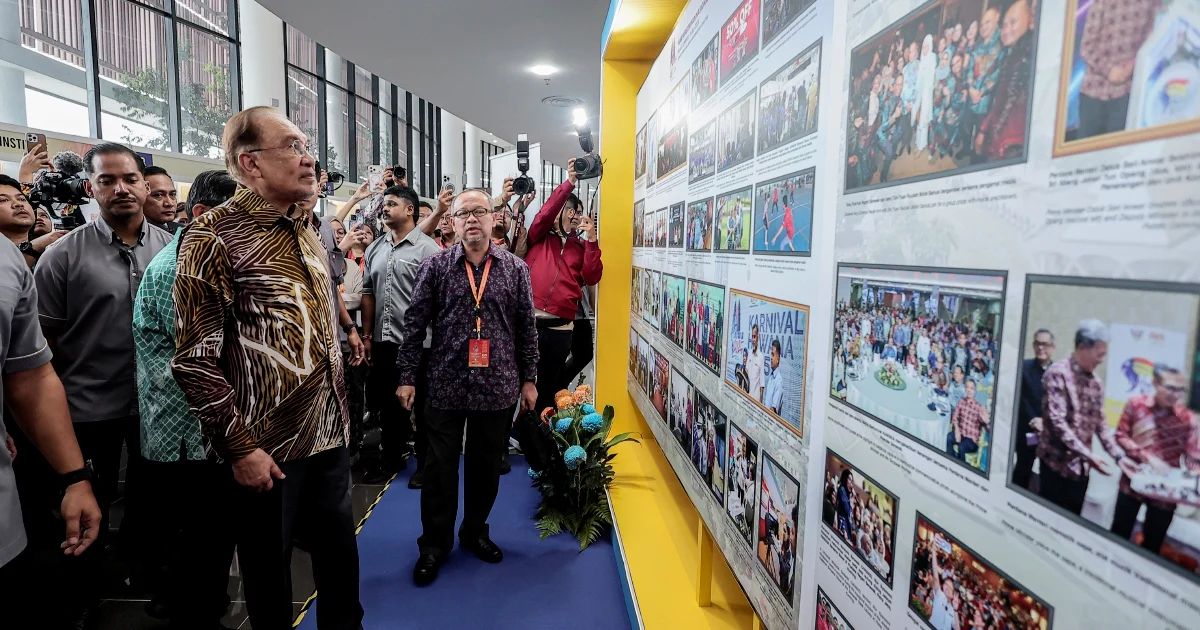
Prime Minister Datuk Seri Anwar Ibrahim has committed RM1 million in government funding towards the Tabung Kasih@Hawana 2026, an initiative designed to bolster welfare provisions for members of Malaysia's journalism community. Speaking at the programme in Permatang Pauh, Anwar underscored the administration's determination to sustain its backing of schemes intended to revitalise and modernise the country's media landscape.
The allocation represents a tangible demonstration of the federal government's recognition of the economic pressures facing journalists in an era marked by technological disruption and structural changes within news organisations. By funnelling resources directly into a dedicated welfare fund, the government is attempting to address specific challenges confronting individual media professionals—a group whose financial security has come under strain as traditional revenue models have deteriorated across newsrooms nationwide.
Tabung Kasih@Hawana 2026 serves as a mechanism to provide targeted assistance to journalists requiring support during periods of hardship or transition. The fund's structure reflects an acknowledgment that the profession faces systemic headwinds, from declining advertising revenues to workforce retrenchments that have characterised the industry globally. Within Southeast Asia, Malaysia's media sector has faced particular upheaval, with several major publications undergoing significant restructuring over recent years, creating genuine welfare concerns among affected reporters, editors, and contributors.
Anwar's announcement occurs within a broader policy framework aimed at repositioning Malaysia's media ecosystem. The government has signalled its intent to move beyond passive observation of industry decline, instead adopting a more interventionist approach through targeted funding and strategic initiatives. The Hawana 2026 programme appears positioned as a cornerstone of this renewed commitment, suggesting that media modernisation encompasses not merely technological upgrades but also safeguarding the human capital that underpins quality journalism.
The RM1 million commitment also carries symbolic weight, particularly given ongoing tensions between government and media organisations over editorial independence and coverage priorities. By establishing a welfare fund, the administration may be attempting to build institutional goodwill within the journalistic community whilst simultaneously advancing its narrative around government support for the profession. Such initiatives can influence media-government relations in subtle ways, creating channels of communication and interdependence that shape subsequent editorial decisions.
From a sectoral perspective, the allocation addresses a genuine need within Malaysia's journalism workforce. Many individual practitioners operate without corporate safety nets or robust pension schemes, rendering them vulnerable to income disruption. Freelancers and contract workers—an increasingly significant portion of the sector—face even greater precarity. A dedicated welfare fund can serve as a buffer against personal crises, potentially reducing the professional instability that drives experienced journalists from the field entirely.
However, the adequacy of RM1 million warrants scrutiny. For a welfare fund serving thousands of journalists across print, broadcast, and digital platforms nationwide, the allocation represents a modest resource. Distribution mechanisms and eligibility criteria will prove crucial in determining whether the fund achieves meaningful impact or functions primarily as a symbolic gesture. The fund's governance structure and decision-making processes will significantly influence its credibility and effectiveness within the journalism community.
The initiative must also be contextualised within Malaysia's broader media environment, where commercial pressures intersect with regulatory constraints and audience fragmentation. Malaysian news organisations have generally adapted more slowly to digital transformation compared with counterparts in developed markets, contributing to prolonged financial instability. Some publishers have diversified into events and other revenue streams, whilst others have scaled back operations. Against this backdrop, government welfare support for individual journalists may represent a stopgap measure rather than a comprehensive solution to structural industry challenges.
Regionally, Malaysia's initiative contrasts with approaches adopted by neighbouring countries. Singapore, for instance, has maintained a more collaborative government-media relationship structured through different mechanisms, whilst Indonesia's vast but fragmented media sector has developed alternative support systems. Thailand's media landscape remains shaped by distinct political and regulatory frameworks. Malaysia's approach through dedicated welfare funding appears relatively novel within the ASEAN context, potentially offering a model that other governments might consider emulating or adapting.
Looking forward, the success of Tabung Kasih@Hawana 2026 will likely influence government policy towards other industry sectors facing disruption and workforce challenges. The precedent established through dedicated welfare funding for journalists may extend to other professions experiencing technological displacement or structural change. Furthermore, the programme's implementation will provide insights into Malaysian government capacity for targeted, sector-specific economic intervention.
The announcement also reflects broader questions about media's role within democratic societies and governments' responsibilities towards professions deemed vital for democratic functioning. By allocating resources to journalist welfare, the government articulates—at least implicitly—recognition that independent journalism requires structural support and that allowing the profession to deteriorate entirely would damage Malaysia's information ecosystem.
Ultimately, whilst the RM1 million commitment demonstrates political will to support journalism as an institution, sustained transformation of Malaysia's media sector will require multifaceted interventions addressing technology adoption, business model innovation, and workforce development. The Tabung Kasih@Hawana 2026 represents one element within a larger constellation of necessary reforms.