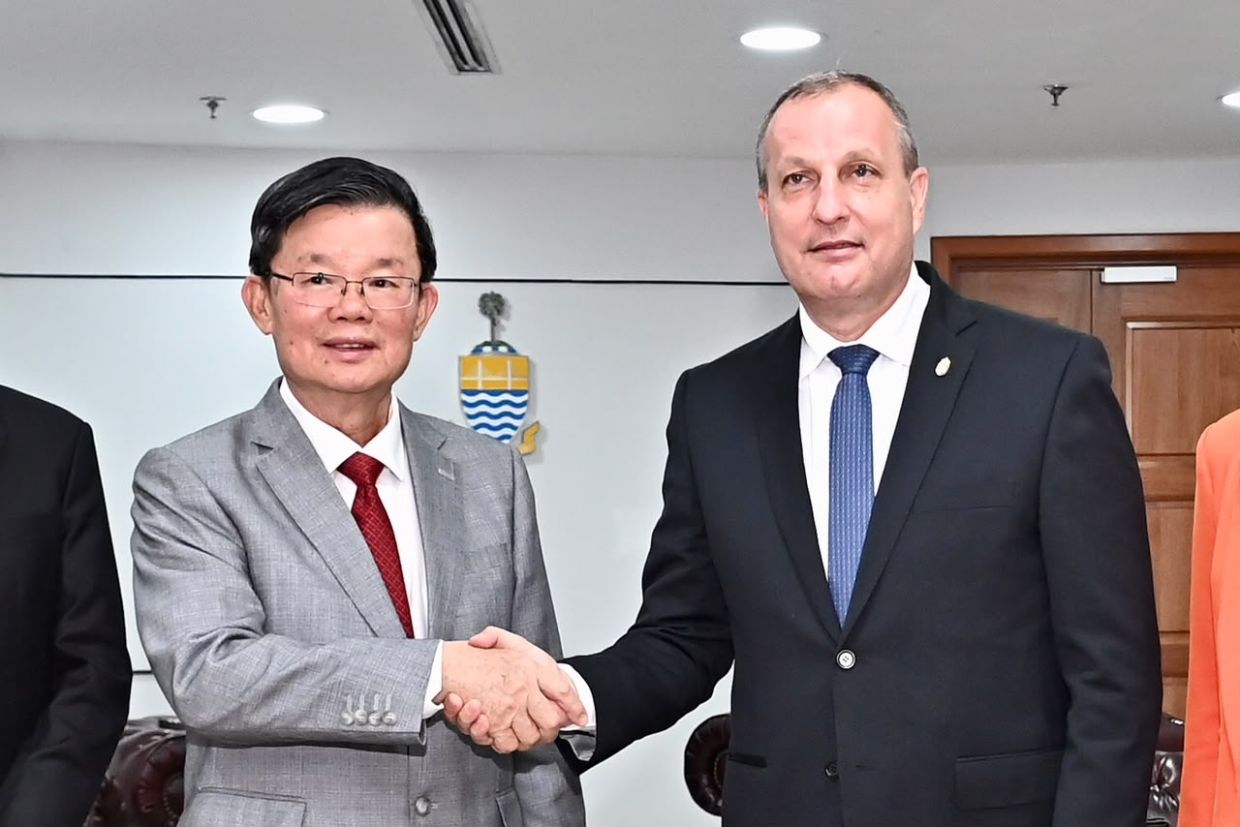
Penang is pursuing a comprehensive partnership with Hungary that spans higher education, technological advancement, environmental management and cultural preservation, marking a significant expansion of ties between the Malaysian state and the Central European nation. The strategic engagement emerged from recent discussions between state leadership and a Hungarian delegation led by Ambassador to Malaysia Dr Sándor Sipos, signalling Penang's determination to tap into European expertise for its long-term development agenda.
Chief Minister Chow Kon Yeow characterised Hungary as a repository of specialised knowledge across multiple sectors that align closely with Penang's development priorities. During his meeting with Sipos and the delegation, Chow identified research and development, water security, renewable energy and talent cultivation as particularly promising areas for bilateral collaboration. The discussions extended beyond these headline issues to encompass trade pathways, tourism potential and mechanisms for academic and cultural exchange—a breadth that suggests both sides view the relationship as having multi-dimensional potential rather than narrowly sectoral focus.
Education emerges as perhaps the most immediately tangible avenue for deepening the partnership. Hungary currently allocates 40 fully funded scholarship positions annually for Malaysian students, a programme that Chow commended for its role in facilitating access to European higher education and research opportunities. The state leader emphasised that such educational bridges serve broader geopolitical purposes, functioning as conduits for sustained inter-regional cooperation and mutual understanding. For Malaysian students, particularly those from Penang, these scholarships represent gateways to studying at competitive Central European institutions and gaining exposure to European research methodologies and innovation systems.
Sipos highlighted Hungary's appetite to expand the scholarship programme's reach within Penang specifically, actively encouraging applications from high-performing students across the state. This initiative carries particular significance for Malaysia's knowledge economy ambitions. Brain drain remains a concern for Southeast Asian nations, yet structured scholarship arrangements with reciprocal expectations around collaboration can transform student mobility into a strategic asset rather than a permanent loss of talent. The Hungarian government's willingness to increase Penang's participation in its scholarship scheme suggests confidence in the state's capacity to produce globally competitive graduates.
Water management and green technology represent a second pillar of the proposed cooperation framework. These sectors are increasingly critical across Southeast Asia as the region grapples with climate impacts, urbanisation pressures and resource scarcity. Hungary, despite its smaller geographic footprint compared to Malaysia, has developed sophisticated approaches to water governance and environmental sustainability that have proven effective in a different climatic and demographic context. The prospect of knowledge transfer in these domains could enhance Penang's capacity to address infrastructure challenges while pursuing its aspirations as a green economy hub for the region.
The partnership's inclusion of heritage conservation speaks to a shared recognition that development need not conflict with cultural preservation. Both Penang and Hungary possess layered historical legacies—Penang as a colonial-era trading hub and cultural melting pot, Hungary as a nation at the intersection of European civilisations. Joint initiatives in conservation could encompass shared methodologies, expertise exchange, and potentially tourism collaborations that position both destinations as custodians of authentic heritage experiences rather than purely commercial attractions.
State executive councillors Goh Choon Aik and Gooi Zi Sen conducted parallel discussions focusing on trade, investment, community development and sports cooperation. The inclusion of sports in the bilateral agenda, though sometimes underestimated, can yield unexpected returns. Sports exchanges generate goodwill, provide platforms for youth development, and occasionally uncover talent pathways that traditional academic and commercial channels miss. Gooi's proposal to task the Penang State Sports Council with identifying disciplines suitable for cooperation with Hungary indicates a systematic rather than ad hoc approach to deepening ties.
For Malaysian policymakers and business communities, the Penang-Hungary initiative offers a instructive model for engagement with smaller European nations that possess specialised capabilities and seek Southeast Asian partnerships. Unlike relationships with larger European powers that may carry historical baggage or overwhelming economic gravitational pull, partnerships with Hungary and comparable mid-sized European economies can be structured as more balanced exchanges where both parties bring distinct value. Hungary's openness to collaboration in areas where it possesses demonstrable expertise—water management, renewable energy innovation, higher education—reflects a pragmatic approach to international engagement that Malaysia should consider emulating with other nations.
The timing of this diplomatic push also reflects broader regional reorientation. As Southeast Asian economies diversify their international partnerships beyond traditional Western and Asian partners, Central Europe represents relatively untapped potential. Hungary's geographic position, EU membership, and technological prowess position it as a useful bridge between Southeast Asia and continental Europe. For Penang specifically, which has long positioned itself as Malaysia's innovation and investment hub, European partnerships can enhance its attractiveness to multinational corporations seeking Southeast Asian bases with strong ties to European supply chains and knowledge ecosystems.
Chow's expression of hope that discussions would crystallise into concrete projects within coming years indicates realistic expectations about institutional cooperation timelines. The partnership framework outlined encompasses areas—education, research, renewable energy—where results require sustained commitment rather than quick wins. This measured approach contrasts with sometimes breathless international engagement announcements that promise transformation but deliver marginal outcomes. By anchoring ambitions in specific sectors where both Penang and Hungary can demonstrate comparative advantage, the partnership creates conditions for genuine collaboration rather than performative diplomacy.
Looking forward, success will hinge on translating institutional goodwill into operational mechanisms. Formal academic partnerships, joint research initiatives, business delegations and student exchanges require structures, funding commitments and personnel to function effectively. The early enthusiasm from both sides provides a foundation, but sustained attention from state and national governments, as well as private sector engagement, will ultimately determine whether this partnership becomes a model for Penang's regional and international strategy or remains another aspirational framework document.