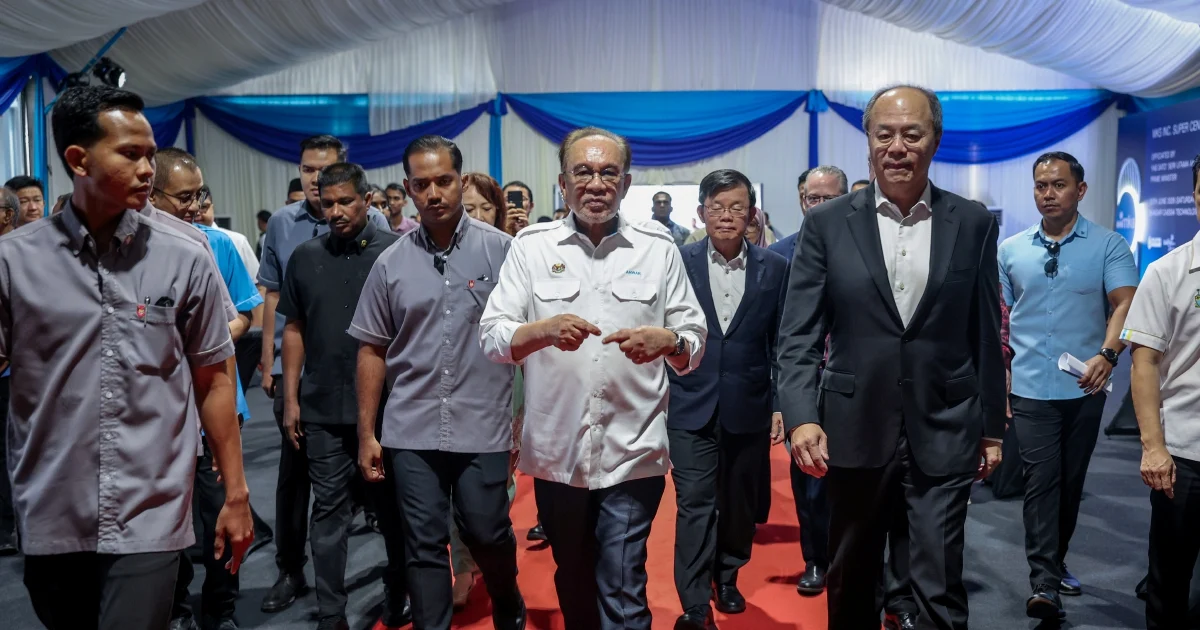
Prime Minister Datuk Seri Anwar Ibrahim has underscored the strategic advantages Malaysia derives from maintaining diplomatic neutrality while actively engaging with major powers across the globe. Speaking in Batu Kawan, Anwar emphasised that this balanced approach to international relations has become a cornerstone of the country's efforts to attract foreign capital and bolster sustained economic growth.
The emphasis on Malaysia's independent foreign policy reflects a broader strategic shift as the nation navigates an increasingly complex geopolitical landscape. Rather than aligning exclusively with any single power or bloc, Malaysia's approach seeks to position itself as a trusted partner for investors from diverse economic zones, thereby expanding the pool of potential capital sources. This diplomatic posture has gained particular significance in Southeast Asia, where countries face mounting pressure to choose sides amid great-power competition.
Anwar's remarks signal confidence that investor uncertainty stemming from geopolitical tensions can be mitigated through clear messaging about Malaysia's commitment to non-alignment and pragmatic engagement. Foreign companies evaluating investment locations increasingly factor in political stability and predictable regulatory environments into their decisions. By articulating Malaysia's refusal to be drawn into ideological contests, the government aims to reassure multinational corporations and institutional investors that their interests will be protected regardless of shifts in global power dynamics.
The neutrality doctrine carries particular weight in attracting technology and manufacturing investments, sectors where companies seek stable jurisdictions insulated from sanctions regimes or trade restrictions. Malaysia's historical position as a bridge between major economies—sitting at the crossroads of Asia-Pacific shipping lanes and maintaining strong ties with both Western and non-Western powers—offers tangible advantages in this regard. The government's messaging suggests this geographical and diplomatic positioning represents a durable competitive advantage.
Investor confidence extends beyond political considerations to encompass Malaysia's broader economic fundamentals. The country's established infrastructure, skilled workforce, and transparent business framework provide complementary advantages to its foreign policy neutrality. Together, these factors create an attractive investment proposition that distinguishes Malaysia from regional competitors who may face greater political or regulatory uncertainty. The coherence between Malaysia's diplomatic messaging and its economic policies strengthens the credibility of both.
The timing of Anwar's emphasis on neutrality coincides with increased global scrutiny of supply chain resilience and the benefits of geographic diversification. Multinational corporations, having learned lessons from pandemic-related disruptions and trade frictions, now actively seek alternative production bases outside geopolitical flashpoints. Malaysia's messaging positions the country as a rational choice for companies implementing such diversification strategies, offering operational advantages without the baggage of being perceived as aligned with contested political camps.
Regional stability underpins Malaysia's economic prospects, and Anwar's framing suggests that maintaining neutrality contributes directly to this stability. When smaller nations align rigidly with particular powers, they risk becoming entangled in disputes that have little bearing on their core interests. Malaysia's approach—engaging all parties while reserving the right to independent judgment—minimises such risks and creates a more predictable investment climate. This distinction resonates particularly with long-term investors focused on market access and operational continuity rather than short-term geopolitical bets.
The government's messaging also reflects awareness that investor confidence encompasses perceptions of governmental legitimacy and coherence. By consistently articulating an independent foreign policy, Malaysian leadership projects competence and strategic vision to international audiences. This consistency reduces the perception that government decisions are reactive or subject to external pressure, thereby strengthening institutional credibility in the eyes of sophisticated investors conducting due diligence.
For ASEAN more broadly, Malaysia's championing of neutrality carries symbolic importance. As the bloc seeks to maintain its central role in regional affairs while managing tensions between major powers, member states like Malaysia that articulate commitment to non-alignment reinforce ASEAN's collective position. This dynamic creates mutual reinforcement between Malaysia's national strategy and its obligations as an ASEAN member, strengthening the coherence of its diplomatic positioning.
The economic implications of investor confidence translate into measurable outcomes: increased foreign direct investment flows, job creation, technology transfer, and integration into global value chains. By explicitly linking its foreign policy to economic performance, Anwar signals that Malaysia's approach to international engagement is not merely ideological but fundamentally pragmatic and tied to tangible national interests. This framing appeals to both domestic audiences concerned with job creation and foreign investors seeking rational, predictable partners.
Looking forward, Malaysia's ability to sustain investor confidence will depend on consistent implementation of this diplomatic philosophy amid geopolitical turbulence. The country faces ongoing challenges in managing great-power relations, particularly in sensitive areas such as maritime claims and technology access. However, the government's clear articulation of neutrality principles provides a framework for addressing these challenges while maintaining the investor-friendly positioning that has become central to Malaysia's economic strategy.