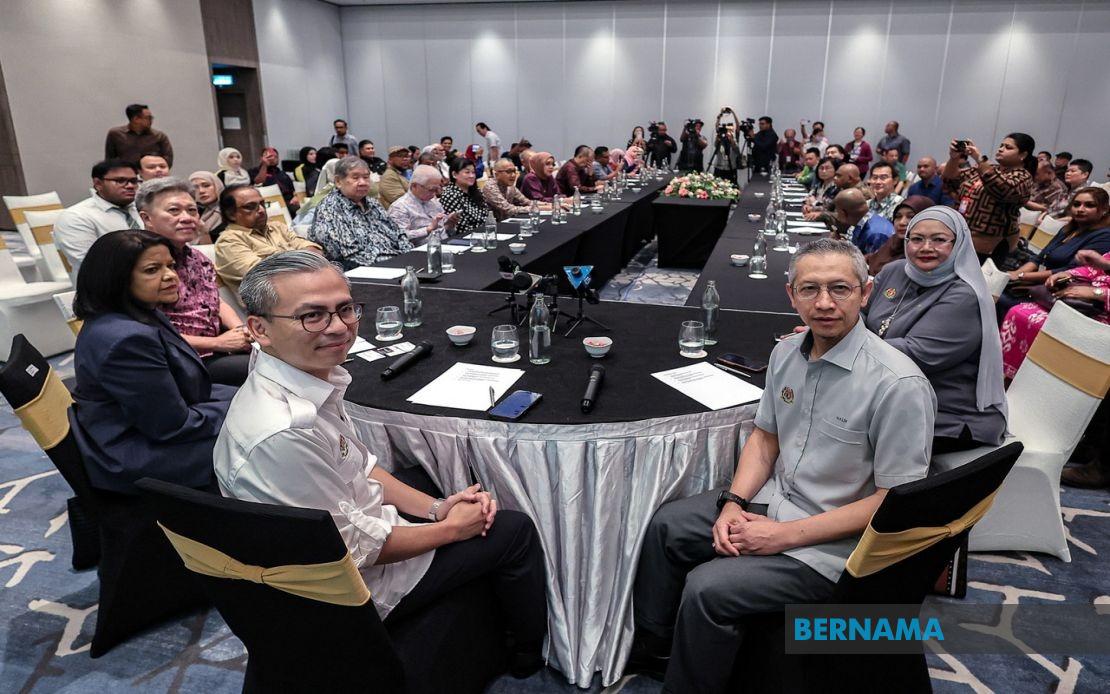
Communications Minister Datuk Fahmi Fadzil unveiled an initiative to embed structured dialogue between government and the media industry into Malaysia's annual journalistic calendar. Speaking at a media engagement session during HAWANA 2026 in Butterworth on June 20, Fahmi proposed that every future National Journalists' Day celebration should feature a dedicated retreat bringing together communications officials and media professionals for frank discussion.
The proposal marks an effort to institutionalise ongoing conversation between the government and newsroom leaders rather than treating such engagement as occasional or ad-hoc. Fahmi indicated that the Communications Ministry would approach the Malaysian Media Council to oversee the coordination and logistical arrangements for these sessions, ensuring consistency and professional facilitation across years. This delegation to the MMC reflects the ministry's recognition that media council oversight would lend credibility and independence to the dialogue process.
Central to Fahmi's vision is positioning these retreats as formal channels through which the media industry can transmit its concerns and recommendations directly to policymakers. The sessions would function as structured feedback mechanisms, allowing practitioners to raise issues spanning operational challenges, regulatory burdens, legislative gaps, and industry sustainability. Fahmi explicitly noted that discussions could address potential amendments to existing legislation or the crafting of new policy frameworks, signalling government receptiveness to law reform proposals emerging from the newsroom floor.
The proposal arrives at a moment when Malaysia's media landscape faces mounting economic pressures that threaten traditional business models. Fahmi identified a critical structural challenge: mainstream news organisations invest substantially in content production yet see that same material republished across social media platforms without generating corresponding revenue or advertising returns. This digital arbitrage—where platforms profit from journalistic labour without compensating creators—has squeezed margins across the sector, forcing newsrooms to make difficult choices about staffing and coverage breadth.
Fahmi's acknowledgement of this economic bind demonstrates government awareness of industry distress that extends beyond editorial or regulatory concerns. By flagging the social media monetisation problem during the Butterworth dialogue, the communications minister signalled willingness to involve his ministry in brokering discussions between Malaysian media organisations and technology platforms. He indicated the government stands ready to facilitate and assist such negotiations, potentially lending diplomatic or legislative weight to industry demands for fairer revenue sharing or content licensing arrangements.
The dialogue session itself drew significant attendance from Malaysia's communications establishment, underscoring the government's commitment to the engagement process. Joining Fahmi were Communications Ministry secretary-general Datuk Abdul Halim Hamzah and deputy secretary-general for strategic communications and creative industry Datuk Bahria Mohd Tamil, indicating senior-level institutional involvement. The media side included Malaysian National News Agency chairman Datuk Seri Wong Chun Wai, Bernama chief executive officer and HAWANA 2026 working committee chair Datin Paduka Nur-ul Afida Kamaludin, MMC chairman Tan Sri Nallini Pathmanathan, and senior executives from major local news organisations, reflecting the breadth of the industry's participation.
This gathering composition matters for understanding the proposal's trajectory. With Bernama leadership prominent and the MMC positioned as coordinating partner, the retreat mechanism would operate within institutional frameworks already connecting government to professional journalism bodies. Rather than seeking to bypass existing media organisations or their representative bodies, the proposal channels dialogue through established structures, which may enhance buy-in but could also constrain the breadth of voices reaching policymakers.
For Malaysian and regional observers, the initiative addresses a structural imbalance in communications between government and industry. Too often, policy affecting media operations emerges from administrative deliberation with minimal real-time industry consultation. By formalising annual retreat sessions, Fahmi's proposal attempts to embed consultation earlier in the policy development cycle, potentially reducing the gap between government intentions and industry realities. The explicit mention of acts and laws open to amendment suggests these retreats could become crucibles where legislative reform originates.
The timing of this proposal also reflects broader regional and global trends in media-government relations. As digital platforms transform news distribution and economics, governments across Southeast Asia face pressure to develop coherent media policies that protect journalistic viability without undermining editorial independence. Malaysia's proposal positions regular structured dialogue as a middle path, acknowledging industry challenges whilst maintaining government leadership in policy development.
Yet questions remain about the mechanism's practical effectiveness. Annual retreats risk becoming performative exercises unless government demonstrably acts on industry proposals, particularly regarding social media platform negotiations and legislative amendments. The proposal also does not address whether these sessions will include digital media operators and independent journalists whose interests may diverge from traditional newsroom leadership represented in the attendee list.
Fahmi's proposal additionally reflects recognition that media sustainability is increasingly a matter of national interest beyond pure market dynamics. As audiences fragment across platforms and traditional advertising concentrates among digital giants, the viability of domestically-owned news operations—which remain primary sources of original reporting on Malaysian affairs—becomes dependent on intentional policy support. By proposing mechanisms to hear and potentially address industry concerns, the communications minister signals government understanding that media health extends beyond regulatory compliance to encompass economic model innovation and fair competition with global platforms.
The retreat proposal ultimately represents an attempt to make media-government dialogue routine and structured rather than episodic and crisis-driven. Whether annual HAWANA retreats truly empower the industry to shape communications policy, or merely create the appearance of consultation whilst substantive decisions continue elsewhere, will depend on government follow-through and the MMC's independence in facilitating frank exchange.