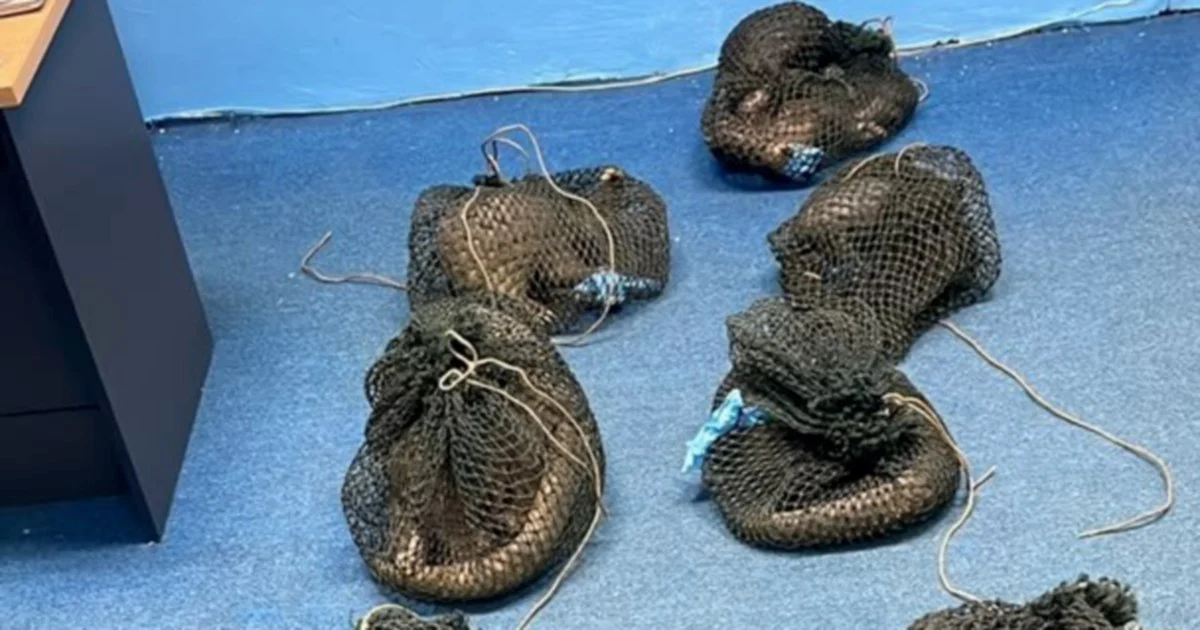
A significant wildlife trafficking case has emerged from Sabah following the apprehension of a 27-year-old Filipino national in Kinabatangan, where enforcement officers discovered 10 live pangolins and elephant ivory at a plantation location in Kampung Paris 3. The arrest represents the latest in a troubling pattern of illegal wildlife trade activities that continue to plague the region, despite intensified border controls and inter-agency cooperation between Malaysian and Philippine authorities.
Pangolins occupy a critical position in international conservation efforts, having earned the distinction of being the world's most trafficked mammals. The creatures, which possess scaled bodies and subsist primarily on insects, face unprecedented pressure from poachers and trafficking networks that target them for their scales—used in traditional medicine and luxury fashion items—and for bushmeat consumption. Each individual animal represents an ecological loss in already diminished wild populations, with multiple species facing imminent extinction across Southeast Asia.
The particular concern with the Kinabatangan seizure extends beyond the live animals themselves. The presence of elephant tusks among the confiscated materials suggests a sophisticated, multi-species trafficking operation rather than isolated criminal activity. Such diversified smuggling operations typically indicate organised networks with established supply chains, financial backing, and distribution contacts spanning multiple countries. The involvement of a Filipino national aligns with documented patterns of transnational trafficking infrastructure connecting Mindanao and Sabah, regions separated by maritime boundaries that remain vulnerable to organised crime despite enforcement efforts.
Sabah has emerged as a critical theatre in the struggle against wildlife trafficking, positioned at the intersection of major trafficking routes linking Southeast Asia with markets in China, Vietnam, and increasingly, Middle Eastern destinations. The state's terrestrial and maritime borders, combined with porous enforcement capacity in certain zones, have historically attracted criminal syndicates seeking to exploit vulnerabilities. Recent years have witnessed escalating seizures of endangered species, suggesting either increased trafficking activity or, more optimistically, improved detection capabilities through enhanced patrols and intelligence sharing.
The enforcement action that led to this arrest reflects ongoing collaboration between Malaysian wildlife authorities and regional partners, though experts consistently highlight substantial gaps in cross-border coordination. Philippine authorities face their own challenges in containing wildlife trafficking originating from Mindanao, where armed groups' territorial control complicates government operations. The coordination required to disrupt sophisticated trafficking networks—involving intelligence gathering, surveillance, legal proceedings, and asset seizure—remains an area where Southeast Asian nations struggle with resource constraints and jurisdictional complications.
Traffickers exploit several advantages in their operations across the Malaysia-Philippines maritime zone. The sheer volume of legitimate commercial traffic provides cover for illegal shipments, while corruption within enforcement agencies—documented in multiple investigations—enables smugglers to navigate checkpoints. Additionally, the relatively high profitability of wildlife trafficking compared to penalties in many jurisdictions creates persistent incentives for criminal participation, particularly for economically marginalised individuals recruited as operational foot soldiers.
The pangolins seized in this operation will require specialist care to assess their health status and potential for rehabilitation. Unlike some confiscated wildlife that can be released into protected areas, pangolins present particular challenges due to their specialised dietary requirements, their solitary nature, and the difficulty of identifying appropriate release locations without risking trafficking recurrence. Most confiscated pangolins ultimately require long-term sanctuary accommodation, straining already-limited facility resources across the region.
From a prosecutorial standpoint, the case illustrates the complexity of pursuing wildlife trafficking charges. While Malaysia's Wildlife Conservation Enactment provides frameworks for prosecution, securing convictions requires establishing chains of custody, expert testimony regarding species identification, and coordination with customs authorities handling the cross-border dimension. Sentencing disparities between Malaysian and Philippine jurisdictions create perverse incentives for syndicate operators to employ nationals of countries with comparatively lenient penalties.
The broader implications for Malaysian biodiversity remain concerning. Sabah's rainforests and wildlife populations face cumulative pressure from habitat conversion, climate change, and exploitation through poaching. Each trafficking episode represents not only criminal activity but a symptom of deeper conservation crises. The state's commitment to wildlife protection must extend beyond reactive enforcement toward proactive habitat restoration, community engagement in anti-trafficking initiatives, and addressing underlying economic drivers that incentivise participation in illegal wildlife trade.
Looking forward, regional authorities acknowledge that disrupting trafficking networks requires sustained commitment beyond individual arrests. Intelligence sharing protocols between Malaysian, Philippine, and Thai authorities need strengthening, while financial investigations targeting trafficking networks' economic structures remain underdeveloped. International coordination through ASEAN frameworks and Interpol channels has expanded, yet enforcement capacity gaps persist. The Kinabatangan case, while representing successful detection, underscores how much trafficking activity likely remains undetected, with pangolins and elephant ivory continuing to move through regional networks despite regulatory efforts.


%22%2F%3E%3C%2Fpattern%3E%3C%2Fdefs%3E%3Crect%20width%3D%22100%25%22%20height%3D%22100%25%22%20fill%3D%22url(%23ph2dkjhg)%22%2F%3E%3Crect%20width%3D%22100%25%22%20height%3D%22100%25%22%20fill%3D%22url(%23ph2dkjhp)%22%2F%3E%3Ctext%20x%3D%2250%25%22%20y%3D%2250%25%22%20text-anchor%3D%22middle%22%20dominant-baseline%3D%22central%22%20fill%3D%22rgba(255%2C255%2C255%2C0.95)%22%20font-family%3D%22Georgia%2C%20'Times%20New%20Roman'%2C%20serif%22%20font-weight%3D%22700%22%20font-size%3D%22272%22%20letter-spacing%3D%22-0.02em%22%3EAnwar%3C%2Ftext%3E%3C%2Fsvg%3E)