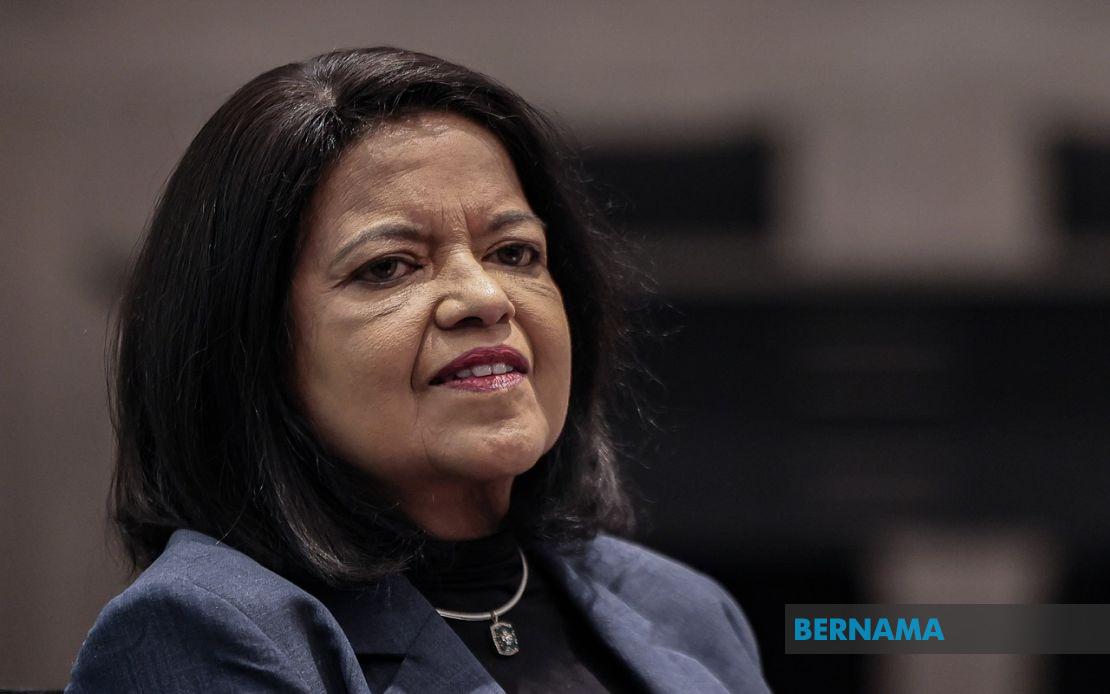
The Malaysian Media Council (MMC) will use the upcoming Johor and Negeri Sembilan state elections as a practical testing ground for a freshly launched anti-misinformation framework designed to protect electoral integrity and shore up public confidence in campaign-period information. With Johor's poll scheduled for July 11 and Negeri Sembilan's for August 1, the close timing of these contests presents a unique opportunity for real-time evaluation and refinement of what the council calls its Rapid Response Election Initiative. The council's chairperson, Tan Sri Nallini Pathmanathan, outlined the strategy at a media dialogue in Butterworth alongside Communications Minister Datuk Fahmi Fadzil, emphasizing that insights gained from the first election would directly inform operational improvements before the second campaign kicks off.
The proliferation of fabricated content during election seasons has become a defining challenge for Malaysian politics. Deepfakes, doctored screenshots, counterfeit media logos, and false news graphics attributed to legitimate news organizations circulate with increasing velocity, sowing doubt about the reliability of information voters encounter. The MMC's new initiative seeks to address this specific vulnerability by creating a coordinated verification mechanism that can respond quickly when false material is attributed to genuine media outlets. Rather than attempting to police political claims or assess the veracity of election promises, the framework focuses narrowly on one tractable problem: confirming whether content actually originated from the media organizations whose branding it claims to carry.
The operational architecture reflects a deliberately distributed model in which different institutions play complementary roles. The MMC itself functions as a coordinator rather than a gatekeeper, channeling complaints and suspicious content to the appropriate responder. Media organizations take the central verification role, determining within minutes whether alleged stories or graphics actually came from their newsrooms. The Election Commission (EC) acts as the authoritative reference point for matters concerning electoral procedure, eligible candidates, voting logistics, and other administrative questions that fall squarely within its remit. Bernama, the national news agency, takes responsibility for amplifying corrected information across its networks. A network of supporting agencies—including Content Forum Malaysia, the Department of Community Communications, the National Information Dissemination Centres, and the Malaysian Communications and Multimedia Commission—provide specialized assistance in digital platforms, community outreach, and regulatory enforcement where needed.
One concrete example illustrates how the mechanism could function in practice. A false graphic bearing a major news organization's logo, falsely claiming that a particular candidate has withdrawn from the race, could circulate virally within hours if left unchecked. Under this initiative, the targeted media outlet would verify within minutes that it produced no such graphic, issue a swift public correction, and push that correction back into the same digital channels where the misinformation spread. By acting decisively before false information achieves saturation, the system aims to inoculate the electorate against the most damaging falsehoods. Similarly, confusion about voting procedures, candidate eligibility, or polling locations could be rapidly clarified through the Election Commission's involvement, preventing procedural misinformation from undermining voter participation.
The initiative arrives against a backdrop of accelerating technological threats to election security. Synthetic media and artificial intelligence-generated content can now be produced and distributed at unprecedented speed and scale, making traditional fact-checking cycles obsolete. A deepfake video of a senior political figure can be manufactured in hours and reach millions before journalists can verify it. The MMC's framework represents an adaptation to this new reality: rather than attempting comprehensive fact-checking of everything voters encounter, it creates rapid-response capacity specifically for the most verifiable category of false claims—those attributed to actual media organizations.
Crucially, the initiative stops short of adjudicating political substance. It does not attempt to verify whether a party's economic policy claims are sound, whether a politician's campaign promises are realistic, or whether a manifesto's fiscal projections are credible. Those remain contested questions legitimately debated during elections. The council's more modest intervention targets only the technical falsification of media content—the forgery of institutional credibility itself. This boundaries-conscious approach may reduce political accusations that the council favors particular parties, preserving the framework's credibility across the political spectrum.
Accompanying the institutional mechanism is a public awareness campaign built around the bilingual slogan "Who Said It? What's The Source?" rendered also in Malay as "Siapa kata? Sos mana?" The campaign deliberately reframes voter responsibility not as passivity or skepticism toward information generally, but as active discernment before believing and sharing. Nallini emphasized that citizens retain their full rights to read, discuss, and participate vigorously in electoral debates. Rather than advocating silence, the initiative invites voters to pause and verify before accepting claims at face value—a calibration that distinguishes this campaign from heavier-handed information control.
The sequential nature of the two elections offers methodological advantages for the MMC's evaluation. Johor will serve as a live laboratory where the council can observe how quickly the verification mechanism responds to different categories of false content, how effectively corrections reach affected audiences, and where bottlenecks or coordination failures emerge. Lessons learned can be documented, analyzed, and integrated into refined operational procedures before the Negeri Sembilan campaign begins. This iterative approach is far more sophisticated than simply launching a static framework and hoping it works; it assumes that real-world electoral environments will present unexpected challenges that require adaptive management.
For Malaysian politics more broadly, the initiative signals official acknowledgment that misinformation poses a material threat to democratic processes. By 2026, when these elections occur, the information ecosystem will likely have grown even more turbulent, with AI-generated content and coordinated disinformation campaigns becoming routine weapons in electoral competition. The framework represents a pragmatic attempt to shore up the factual foundations on which informed voting depends, without resorting to the authoritarian tools of content censorship that several neighboring democracies have deployed.
Regional observers will watch the initiative's performance closely. Southeast Asia faces acute challenges from cross-border disinformation, state-sponsored manipulation, and rapid technological change that outpaces regulatory capacity in most countries. If the MMC's model demonstrates that rapid verification mechanisms can effectively combat election misinformation without heavy-handed government censorship, it could offer a template for other democracies in the region wrestling with similar problems. Conversely, if the framework proves too slow, too partial in its coverage, or too vulnerable to political manipulation itself, that failure would reinforce arguments that only direct platform regulation or stronger fact-checking requirements can adequately protect electoral integrity. The Johor and Negeri Sembilan contests will thus carry significance extending well beyond these two states.