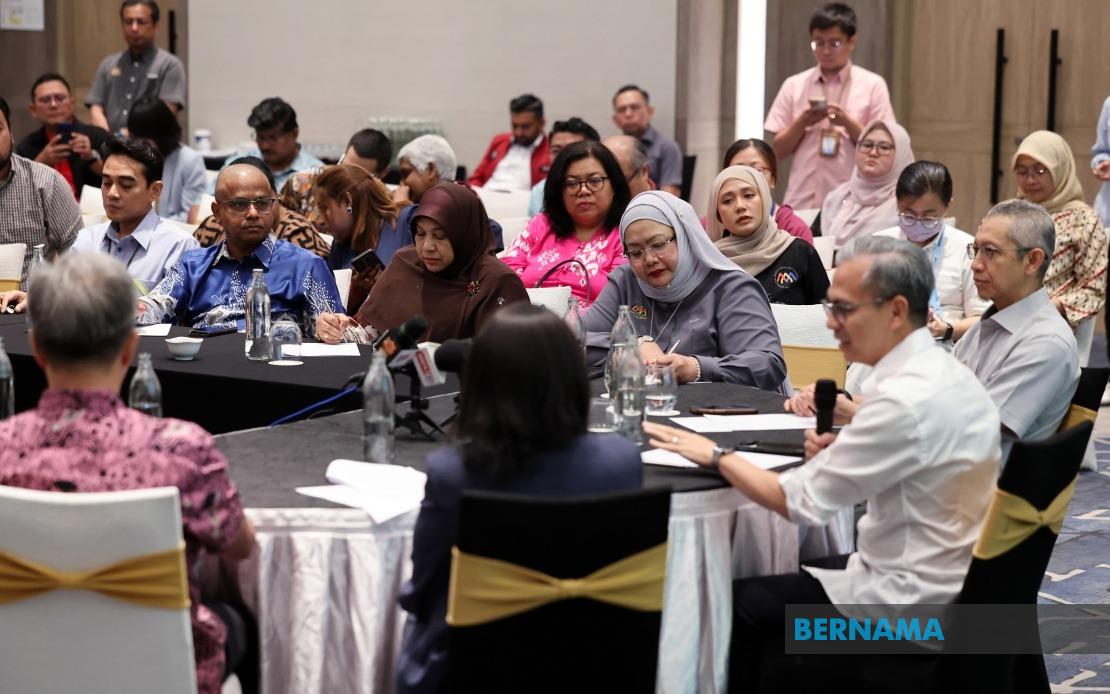
The HAWANA 2026 Summit has officially begun at PICCA@Arena Butterworth Convention Centre, welcoming a diverse gathering of journalists, media executives, and strategic partners from Malaysia and across the ASEAN region. The convergence marks a significant moment for the regional media sector, as practitioners and government officials convene to address challenges facing the industry in an increasingly complex information landscape.
Attendees have been making their way through the convention centre throughout the opening day, taking advantage of exhibition booths showcasing innovations and initiatives from media organisations and technology providers. A specially curated photo gallery at the venue's foyer provides a visual history of Malaysia's media development, offering delegates an opportunity to reflect on the sector's evolution while they reconnect with colleagues from different newsrooms and broadcasting outlets. For many professionals juggling demanding schedules, the summit presents a rare occasion to step back from daily editorial demands and engage in substantive dialogue about industry direction.
The presence of delegates from ASEAN member states underscores a deliberate strategic choice by Malaysian organisers to position the summit as more than a domestic gathering. By creating space for regional exchange, HAWANA 2026 acknowledges the interconnected nature of media challenges and opportunities across Southeast Asia. Border-spanning issues such as misinformation, digital transformation, and the sustainability of quality journalism demand collaborative solutions that transcend national boundaries. This regional dimension signals recognition that media practitioners across ASEAN face remarkably similar pressures and share common interests in preserving journalistic standards.
Prime Minister Datuk Seri Anwar Ibrahim will deliver the opening address at the summit, lending government-level endorsement to an event focused on media integrity and credibility. His attendance reflects the administration's positioning on press freedom and the role of journalism in strengthening democratic institutions. The prime ministerial presence also signals that government engagement with media practitioners extends beyond daily press relations into structured forums where broader industry concerns can be discussed.
Organised through the Ministry of Communications with Bernama, the Malaysian National News Agency, acting as implementing body, the summit brings institutional heft to discussions about journalism's future. Bernama's role as orchestrator carries symbolic weight, given its longstanding status as a cornerstone of Malaysia's state-level media infrastructure. The agency's stewardship suggests that the summit will likely balance perspectives from commercial media, public broadcasters, and official information channels, creating a more complete picture of the media ecosystem.
The summit's central theme of 'Media Integrity Strengthens Credibility' directly addresses one of the sector's most pressing concerns. Media organisations across the region face mounting pressure from misinformation campaigns, declining public trust, and technological disruption that has fundamentally altered how news reaches audiences. By making integrity the focal point, organisers highlight that technical journalism skills and access to information matter less than institutional commitment to accuracy, transparency, and ethical standards. This thematic choice implicitly acknowledges that credibility—once largely taken for granted by mainstream media—has become something requiring deliberate cultivation and defence.
With approximately 1,000 media practitioners expected to attend, the summit represents a significant gathering of the regional journalism community. The scale suggests multiple concurrent sessions addressing specific challenges facing different media sectors: print journalism's financial sustainability, broadcast journalists' role in combating disinformation, digital newsrooms' evolving skill requirements, and freelancers' working conditions. A gathering of this magnitude creates opportunity for cross-pollination of ideas and practices, allowing newsrooms from smaller markets to learn from larger regional players and vice versa.
The summit's timing in 2026 positions it within a broader moment of reckoning for journalism globally. The industry faces existential questions about business models, artificial intelligence's impact on reporting and editorial decisions, and the blurring lines between entertainment and news. For Malaysian and ASEAN media practitioners, these universal challenges compound with region-specific concerns including varying regulatory environments, differences in press freedom frameworks, and uneven access to training and professional development resources. A regional summit provides venue to explore how different jurisdictions navigate these common terrain.
Beyond formal proceedings, the exhibition booths and informal networking spaces serve important functions in building community among practitioners who often work in relative isolation. A freelancer based in rural Malaysia or a broadcast journalist in a smaller ASEAN capital may have limited opportunities throughout the year to engage with peers facing similar professional dilemmas. The summit effectively creates temporary congregation space where informal conversations often generate insights and connections as valuable as formal presentations. These connections become the basis for ongoing professional relationships and potential collaborations.
The recognition embedded in HAWANA's structure—celebrating media practitioners' dedication and contributions to accurate information delivery—carries particular significance in regional and global contexts where journalism faces unprecedented criticism and questioning. By formally honouring the profession, the summit pushes back against narratives that dismiss journalists as enemies of truth or self-interested actors. Instead, it frames journalists as professionals committed to serving public interest through rigorous standards and ethical conduct. This affirmation matters, particularly in markets where media workers experience pressure from multiple directions.
Looking forward, the summit's discussions and outcomes will likely influence how Malaysian and ASEAN media organisations approach challenges over coming years. Consensus positions emerging from such gatherings carry informal authority within industry communities, potentially shaping editorial priorities, professional standards discussions, and advocacy positions on media-related policy questions. The connections forged among practitioners may lead to collaborative initiatives addressing shared challenges, from training programmes to industry standards setting.