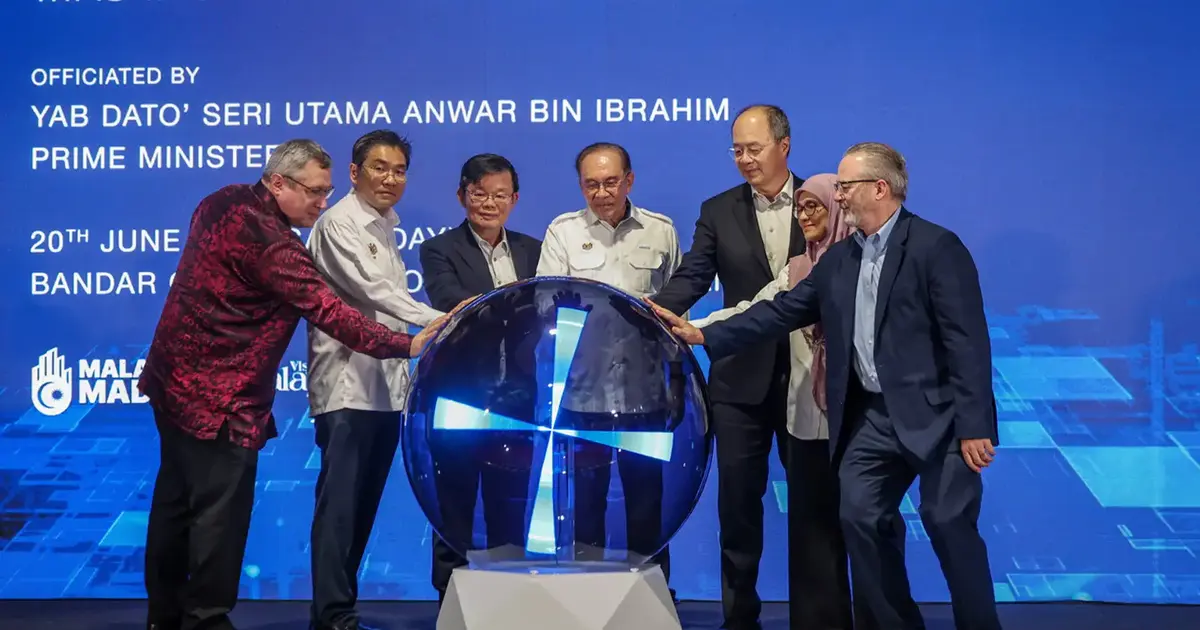
Prime Minister Anwar Ibrahim has moved to fortify Malaysia's semiconductor ecosystem by appointing a dedicated adviser tasked with bridging the longstanding gap between the nation's universities and the manufacturing industry. The appointment signals the government's intent to leverage academic research capabilities alongside industrial capacity, potentially positioning Malaysia to compete more effectively within the global semiconductor supply chain during a period of unprecedented technological competition.
The adviser will operate across institutional boundaries to identify opportunities where university research and development aligns with real-world manufacturing needs. This collaborative model seeks to translate academic breakthroughs into commercially viable products and processes, addressing a persistent challenge across Southeast Asia where technical knowledge often remains siloed within university laboratories rather than flowing directly to industry. By creating structured pathways for knowledge transfer, Anwar's administration hopes to accelerate Malaysia's transition from assembly-focused semiconductor operations toward higher-value design and development activities.
A significant advantage of this initiative is its fiscal neutrality—Anwar emphasised that the arrangement will not drain additional resources from the government budget. This constraint underscores the necessity for innovative institutional design. Rather than creating new bureaucratic structures, the adviser model operates as a lean coordinating mechanism, potentially drawing on existing infrastructure and expertise. Such efficiency-focused approaches are particularly relevant in Malaysia's current fiscal environment, where competing demands on public finances necessitate strategic spending.
The semiconductor industry holds particular importance for Malaysia's economic trajectory. The sector has historically contributed substantially to export revenues and employment, yet faces mounting pressure from geopolitical fragmentation and rising competition. Taiwan and South Korea dominate advanced fabrication, while countries including Vietnam and Thailand increasingly attract manufacturing investment. Malaysia must therefore differentiate by excelling in niche segments and fostering innovation capacity. University-industry collaboration becomes central to this repositioning strategy, as academic institutions possess research depth and capabilities that could support development of specialised semiconductor applications, materials science, and process innovations.
Malaysian universities have developed notable strengths in fields relevant to semiconductors, including materials science, electrical engineering, and nanotechnology. However, these capabilities often remain underutilised by industry partners who may lack awareness of available expertise or face barriers in translating academic work into production environments. The adviser's role encompasses breaking down these informational and institutional barriers, potentially identifying joint research initiatives, internship pathways, and licensing opportunities that benefit both sectors. Such structures already exist in successful semiconductor clusters elsewhere—South Korea's Daedeok Valley and Taiwan's Hsinchu region demonstrate how university-industrial partnerships generate competitive advantage.
The appointment also reflects broader government recognition that semiconductor advancement requires long-term strategic commitment rather than isolated tactical interventions. Anwar's administration has signalled its intention to position Malaysia as a significant player in resilient supply chains, particularly those serving electronics, automotive, and renewable energy sectors. Universities supply the research foundation; industry provides commercialisation expertise and market access. Neither excels without the other, yet coordination typically requires sustained institutional effort and, importantly, someone empowered to navigate political sensitivities within both academic and corporate hierarchies.
For Malaysian stakeholders, this development offers tangible benefits beyond manufacturing. A strengthened semiconductor ecosystem creates high-skill employment, attracts foreign investment, and builds domestic capacity in critical technology domains. As global supply chain diversification accelerates—driven by concerns over concentration in Taiwan and geopolitical tensions—countries demonstrating competence across semiconductor value chains gain negotiating leverage. Malaysia's geographic location, existing manufacturing base, and developing expertise position it to benefit from this reshuffling, provided institutional and research capabilities keep pace with industrial demand.
The adviser's remit likely encompasses several interconnected priorities. First, conducting audits of university research capabilities and assessing industry skill gaps—intelligence that can guide collaborative projects. Second, facilitating introductions between research leaders and corporate technical teams, reducing search costs for both parties. Third, exploring funding mechanisms and intellectual property frameworks that incentivise university participation in applied research. Fourth, advising on curriculum development, ensuring graduates possess skills aligned with evolving industry requirements. These functions operate across traditional boundaries and require someone with credibility in both academic and corporate environments.
Regionally, Malaysia's move carries implications. Semiconductor manufacturing increasingly clusters geographically, with knowledge flows, supplier networks, and talent migration reinforcing specialisation. Thailand's growing electronics sector, Indonesia's manufacturing ambitions, and Vietnam's emerging capacities all compete for investment and expertise. Malaysia's historical advantage—established infrastructure, English-language workforce, and existing international corporate presence—risks eroding if innovation capabilities lag. By systematically connecting universities to industry, Anwar's government seeks to maintain Malaysia's edge through continuous improvement in manufacturing sophistication and research-backed innovation.
The timing of this appointment reflects global market dynamics. Semiconductor demand remains robust despite cyclical downturns, driven by artificial intelligence, data centres, automotive electrification, and internet-of-things proliferation. Malaysia can benefit from this sustained demand if it positions itself effectively. However, such positioning requires more than traditional manufacturing investments; it demands demonstrable research capability and innovation partnerships. The adviser mechanism, though modest in scope, represents recognition that Malaysia's future in semiconductors depends on knowledge integration rather than labour cost competition alone.