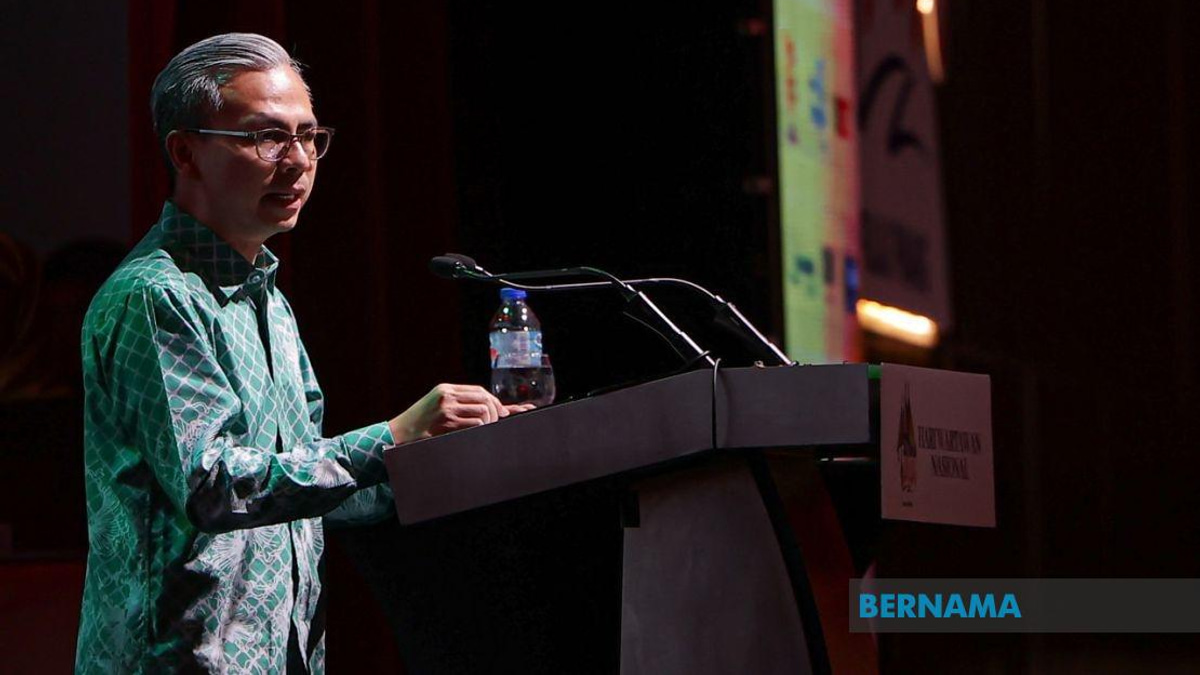
Prime Minister Datuk Seri Anwar Ibrahim's commitment to allocate an additional RM1 million to the Tabung Kasih@HAWANA welfare fund and sustain the Media Innovation Fund has drawn broad endorsement from Malaysia's news and broadcasting organisations, signalling renewed government investment in an industry grappling with digital transformation and economic pressures. The dual-track approach addresses immediate hardship among practitioners while equipping newsrooms with resources to modernise their operations and remain competitive in an increasingly fragmented media landscape.
Radio Televisyen Malaysia (RTM) director-general Ashwad Ismail characterised the announcement as proof of high-level recognition that the media sector must continuously evolve to survive technological disruption. He emphasised that the acceleration of artificial intelligence and digital tools is reshaping news production and audience engagement, demanding swift organisational adaptation. Ashwad underscored that Anwar's backing demonstrates understanding of the industry's dual need for financial support and policy commitment to enable transformation rather than entrench legacy practices. The RTM leader argued that maintaining funding for innovation is essential if Malaysian broadcasters and publishers are to compete globally and retain audience trust in an era when information moves at unprecedented speed.
The welfare dimension of the announcement carries particular significance for Malaysia's freelance journalism sector, which has contracted substantially over the past decade as advertising revenue migrated online and newsrooms downsized. Kelantan Darul Naim Media Club (KEMUDI) president Muhammad Yatimin Abdullah highlighted that the additional Tabung Kasih@HAWANA allocation directly supports former journalists and media workers facing hardship, acknowledging a social responsibility often overlooked in corporate restructuring. The fund serves as a safety net for individuals who built Malaysia's broadcast and print infrastructure during decades when stable employment was the norm, yet now face precarious livelihoods as business models collapsed.
Wan Syamsul Amly Wan Seadey, president of the Kuala Lumpur and Selangor Journalists Club, framed the announcement within the broader context of industry consolidation and job losses that have accelerated since the pandemic. He welcomed both components but voiced a strategic concern: that journalists themselves require targeted professional development to operate effectively with new tools and in new formats. Wan Syamsul proposed that HAWANA establish an education fund to enable working journalists and freelancers to upgrade skills in digital storytelling, data journalism, and multimedia production, addressing a gap that generic innovation funding may not fill. His suggestion reflects recognition that technology alone cannot sustain quality journalism; the workforce must evolve alongside systems and platforms.
The continuation of the Media Innovation Fund, which previously received RM30 million in allocations, holds particular weight given Malaysia's role as a regional media hub competing with established players in Singapore, Thailand, and Indonesia. Han Chiang University College of Communication lecturer Siti Nooraeina Omar argued that without sustained innovation investment, Malaysian media organisations risk irrelevance in a landscape where news consumption patterns shift rapidly across platforms and demographics. She noted that the industry cannot replicate twentieth-century operating models, emphasising that modernisation encompasses not only technology infrastructure but also editorial workflows, audience analytics, and content distribution strategies. Siti stressed that the fund's existence signals to Malaysian newsrooms that government recognises innovation as a prerequisite, not a luxury.
While acknowledging that funding accelerates adoption of efficiency tools, Siti highlighted a critical counterpoint that Anwar himself raised: journalists retain an essential gatekeeping and verification function that technology cannot replace. As artificial intelligence generates content and algorithms distribute information, the human role of assessing credibility and investigating claims becomes more rather than less important. This tension—between automation and human judgment—frames the actual challenge facing Malaysia's media industry. The innovation fund must therefore support not just technical upgrades but editorial capacity-building that enables journalists to add value through rigorous reporting and analysis rather than compete on speed alone.
The industry response reflects broader anxiety about media sustainability across Southeast Asia, where structural challenges mirror Malaysia's experience. Advertising markets continue fragmenting, younger audiences favour social media and aggregated content over traditional news sources, and smaller regional publishers lack resources to invest in digital transformation independently. Malaysia's government funding initiative stands apart in the region as an explicit recognition that media pluralism and quality journalism require public support beyond the market. The announcement signals that authorities understand media health as a public good, not merely an industry concern, though sceptics may question whether RM30 million in innovation funding adequately addresses the scale of change required.
The welfare fund component also carries symbolic importance in recognising journalism as a profession deserving social protection. In Malaysia, as across the region, journalists have faced income volatility, job insecurity, and sometimes physical danger in pursuit of their work, yet rarely receive the institutional safety nets available to other professions. The Tabung Kasih@HAWANA fund acknowledges that individual journalists and retirees deserve dignity and support, particularly those affected by industry contraction beyond their control. The additional RM1 million suggests the government recognises existing allocations may have reached capacity given rising demand.
Looking forward, the sustainability of both initiatives depends on their implementation quality and continued political prioritisation in future budgets. Malaysia's media landscape remains politically contested, with questions about editorial independence and government influence shaping public perception of domestic news sources. Funding announcements must be paired with clarity about allocation criteria and governance mechanisms to ensure both welfare support and innovation resources reach intended beneficiaries without creating perception of political influence over journalism. Transparent administration becomes essential for the funds to achieve their stated objectives and strengthen rather than compromise media credibility.
For Malaysian readers and media professionals, the announcement represents tangible support for an industry navigating existential change. Newsroom staff may access training funded by innovation allocations, struggling freelancers can access welfare support when faced with income shocks, and organisations can invest in digital platforms and capabilities that make their content competitive. However, the funds represent necessary but insufficient responses to structural challenges requiring broader media industry reform, including sustainable business model innovation and audience loyalty building. The real test lies in how effectively media organisations deploy these resources to create journalism that Malaysians value enough to support financially, whether through subscriptions, memberships, or continued advertising investment.