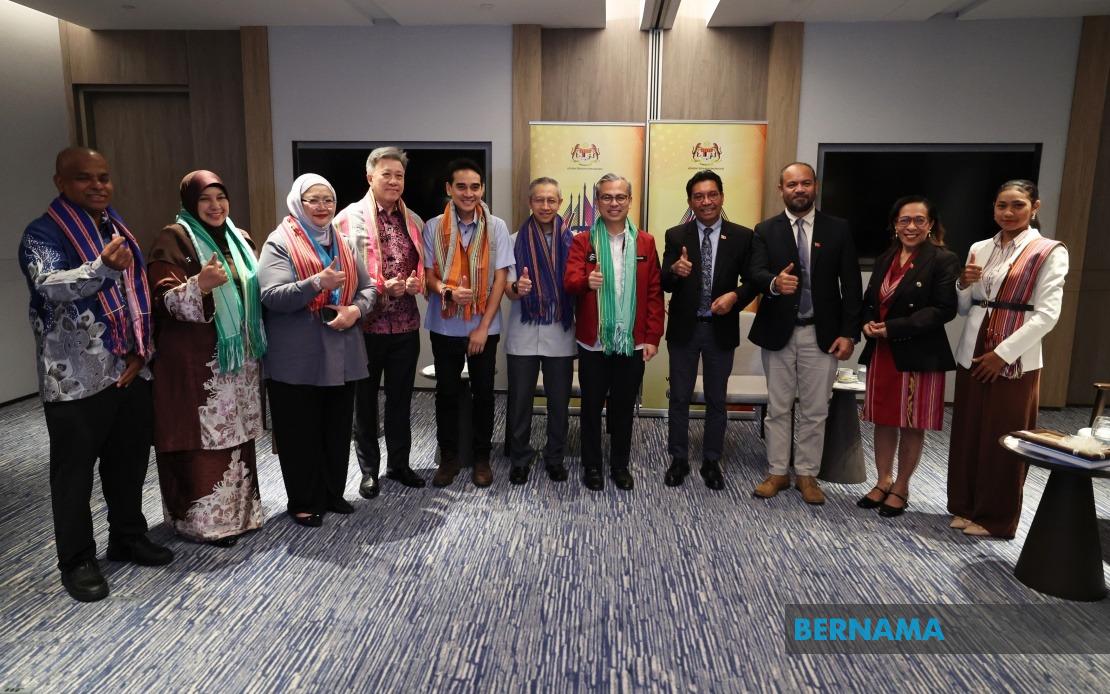
In a significant move to strengthen media ties within Southeast Asia, Malaysia's national news agency Bernama and Timor-Leste's Agência Noticiosa de Timor-Leste (TATOLI) have formalized their partnership through a memorandum of understanding focused on expanding news sharing, multimedia content exchange, and journalism training. The agreement was officially signed during the National Journalists' Day celebration in Butterworth on June 20, with Prime Minister Datuk Seri Anwar Ibrahim and Communications Minister Datuk Fahmi Fadzil witnessing the historic accord between the two ASEAN member states.
The collaboration carries particular significance given Timor-Leste's recent integration into ASEAN as the 11th member state in October 2025, marking a fresh chapter in Southeast Asian regionalism. For Malaysian audiences and media professionals, this partnership represents a deliberate effort to position local news agencies as architects of the regional narrative, rather than allowing international news organizations to dominate coverage of the region's affairs. Bernama Chief Executive Officer Datin Paduka Nur-ul Afida Kamaludin emphasized that the arrangement serves a dual purpose: reinforcing Bernama's standing on the global stage while ensuring that Southeast Asian perspectives are conveyed through indigenous news sources.
From a content distribution standpoint, the partnership will enable Bernama's reporting to reach Timorese audiences through TATOLI's platforms in multiple languages including Tetum, Portuguese, Bahasa Indonesia, and English. This linguistic diversity is crucial for media penetration in a country with varied language communities. Significantly, Bernama's existing multilingual capacity—already operating in Bahasa Melayu, English, Tamil, Mandarin, Arabic, and Spanish—will be expanded to include Portuguese, reflecting the practical necessities of the partnership and opening pathways to lusophone audiences worldwide. The linguistic expansion demonstrates how regional cooperation can enhance news agencies' global reach and relevance.
The training component of the agreement addresses a fundamental challenge facing developing media institutions: building professional capacity among journalists. TATOLI has already begun identifying reporters who will undertake training programs at Bernama before the end of the year, tapping into the Malaysian agency's substantial institutional expertise. Bernama brings more than two decades of continuous training experience, operating specialized facilities including the Bernama School of Journalism and the Bernama Excellence Centre. The agency's editorial teams span multiple production environments—from digital and online platforms to television, radio, and photography—providing TATOLI staff with exposure to contemporary journalism practices across diverse media formats.
For Southeast Asian journalism standards more broadly, this partnership addresses critical professional development needs in the region. Many ASEAN member states, particularly those with newer democratic institutions or less developed media infrastructure, face persistent gaps in journalistic training. By establishing direct knowledge transfer between established agencies like Bernama and emerging institutions like TATOLI, the agreement contributes to regional capacity-building efforts. The exchange of expertise in areas such as digital media production, news verification, and multimedia storytelling can help standardize professional practices across the region.
The emphasis both agencies place on journalistic ethics and press freedom resonates with broader Southeast Asian conversations about responsible reporting in an age of digital proliferation. TATOLI President Noémio Mateus Soares Falcão articulated concerns about information integrity in environments where news spreads rapidly across social media platforms, often without adequate verification. This shared concern reflects a regional consensus that press freedom must coexist with professional accountability—a delicate balance many Southeast Asian nations are still negotiating. The partnership implicitly endorses the principle that credible, locally-produced journalism serves societies better than unverified content circulating on digital platforms.
The timing of the agreement merits consideration within Malaysia's broader diplomatic strategy. Prime Minister Anwar Ibrahim's presence at the signing ceremony underscores the government's commitment to deepening ASEAN institutional ties in the post-accession period for Timor-Leste. For Kuala Lumpur, fostering strong media relationships with newer member states supports political objectives of regional cohesion and Malaysian soft power projection. Simultaneously, Penang Chief Minister Chow Kon Yeow and Bernama Chairman Datuk Seri Wong Chun Wai's attendance indicates state-level engagement with national media initiatives, suggesting coordinated effort across governmental levels.
The partnership also reflects institutional maturity at Bernama, which has operated as Southeast Asia's oldest national news agency since its establishment under an Act of Parliament in 1967. With 58 years of operational experience, Bernama has accumulated institutional knowledge about navigating media landscapes across varying political and social contexts. TATOLI, established in 2016, represents a newer generation of government news agencies designed for the contemporary media environment, yet faces the challenge of building sustainable institutional practices. The mentorship implicit in this arrangement—with Bernama providing templates and expertise—enables faster development of TATOLI's institutional capacity.
Regional observers should recognize that this partnership, while presented as technical media cooperation, carries geopolitical implications. Strengthening media infrastructure among ASEAN members and ensuring that regional narratives originate from Southeast Asian sources rather than international news conglomerates represents a form of soft power competition. As global media landscapes increasingly fragment into competing centers of news production, ASEAN nations have strategic interests in maintaining independent news gathering and distribution capabilities. Malaysia's facilitation of Timor-Leste's media development positions Kuala Lumpur as a responsible regional partner while simultaneously expanding Bernama's network and influence.
Looking forward, the practical implementation of this memorandum will reveal how effectively institutional knowledge transfers across significant contextual differences. Timor-Leste's media landscape differs substantially from Malaysia's in terms of market size, technological infrastructure, and regulatory frameworks. The success of the training programs will depend on TATOLI's ability to adapt Malaysian best practices to Timorese conditions rather than simply importing models wholesale. Similarly, Bernama's expansion into Portuguese-language reporting, while operationally straightforward, requires editorial judgment about newsworthiness thresholds and coverage priorities for lusophone audiences beyond Timor-Leste.
For Malaysian journalism professionals and media students, this partnership offers unexpected opportunities. As Bernama establishes Portuguese-language reporting capabilities, domestic journalists with language skills or interest in Luso-Asian affairs may find expanded career pathways. The formalized relationship with TATOLI also creates potential for reverse knowledge exchange, where Bernama personnel might learn about operating news agencies in post-conflict societies or countries undergoing rapid institutional development. Such bilateral learning arrangements, when properly structured, strengthen professional networks across the region and expose journalists to diverse operating contexts.
The National Journalists' Day celebration that hosted this agreement signing also featured participation from other ASEAN nations' media officials, including representatives from Cambodia and Laos. This broader gathering suggests that multiple Southeast Asian governments view media cooperation and journalist training as priorities during this period of institutional development. Malaysia's proactive role in facilitating such partnerships—both through Bernama's direct involvement and government-level support—positions the country as a leader in regional media governance discussions. As ASEAN continues integrating newer members and navigating contentious issues around press freedom, media infrastructure, and information governance, the frameworks being established now through partnerships like the Bernama-TATOLI accord will likely influence regional standards and practices for years ahead.