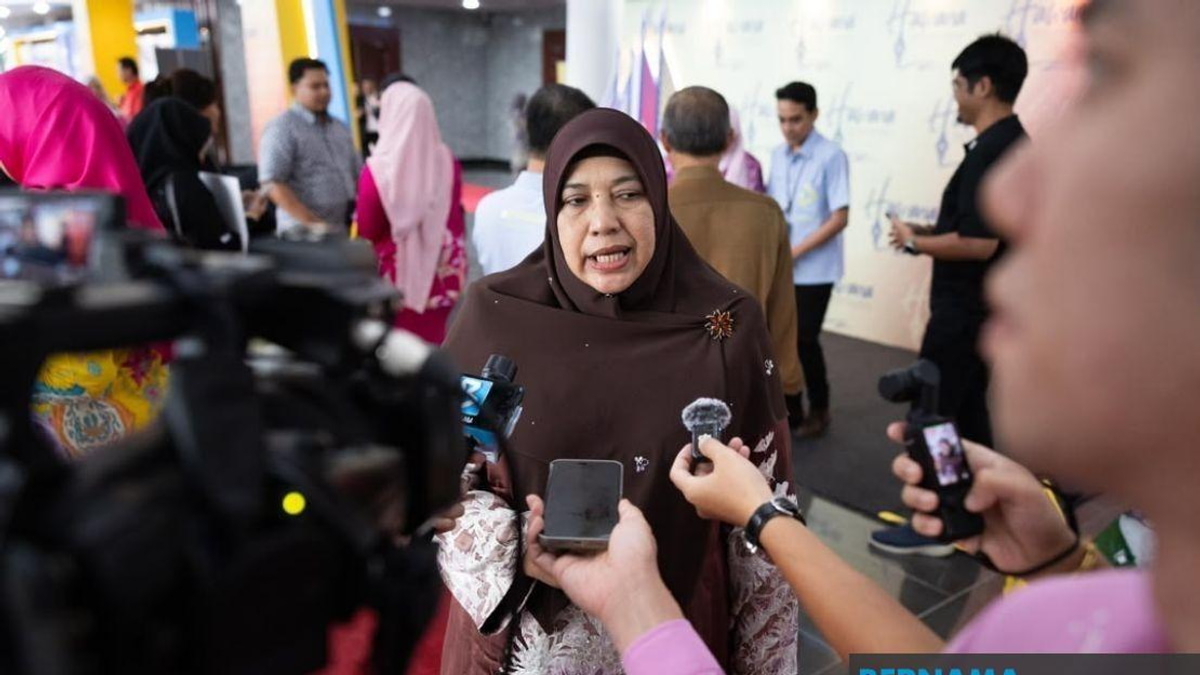
The Johor regent has disclosed that he exercises active oversight of the state government through direct and sometimes unconventional communication with senior officials, underscoring the continued relevance of the sultanate's advisory role in governance matters within the state. In candid remarks, he revealed that he does not hesitate to contact the menteri besar and state secretary at unusual hours—including 3am—whenever matters of concern require immediate clarification or urgent attention.
This disclosure offers insight into the behind-the-scenes mechanics of how Malaysia's traditional institutions interact with elected administrations, particularly in Johor where the state has long enjoyed considerable autonomy in regional affairs. The regent's willingness to bypass normal bureaucratic channels and reach out directly to top officials reflects both his constitutional position as custodian of state interests and a hands-on approach to ensuring accountability. Such interventions, while rare in many other Malaysian states, appear embedded in Johor's governance culture where the palace maintains a visible presence in policy discussions.
The late-night calls serve as a pressure mechanism that operates outside formal state assembly sessions or cabinet meetings. By contacting the menteri besar and state secretary at irregular hours, the regent signals urgency and demonstrates that no issue is too minor or too well-buried to escape his notice. This approach has implications for how senior government officials conduct their responsibilities, knowing they may face sudden interrogation about pending matters at any time. The practice also suggests that some issues cannot be resolved through standard administrative channels and require escalation to the highest authority.
For Malaysian readers, the regent's comments illuminate a dimension of constitutional monarchy that extends beyond ceremonial duties. While the Federal Constitution limits the monarch's direct executive power, sultans retain advisory authority and custodial responsibilities over state welfare. In Johor, where Sultan Ibrahim Iskandar has been vocal on development and administrative matters, the regent's monitoring activities represent an extension of institutional vigilance. This sits within historical precedent, as Johor's palace has traditionally wielded considerable influence over state-level decision-making, a legacy that continues under the current administration.
The revelation also sheds light on governance challenges that persist despite established reporting structures and ministerial hierarchies. If the regent feels compelled to personally intervene and seek explanations on unresolved issues, it suggests that routine oversight mechanisms may sometimes fall short. Senior civil servants and politicians may become insulated from accountability through layers of bureaucracy, making direct palace contact a necessary corrective tool. This dynamic, while ensuring checks and balances, also reflects a gap between what happens in formal meetings and what actually gets resolved on the ground.
From a Southeast Asian perspective, Johor's approach stands out among regional democracies where monarchical institutions maintain active engagement in governance. While Thailand's palace has faced international scrutiny over its involvement in state matters, and regional democracies typically minimize such overlap, Malaysia's constitutional framework permits sultans a defined advisory capacity. Johor's regent appears to interpret this mandate expansively, viewing it as a responsibility to push for effective administration rather than merely rubber-stamping decisions made by elected officials.
The practice of 3am calls raises questions about governmental efficiency and the distribution of decision-making authority. If critical matters remain unresolved and require palace intervention to gain traction, this suggests possible bottlenecks in the menteri besar's office, state secretariat, or specific departments. Alternatively, it may indicate that some officials lack the authority or political capital to resolve cross-departmental issues independently, necessitating the regent's weight to move them forward. Either interpretation points to administrative structures that could benefit from streamlining.
The regent's statement also has implications for how Johor's administration is perceived both domestically and internationally. Investors and stakeholders may view palace oversight as either a reassuring safeguard against misgovernance or a troubling sign of instability and unclear lines of authority. Clear accountability hierarchies typically reassure investors, whereas hints of institutional friction or unresolved issues can create uncertainty. The regent's involvement, framed as quality control, may paradoxically signal underlying governance concerns that regular systems have not adequately addressed.
Looking forward, the regent's disclosure normalizes a supervisory role that blurs formal boundaries between the ceremonial and the operational. This carries broader implications for how constitutional monarchies function in modern democracies. If palace institutions increasingly intervene in administrative details, questions arise about whether elected representatives retain sufficient autonomy to govern effectively. Conversely, complete non-involvement would arguably constitute a dereliction of custodial duty. The tension between these poles shapes how Malaysian states navigate governance in the contemporary era.
For the Johor state government specifically, the regent's vigilance serves as a constant reminder that performance standards are monitored at the highest institutional levels. This may spur officials to resolve matters more efficiently rather than allowing them to languish in bureaucratic pipelines. Whether the frequency of 3am calls has increased or decreased over time remains unclear, but the practice itself establishes an implicit threat of palace intervention for any official perceived as underperforming or negligent in their duties.