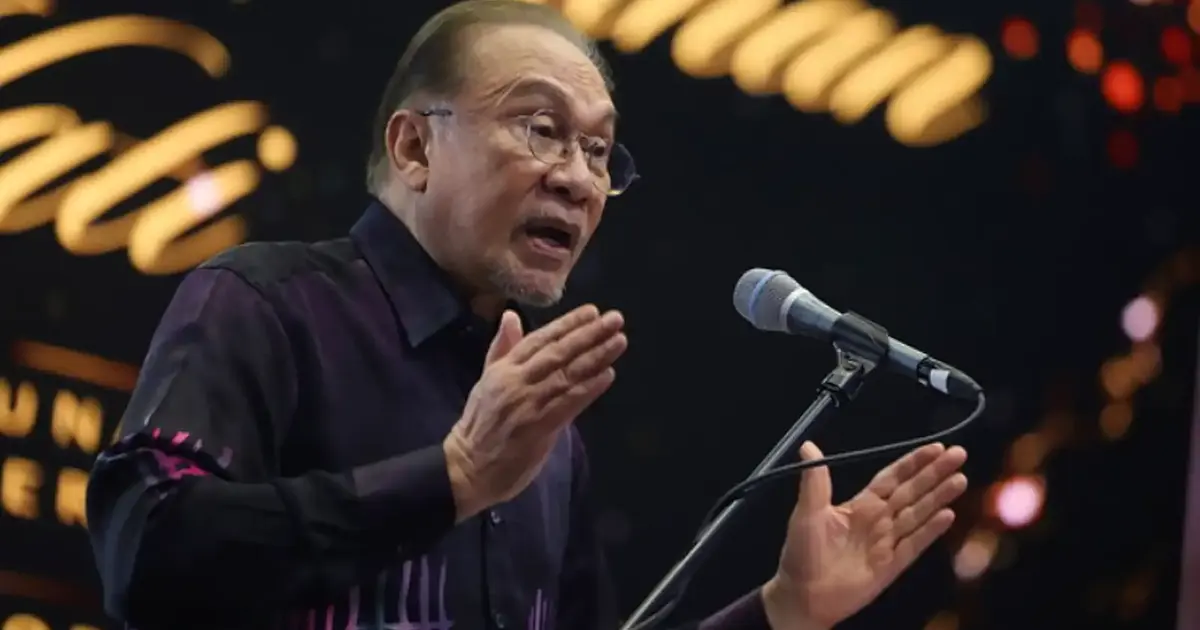
Prime Minister Anwar Ibrahim has issued a pointed call for Malaysians to move beyond hateful rhetoric being deliberately spread by specific political figures, positioning the country's multicultural fabric as central to its competitive advantage and future prosperity. The remarks underscore growing concerns within government circles about inflammatory messaging in the political landscape and the potential consequences of divisive discourse on social cohesion.
Anwar's statement places ethnic diversity squarely at the centre of Malaysia's national identity and economic resilience. The framing reflects a deliberate strategic choice by the Prime Minister to counter what he perceives as attempts by certain quarters to weaponise communal differences for political gain. Rather than engage directly with specific incidents or individuals, Anwar chose to appeal to broader principles of national unity, suggesting a preference for elevating the conversation above personalised confrontations.
The timing of Anwar's appeal carries significance within Malaysia's contemporary political context. The country has witnessed periodic flare-ups of communal tensions in recent years, often triggered by provocative statements on social media or public platforms. These incidents have periodically shaken investor confidence and raised international concerns about Malaysia's stability. By publicly reiterating the value of diversity, Anwar appears intent on reassuring both domestic audiences and external observers that the government remains committed to maintaining harmonious interethnic relations.
For Malaysian readers, the Prime Minister's emphasis on diversity as a strength speaks to practical, tangible benefits beyond abstract notions of harmony. A multicultural workforce and consumer base have historically attracted multinational corporations and contributed to Malaysia's position as a regional financial and commercial hub. The manufacturing sector, financial services, technology industries, and tourism all benefit from the cosmopolitan character that ethnic plurality provides. Erosion of social trust through divisive politics carries real economic costs that extend beyond headline incidents.
Anwar's implicit critique of certain leaders suggests a recognition that hate speech and divisive rhetoric have become more prevalent or brazen within Malaysian politics. The phenomenon is not unique to Malaysia; democracies across Southeast Asia and globally have grappled with the normalisation of inflammatory language in electoral cycles. However, Malaysia's particular vulnerability stems from its constitutional compact around religion, ethnicity, and special rights—a carefully calibrated settlement that requires constant renegotiation and mutual forbearance to function effectively.
The political calculation underlying Anwar's statement warrants examination. By framing the issue as one of national interest rather than partisan advantage, the Prime Minister positions his government as the adult in the room, concerned primarily with stability and progress. This rhetorical strategy can be effective in mobilising moderate voters and reassuring business communities. Simultaneously, it implicitly challenges opposition figures and other actors engaging in divisive messaging, placing them on the defensive if they respond with further inflammatory statements.
Educational and institutional responses to hate speech remain limited in Malaysia. While the law provides tools through sedition statutes and communal harmony provisions, enforcement has been inconsistent and sometimes controversial. Civil society organisations have expanded their work on building intercommunal dialogue, yet these efforts reach limited audiences. Anwar's intervention suggests the government recognises that curbing divisive rhetoric requires more than legislative tools; it demands consistent messaging from the highest political levels that diversity is genuinely valued rather than merely tolerated.
The challenge facing Malaysia extends beyond any single leader's rhetoric. Demographic pressures, economic inequality, competition for resources, and identity anxieties create fertile ground for divisive messaging regardless of whether specific politicians actively cultivate such sentiment. Anwar's appeal thus implicitly acknowledges that the work of maintaining social cohesion is never finished; it requires continuous affirmation and active commitment from political leaders.
For Southeast Asian observers, Malaysia's management of ethnic diversity remains instructive. The region contains numerous plural societies where different ethnic, religious, and linguistic communities must coexist. How Malaysia navigates contemporary pressures—including economic disruption, digital platforms that amplify divisive content, and generational shifts in identity consciousness—may offer lessons or cautionary tales to neighbouring countries. Anwar's public stance signals that the Malaysian government intends to defend its multicultural model rather than permit its erosion through unchecked inflammatory rhetoric.
Looking forward, the practical test of Anwar's commitment will lie in concrete government actions and policy choices that reinforce rather than undermine interethnic trust. Allocation of resources, advancement opportunities, and recognition across different communities ultimately matter more than rhetorical appeals. The Prime Minister's words carry weight primarily when backed by institutional practices that genuinely reflect the valuing of diversity at multiple levels of governance.
Anwar's intervention also reflects awareness that divisive rhetoric, once unleashed, becomes difficult to contain. Early and consistent pushback from credible authority figures can help establish norms that delegitimise hate speech as a political strategy. Conversely, silence or weak responses risk emboldening further inflammatory messaging and shifting the Overton window of acceptable political discourse toward greater extremes. The Prime Minister's choice to speak out publicly signals that he views the stakes as sufficiently high to warrant direct engagement with the issue at the highest level.