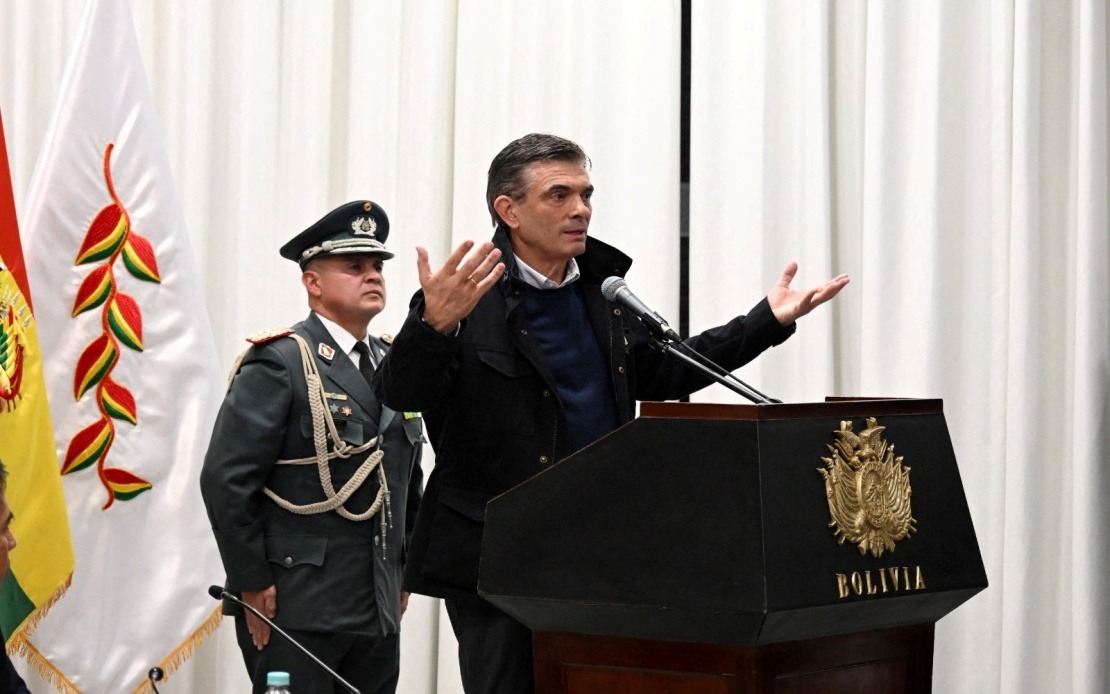
Bolivia has descended into acute political turmoil as President Rodrigo Paz invoked emergency executive powers to confront a spiralling crisis that has paralysed large swathes of the South American nation. The declaration, announced in a televised address on Saturday, represents an escalation in response to sustained anti-government demonstrations that have now persisted for fifty days, creating a humanitarian and economic emergency across multiple regions.
The root of the crisis lies in mounting social discontent over deteriorating living conditions and economic mismanagement. Workers' unions and farming associations have mobilised their members to erect roadblocks at strategic locations, effectively bottlenecking commerce and supply chains. Their core demand remains unambiguous: Paz must step down from office. The blockade movement reflects broader frustration with inflationary pressures, reduced purchasing power, and what protesters characterise as governmental neglect of ordinary Bolivians' material welfare.
The humanitarian toll of the extended blockade has become severe and measurable. Food shortages have emerged in multiple communities as agricultural produce cannot reach urban markets. Fuel supplies have dwindled dangerously, affecting transport networks and essential services. Medical facilities report critical shortages of pharmaceuticals and equipment, forcing patients to postpone necessary procedures. Schools have shuttered, depriving children of education. This confluence of deprivations underscores how infrastructure disruption rapidly metastasises into broader social breakdown when sustained over weeks rather than days.
Paz's public comments reveal the administration's frustration with the blockade tactic's effectiveness and durability. In his televised remarks, he invoked stark language about citizens being held "hostage" by circumstances preventing them from working, studying, accessing healthcare, purchasing food, and sustaining their families. This framing attempts to shift blame from governmental policy failures toward the protest movement, portraying the emergency declaration as a necessary measure to restore normalcy rather than a suppression of legitimate dissent.
The state of exception mechanism deployed by Paz carries significant constitutional and practical implications. By invoking this extraordinary measure, the president has cleared legal pathways for deploying military units to dismantle blockades and restore road access nationwide. Such deployment raises thorny questions about proportionality, force use, and potential for confrontation between uniformed personnel and civilian protesters. Bolivia's historical experience with military interventions in civilian politics remains a sensitive chapter, making this recourse politically fraught despite the administration's insistence on restrained implementation.
For Malaysia and Southeast Asian observers, Bolivia's unfolding crisis offers instructive parallels and contrasts worth examining. The region has experienced its own iterations of large-scale protests and blockades, from Thai demonstrations to Myanmar's turmoil. The Bolivian case illustrates how sustained economic mismanagement creates political vulnerability and how organised labour movements retain considerable disruptive capacity even against incumbent governments. Unlike some Southeast Asian contexts where military interventions carry historical weight justifying caution, Bolivia demonstrates the tension between restoring immediate order and addressing underlying grievances.
The economic dimensions demand scrutiny as well. Bolivia's crisis reflects commodity price volatility, foreign exchange pressures, and perhaps monetary policy missteps. These are not unique to Bolivia but resonate across developing economies including those in Southeast Asia where export dependency and external price shocks create similar vulnerabilities. Understanding how Bolivia's authorities respond to this conjuncture—whether through structural reforms or temporary order restoration—holds lessons for regional policymakers navigating comparable pressures.
The blocking coalition's durability and coordination across workers' unions and agricultural interests suggests sophisticated organisation. Rather than dissipating after weeks of disruption, the movement has maintained cohesion around its central demand for presidential departure. This persistence indicates deep-rooted discontent rather than ephemeral grievance, suggesting that military deployment to clear roads addresses symptoms rather than underlying causes. Paz faces a strategic dilemma: military force may restore physical circulation of goods temporarily, but it cannot address the economic policies generating the original protest wave.
International attention to the Bolivian situation remains muted compared to crises in other regions, yet the situation warrants monitoring. The declaration's implementation will reveal whether authorities exercise restraint or employ heavy-handed tactics that escalate tensions further. Bolivia's regional partners and global stakeholders will watch closely for signs of either genuine dialogue opening with protest representatives or hardening positions suggesting prolonged confrontation ahead.