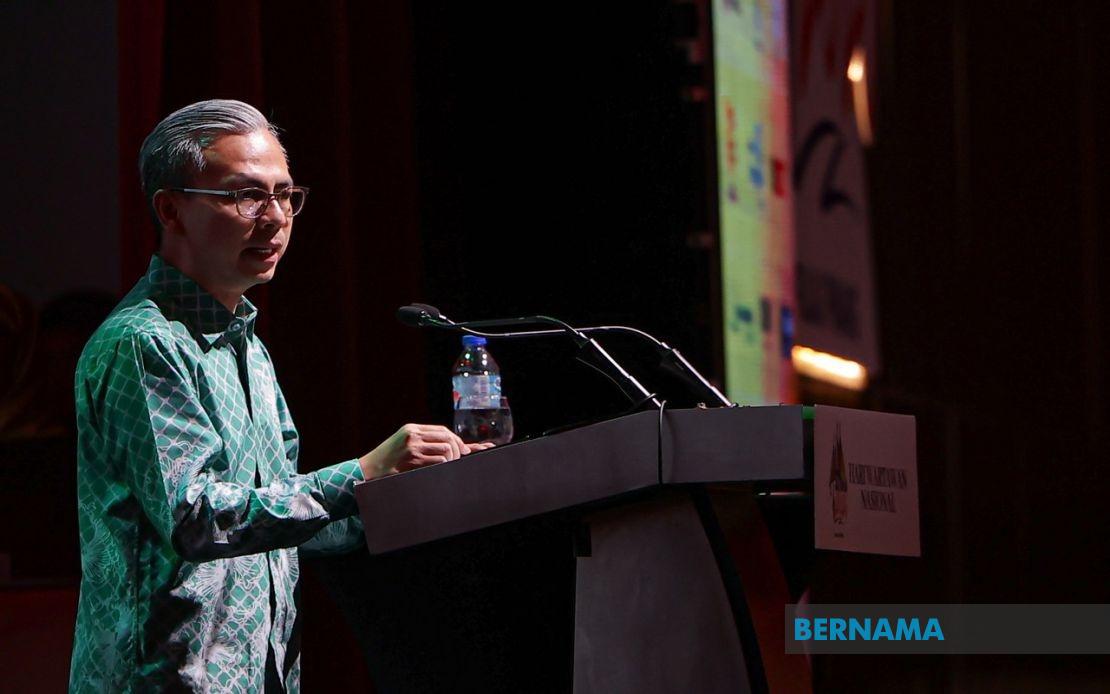
Telekom Malaysia has assumed the role of strategic partner for Tabung Kasih@HAWANA, pledging RM500,000 through its corporate social responsibility programme to sustain financial assistance for media workers across Malaysia. The announcement was made by Communications Minister Datuk Fahmi Fadzil during the National Journalists' Day 2026 celebrations in Butterworth, an event attended by Prime Minister Datuk Seri Anwar Ibrahim and Penang Chief Minister Chow Kon Yeow.
The fund, which was launched in April 2023, has already distributed RM2.26 million to 773 media practitioners facing financial hardship. TM's contribution will expand the reach of these assistance programmes, ensuring that more journalists and former media workers can access emergency support during times of difficulty. For a sector facing unprecedented economic pressures, such corporate partnerships represent a lifeline to employees struggling with reduced incomes and job security.
Minister Fahmi emphasised the critical importance of corporate engagement with Malaysia's media sector. He highlighted that the industry faces a structural crisis in advertising revenue, with annual advertising expenditure collapsing from RM4.5 billion to approximately RM2 billion in recent years. This dramatic contraction—representing a decline of more than 55 percent—has forced newsrooms nationwide to make painful staffing decisions and reduced their capacity to produce quality journalism. The financial squeeze extends beyond major newsrooms to freelancers and contract workers who often lack formal employment protections.
Fahmi's appeal to government-linked companies and private enterprises carries particular weight given the scale of the advertising downturn. He explicitly urged businesses to redirect media buys towards local Malaysian media organisations, framing such spending as both a commercial decision and a patriotic investment in the country's information ecosystem. The call reflects growing recognition among policymakers that media sustainability is not merely a commercial concern but a public interest matter, given journalism's role in accountability and democratic governance.
Beyond the immediate welfare assistance, the Malaysian government is pursuing parallel initiatives to strengthen media capabilities. Minister Fahmi announced official support for Project Sigma 2.0, a programme led by Google Malaysia in partnership with the Malaysian Media Council and the Malaysian Press Institute. This initiative aims to equip media personnel with skills in emerging technologies and artificial intelligence, ensuring journalists remain competitive and relevant as the information landscape undergoes rapid transformation. Such upskilling programmes address a secondary challenge facing the sector: the need to adapt business models and editorial practices to digital-first audiences.
The event also marked a significant diplomatic development for the region. Bernama, Malaysia's national news agency, formalised a memorandum of understanding with TATOLI, Timor-Leste's national news agency. This collaboration signals deepening media cooperation within ASEAN, particularly following Timor-Leste's accession as the bloc's 11th member state last year. For Malaysian media, the arrangement opens avenues for story exchange, journalist training partnerships, and joint coverage of regional developments that affect ASEAN collectively.
Minister Fahmi positioned the Bernama-TATOLI accord within a broader narrative about ASEAN solidarity and regional integration. He noted that Timor-Leste's admission represents the association's commitment to inclusivity and shared prosperity, principles that extend logically to enhanced media cooperation. For Southeast Asian news organisations, such partnerships help level the playing field against international news outlets that dominate regional coverage, and they create opportunities for ASEAN voices to shape the region's own narrative about itself.
The announcement of TM's partnership and the communications minister's public advocacy for corporate media support reflect a governmental strategy to address industry fragility through multiple channels simultaneously. Direct welfare assistance through Tabung Kasih@HAWANA addresses immediate human need. Corporate partnerships leverage private sector resources. Skills development programmes prepare the workforce for economic transition. And regional cooperation initiatives create new business and collaboration opportunities. Together, these interventions suggest recognition that no single solution will stabilise Malaysia's media sector.
For Malaysian businesses considering their own media partnerships, TM's move may serve as both model and prompt. The RM500,000 commitment is significant enough to generate positive goodwill and measurable impact, yet modest enough that other major corporations could match or exceed it without extraordinary budgetary strain. In an environment where advertising budgets have halved, even modest increases from corporate buyers could provide meaningful relief to newsrooms operating with skeleton staffs and curtailed coverage.
The longer-term implications for Malaysia's media ecosystem remain complex. While corporate support and government backing can sustain struggling outlets in the short term, they do not resolve fundamental business model challenges. Digital disruption, audience fragmentation, and competition from free online content continue reshaping how people access news. Media organisations will ultimately need to develop sustainable revenue streams beyond advertising—through subscriptions, membership models, events, and branded content—to achieve long-term independence and viability.
Nevertheless, initiatives like TM's partnership provide crucial breathing room during this transition period. They ensure that experienced journalists remain employed, that newsrooms can maintain basic editorial operations, and that Malaysia continues producing domestic journalism capable of holding institutions accountable. The alternative—rapid collapse of commercial media infrastructure—would create an information vacuum increasingly filled by unverified online sources and the unchecked narratives of powerful interests.
The convergence of welfare support, corporate partnerships, skills development, and regional cooperation reflects an emerging consensus among Malaysian policymakers that media sustainability requires active engagement across multiple fronts. While critics might question whether corporate-dependent models can produce fully independent journalism, the immediate reality is that without such support, Malaysia's media workforce faces deteriorating conditions and the country loses the institutional capacity for quality news gathering. For now, TM's contribution and the minister's calls for broader corporate engagement represent pragmatic efforts to stabilise an industry in crisis.