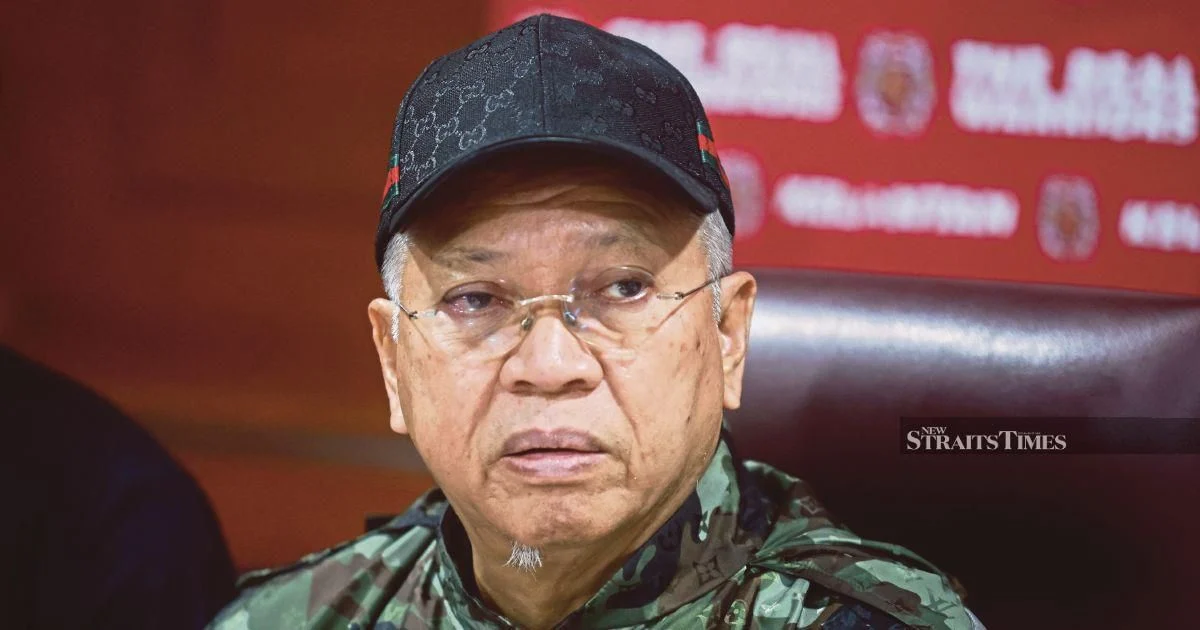
Tan Sri Annuar Musa has acknowledged his inability to bridge widening divisions between PAS and rival factions within Bersatu, laying bare the mounting strain threatening the Perikatan Nasional coalition. Speaking in his home state of Kelantan, the senior political figure revealed he had undertaken multiple personal mediation efforts to arrest the deterioration of relations within PN's power structure, yet these initiatives ultimately yielded no meaningful breakthrough.
The disclosure comes at a critical juncture for the Islamist-led coalition, which has struggled to maintain cohesion despite commanding substantial parliamentary representation. Internal tensions have simmered beneath the surface for months, with personality clashes and competing visions for the bloc's future direction creating a volatile political environment. Annuar's candid admission represents a rare public acknowledgement of the scale of the problem facing PN leadership, suggesting that behind-the-scenes diplomatic channels have proven inadequate to resolve fundamental disagreements.
The tensions between PAS and the competing Bersatu camps reflect broader fissures in Malaysian politics that transcend simple factional disputes. Bersatu, which was instrumental in the 2020 political realignment that brought PN to power, has fractured into distinct groupings with differing strategic priorities and leadership aspirations. These divisions have created an unstable foundation for the coalition, as different factions pursue divergent agendas that sometimes work against collective party interests. PAS, strengthened by its strong showing in recent electoral contests, has simultaneously sought to assert greater influence within PN's decision-making structures, exacerbating tensions with a weakened Bersatu.
For Malaysian political observers, Annuar's failed reconciliation attempts underscore a critical vulnerability in PN's long-term viability. The coalition's ability to function effectively depends on maintaining at least a working consensus among its constituent parties, yet the mechanisms for managing internal disputes appear insufficient. Annuar's position as a respected elder statesman within PN gave his mediation efforts considerable credibility, suggesting that the difficulties facing the alliance run deeper than personality conflicts or negotiating tactics alone.
The repercussions of these unresolved tensions extend beyond the immediate confines of PN politics. Malaysia's broader political equilibrium rests partly on the stability of parliamentary alliances, and a coalition in visible disarray creates uncertainty for governance and legislative initiatives. For ordinary Malaysians, such rifts can translate into delayed decision-making on critical national issues, as parties prioritise internal survival over collective policymaking. The instability also potentially weakens PN's ability to present a unified front when engaging with other political blocs or addressing urgent matters of public concern.
Regionally, the deterioration of Malaysia's ruling coalition draws attention to a wider pattern of political fragmentation across Southeast Asia. Many countries in the region grapple with similar challenges of maintaining cohesive governing alliances amid competing interests and competing power bases. The Malaysian case provides a cautionary example of how ideological differences, personality clashes, and unequal power distributions can gradually erode even formally strong political partnerships. Other regional blocs watching PN's struggles may recognise uncomfortable parallels in their own political structures.
The timing of Annuar's statement carries additional significance, arriving amid speculation about potential broader realignments in Malaysian politics. Should PN continue to fracture, discussions about reconstituting parliamentary majorities or reconfiguring ruling coalitions may accelerate. Such scenarios could fundamentally reshape the Malaysian political landscape and create unpredictable consequences for governance. The opposition coalition also watches these developments closely, calculating whether PN's internal weakness creates openings for political repositioning.
Annuar's transparency about his failed efforts, while politically candid, may also signal that PN leadership has largely abandoned hopes for quick fixes to internal divisions. This apparent resignation could indicate that the coalition has entered a new phase where parties pursue strategies aligned with self-preservation rather than collective advancement. Such a shift typically heralds either a hardening of internal divisions or increasingly transactional relationships among coalition members, neither scenario conducive to stable governance.
Moving forward, PN faces a choice between undertaking more systematic structural reforms to its decision-making processes or accepting a future of permanent internal tension. History suggests that coalitions do not resolve deep-seated disputes through informal mediation alone; rather, durable solutions typically require formal mechanisms for dispute resolution, clearly defined power-sharing arrangements, and demonstrable benefits to maintaining unity. Without such institutional reforms, PN risks sliding toward irrelevance or eventual collapse, outcomes that would reverberate through Malaysia's political system.
For Malaysian voters and stakeholders invested in political stability, the implications of PN's travails warrant close monitoring. Coalition politics remains central to Malaysian governance, and the performance of ruling blocs directly affects policy implementation and national development. The coming months will reveal whether PN can develop new strategies to manage its internal conflicts or whether the alliance will continue its current trajectory of visible disintegration.