Navigating George Town, Penang's UNESCO-listed heritage district, often feels like following a script written by earlier tourists. The predictable route winds through Beach Street, Armenian Street and the established heritage precinct, where souvenir shops and restored colonial buildings dominate the landscape. Yet beyond these well-trodden paths lies Jalan Burma, a nearly 5-kilometre arterial thoroughfare that challenges this conventional itinerary by merging Penang's layered history with its contemporary reputation for exceptional cuisine. What makes this street particularly compelling is not merely that it hosts heritage architecture or Michelin-recognised food stalls—it is that these elements coexist naturally, without the retrofitted quality that characterises much heritage tourism elsewhere in Southeast Asia.
The physical length of Jalan Burma itself tells a story. Stretching from the border of George Town's heritage zone all the way to the upscale Pulau Tikus neighbourhood, the road functions as an unofficial boundary between the densely packed historical core and the more spacious residential areas beyond. This geographical position has made it historically significant long before the current dining renaissance. Originally named Burmah Road—a designation still visible on aged signboards—the street acquired multiple names across different linguistic communities. Malay speakers knew it as Jalan Tarek Ayer or Water Cart Road, reflecting its original function in transporting water via bullock carts during the 19th century. Hokkien and Cantonese communities called it Gui Chia Chui and related variants, all variations on the same practical description. An information board positioned beneath the Komtar Octopus Pedestrian Bridge preserves this multilingual nomenclature, offering contemporary visitors a tangible reminder that Penang's identity was never monolithic but rather emerged from successive waves of settlement and commerce.
The emergence of the Burmese name came later, following the establishment of a Burmese settlement in Pulau Tikus during the 19th century. This historical inflection point explains why the immediate vicinity still carries Burmese cultural markers: Rangoon Road, Mandalay Road and Moulmein Close branch from or near Jalan Burma, while the Dhammikarama Burmese Temple, established roughly two centuries ago, remains accessible via one of the smaller lanes. For travellers accustomed to heritage districts where cultural layering is reduced to cosmetic touches, this persistence of genuine historical imprint proves refreshing. The Burmese influence did not fade into nostalgia but rather became absorbed into Penang's wider tapestry, contributing to the cosmopolitan character that distinguishes the island from Malaysia's other heritage destinations.
The contemporary catalyst for rediscovering Jalan Burma arrives in the form of fine dining establishments and Michelin-recognised street food venues. Penang maintains 74 eateries on the Michelin Guide, an impressive concentration that underscores the island's food tourism significance. Of these, two establishments hold one-star awards, 33 appear on the Bib Gourmand list—which celebrates excellent value and quality—and 39 are designated Michelin Selected venues. Clustering heavily in George Town, these establishments offer visitors a structured framework for exploring the city's culinary landscape without surrendering to either elitist fine dining or the paralysis of unlimited choice. Jalan Burma houses several such venues, with Duck Blood Curry Mee operating as a modest stall a few doors from a newly restored heritage property, while Green House Prawn Mee & Loh Mee operates from Restoran Old Green House, the original location that locals insist outperforms a newer satellite branch.
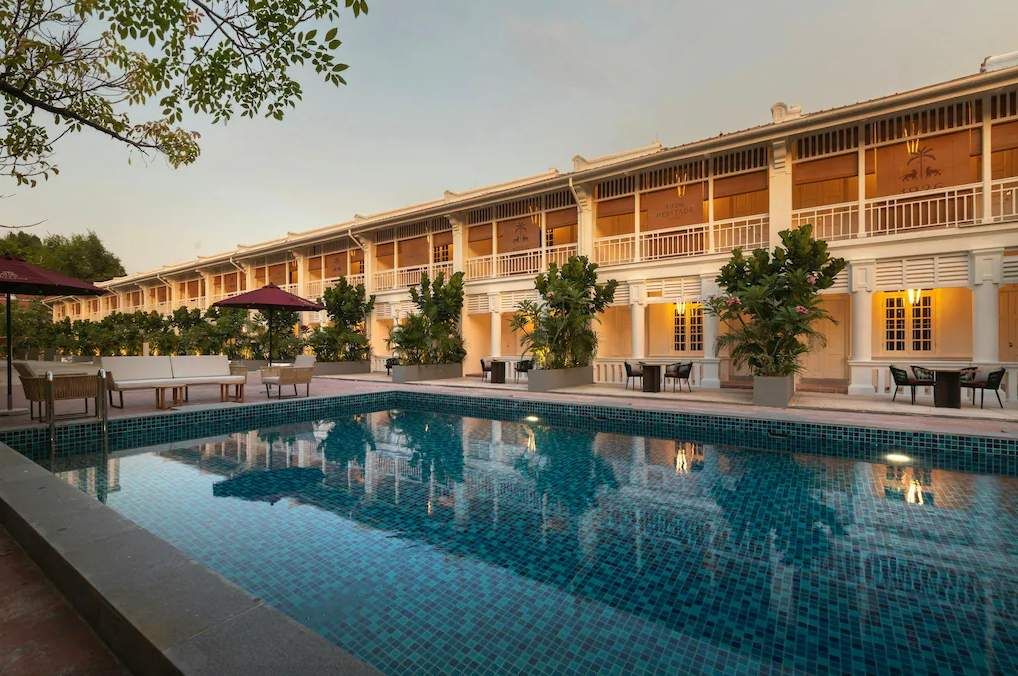
The convergence of heritage conservation and culinary distinction finds physical expression in the renovated hotel anchoring Jalan Burma's heritage sector. Constructed in 1926 and thus marking its centennial year, the building exemplifies Anglo-Malay architectural conventions that characterised colonial Penang. Originally comprising 24 interconnected link houses serving as residential quarters for British and local government employees, the structure was repurposed into a hotel by the Penang Development Corporation in 1999. The conversion respected the original fabric: the 24 link houses now contain 78 rooms and suites across six categories, from Heritage Rooms designed for solo travellers to the Straits Suite, the largest accommodation option. This adaptive reuse represents precisely the kind of heritage intervention that satisfies both conservation principles and contemporary hospitality demands, preserving authenticity whilst generating revenue for ongoing maintenance.
Walking Jalan Burma presents a distinctly different experience from the compressed heritage zone. At nearly 5 kilometres, the street demands genuine pedestrian commitment but rewards it with relative quiet and a sense of gradual discovery. Most sections provide proper pedestrian paths, though one or two stretches lack formal walkway infrastructure. The street itself feels safer than some heritage zone alleys, and the extended walk provides both literal distance from the tourist crowds and psychological separation from the commercial intensity that characterises Lebuh Chulia or Beach Street. For visitors accustomed to rushing through heritage districts on predetermined circuits, the enforced pace of a multi-kilometre walk forces alternative engagement: observing how locals actually move through the neighbourhood, noting which shops attract genuine patronage rather than tourist footfall, and arriving at restaurants during natural meal times rather than peak tourist hours.
The Michelin Bib Gourmand designation carries particular resonance for visitors seeking authenticity without sacrificing quality. These establishments—humble street stalls and coffeeshop vendors rather than fine dining establishments—embody a philosophy that Penang's culinary excellence emerges from consistency, technique and ingredient selection rather than elaborate presentation or exclusive ambiance. Duck Blood Curry Mee represents this category perfectly: a simple operation serving a single speciality from a stall position, yet recognised internationally for executing that speciality with sufficient skill to merit Michelin acknowledgment. Similarly, Green House Prawn Mee & Loh Mee has earned its Bib Gourmand status by perfecting noodle dishes within an unpretentious shophouse restaurant. For regional visitors exploring Penang, these venues offer something that fine dining restaurants cannot: they represent Penang as locals experience it, not Penang packaged for external consumption.
Navigating Penang's food landscape requires adopting frameworks that transform apparent chaos into legible structure. While establishing a single unified food zone proves impossible—the island's hawker culture sprawls across the entire cityscape—visitors can chart routes according to practical categories: halal options, pork-free establishments, street food specialists, cafes, or nasi kandar restaurants, the regional rice-and-curry combination that enjoys near-legendary status among Penang food enthusiasts. This categorical approach proves infinitely more useful than geographic organisation. The ongoing regional debate over which nasi kandar establishment deserves supreme status—disputes that rival sports team loyalties in intensity—actually assists visitors by creating multiple equally valid entry points. Similarly, Michelin recognition provides a ready-made filtering system for those willing to entrust their meal selections to international culinary authority. Jalan Burma benefits from this multiplicity: it accommodates Michelin-focused itineraries whilst remaining accessible to visitors following other gastronomic philosophies.
The street also functions as a practical compromise between authenticity and accessibility. Travellers arriving in Penang with limited time often default to social media recommendations, join whatever crowds appear densest, or revisit familiar establishments from previous visits. Others specifically pursue Michelin-recognised venues as their primary cultural engagement. Neither approach is inherently superior, but Jalan Burma accommodates both simultaneously. A visitor might breakfast at Duck Blood Curry Mee, lunch at Green House Prawn Mee, and reserve evening dining at Root House by Gen, the modern Chinese restaurant within the heritage hotel, experiencing Penang's culinary range across a single arterial road. The walk between venues, totalling approximately 4 kilometres round-trip from the hotel, provides deliberate separation between meals and forces engagement with the street's actual character rather than mere commodity consumption.
The integration of heritage preservation with culinary tourism represents a significant development for Southeast Asian cities seeking to move beyond postcard-dependent heritage models. Traditional approaches reduce historic districts to museum-like environments where locals are gradually displaced by rising commercial rents, replaced by souvenir vendors and cafes designed explicitly for tourist photography. Penang's alternative model—one increasingly visible along Jalan Burma—maintains heritage infrastructure whilst encouraging genuine economic activity through food tourism. This approach generates revenue for building maintenance and conservation, provides employment for local food vendors and hospitality workers, and attracts visitors motivated by culinary interest rather than mere heritage ticking-off. The result resembles actual urban life more closely than the hollowed-out heritage zones that characterise some Malaysian cities.
For regional travellers familiar with Penang's established reputation, Jalan Burma offers rediscovery rather than first discovery. The street has always existed, always hosted food vendors, always contained historical buildings. What has changed is the deliberate framing of it as a cohesive destination worthy of dedicated time investment. This reframing reflects broader shifts in how Asian cities market themselves to regional and international audiences. Rather than perpetually cycling the same heritage routes—Beach Street, Armenian Street, the perpetually crowded Georgetown Attractions—adventurous visitors now possess frameworks for exploring secondary streets that contain equivalent historical significance with substantially fewer tourist crowds. The Hin Bus Depot, operating as a weekend marketplace featuring local artisans, curio vendors and live music alongside homemade food, represents another such discovery point. These venues reward visitors willing to venture slightly beyond the official tourist infrastructure.
Ultimately, Jalan Burma exemplifies a particular moment in Southeast Asian urban tourism where heritage conservation and food culture intersect productively. The street is not exclusively historical nor exclusively culinary—it is rather a space where both elements coexist as genuine aspects of contemporary life. A century-old building functions as a working hotel where guests can dine in a modern restaurant before walking to nearby hawker stalls. The Burmese temple continues serving the small remaining Burmese community whilst attracting heritage tourists. Street-food vendors maintain practices refined across generations whilst accruing international recognition. This simultaneity—this refusal to reduce Penang to either heritage performance or food tourism spectacle—distinguishes the street and explains its growing appeal. For visitors seeking alternatives to the compressed heritage zones and tourist crowds characterising George Town's core, Jalan Burma offers something considerably more valuable: an invitation to experience Penang as an evolving city rather than a preserved artifact.
%22%2F%3E%3C%2Fpattern%3E%3C%2Fdefs%3E%3Crect%20width%3D%22100%25%22%20height%3D%22100%25%22%20fill%3D%22url(%23ph14znng)%22%2F%3E%3Crect%20width%3D%22100%25%22%20height%3D%22100%25%22%20fill%3D%22url(%23ph14znnp)%22%2F%3E%3Ctext%20x%3D%2250%25%22%20y%3D%2250%25%22%20text-anchor%3D%22middle%22%20dominant-baseline%3D%22central%22%20fill%3D%22rgba(255%2C255%2C255%2C0.95)%22%20font-family%3D%22Georgia%2C%20'Times%20New%20Roman'%2C%20serif%22%20font-weight%3D%22700%22%20font-size%3D%22272%22%20letter-spacing%3D%22-0.02em%22%3EAnwar%3C%2Ftext%3E%3C%2Fsvg%3E)