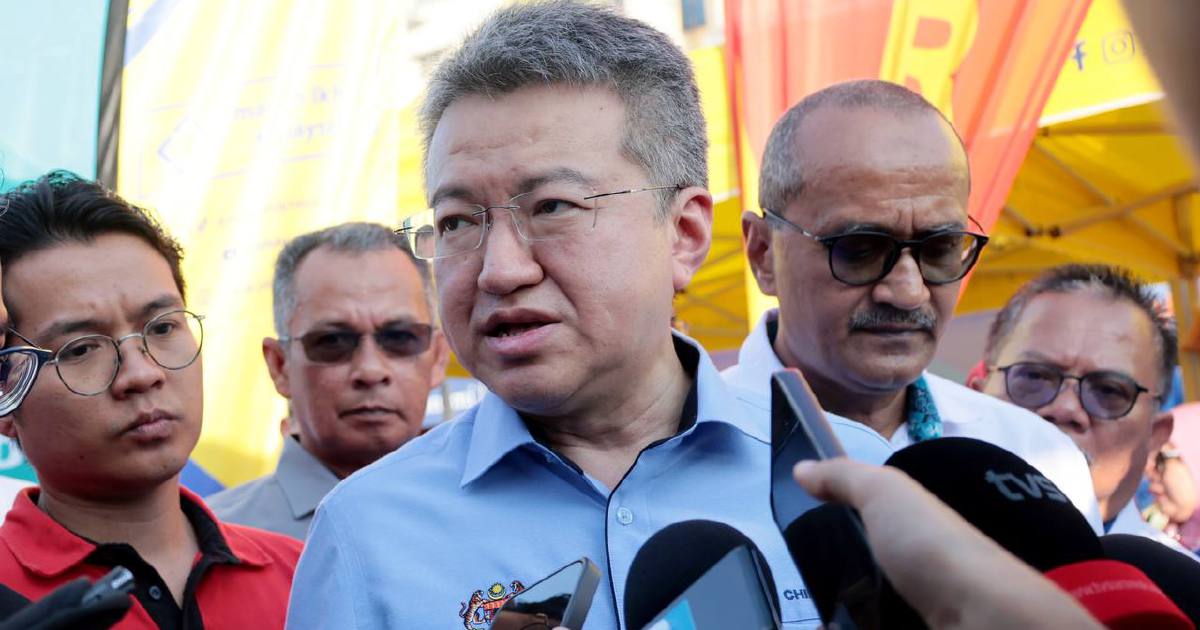
Malaysia's foreign policy apparatus is recalibrating its international engagement strategy in the aftermath of Prime Minister Datuk Seri Anwar Ibrahim's recent visits to Russia and Turkmenistan, reflecting Putrajaya's deliberate pivot toward cultivating a more expansive network of global partnerships. These diplomatic journeys represent more than ceremonial state visits; they underscore a considered governmental approach to diversifying Malaysia's international relationships across regions traditionally underexplored by previous administrations.
The timing of these missions carries particular significance within the current geopolitical landscape. As major powers compete for influence across multiple continents, Malaysia's engagement with Moscow and Ashgabat signals the nation's commitment to maintaining autonomous foreign policy decision-making rather than gravitating toward any single bloc. This balanced approach has long been a cornerstone of Malaysian diplomacy, though recent years have witnessed varying degrees of emphasis depending on specific administrations and regional circumstances. The current administration's articulation of this principle through tangible diplomatic missions demonstrates renewed intentionality in executing this traditional Malaysian doctrine.
Russia represents a significant economic and geopolitical actor whose international profile has shifted dramatically in recent years. Malaysia's engagement with the Russian Federation encompasses potential collaboration across energy sectors, trade expansion, and academic exchange programmes. Given Malaysia's substantial petroleum and natural gas reserves, along with its position as a major palm oil and manufacturing exporter, there exist genuine opportunities for mutually beneficial commercial partnerships. Furthermore, Russia maintains considerable technological expertise in defence, aerospace, and industrial applications that could complement Malaysian development objectives.
Turkmenistan's inclusion in this diplomatic circuit reflects Putrajaya's strategic interest in Central Asian connectivity and resource accessibility. The nation functions as a crucial bridge between Europe and Asia, controlling significant natural gas reserves and serving as a transit point for regional trade flows. Enhanced bilateral relations with Ashgabat could facilitate Malaysian businesses' access to Central Asian markets while simultaneously positioning Malaysia as a reliable partner within Islamic-majority nations spanning diverse geographical regions. This approach strengthens Malaysia's credentials as a bridge-builder across different civilizational spheres.
These visits occur within a broader context of Malaysian foreign policy reassessment that acknowledges the limitations of over-reliance on traditional Western partnerships while recognising the complexity inherent in managing relationships across multiple competing power structures. Southeast Asia itself faces increasing great power rivalry, with major actors seeking influence through economic investment, military partnerships, and institutional engagement. Malaysia's diplomatic manoeuvring must navigate these competing pressures whilst protecting national sovereignty and economic interests.
The expansion of Malaysian partnerships into Central Asia and Russia provides potential counterbalance to existing institutional memberships and regional obligations. While Malaysia maintains fundamental commitments through ASEAN and bilateral relationships with regional partners, engagement with non-traditional partners introduces new dimensions to foreign economic policy. This includes access to different investment sources, alternative supply chains, and diversified technological partnerships that reduce dependency on any single geographic source.
Energy security constitutes a particularly compelling rationale for deepened Russian engagement. Malaysia's energy sector faces longterm sustainability questions, with domestic hydrocarbon reserves requiring careful management. Exploring energy cooperation with Russia, whether through liquefied natural gas trading arrangements, technological partnerships, or investment flows, could enhance Malaysia's energy resilience. Similarly, Turkmenistan's gas wealth presents opportunities for regional energy market participation and potentially lower-cost energy inputs for Malaysian industries.
Turkey's unique geopolitical positioning—straddling Europe and Asia whilst maintaining substantial influence across Middle Eastern affairs—enhances its value as a diplomatic partner. Engagement with Turkmenistan extends this logic southward into Central Asia, where Turkish influence remains considerable. For Malaysia, this creates additional vectors for regional connectivity and potential partnerships with nations that share Islamic heritage but pursue distinct development trajectories.
Domestic implications of expanded foreign partnerships warrant consideration alongside international dimensions. Malaysian businesses, particularly within construction, engineering, technology, and manufacturing sectors, could benefit from access to new markets and investment opportunities in Central Asian nations. Government-to-government engagement at the highest levels typically facilitates subsequent commercial relationships, as evidenced by numerous historical examples across Malaysian economic history. The diplomatic groundwork laid during prime ministerial visits frequently translates into subsequent trade missions and investment promotion activities.
South and Southeast Asian positioning becomes more complex when Malaysian foreign policy encompasses simultaneous engagement with multiple competing global powers. India, Japan, South Korea, and China all maintain substantial interests throughout the region. Malaysia's explicit cultivation of Russian and Central Asian relationships must demonstrate clear benefit assertions rather than appearing reactive or motivated primarily by opposition toward other powers. The articulation of positive engagement rationales becomes crucial for sustaining domestic political support and avoiding criticism regarding potential strategic overextension.
Institutional mechanisms for implementing these expanded partnerships require careful development. Bilateral cooperation frameworks, investment protection agreements, and technical collaboration structures provide scaffolding upon which genuine partnerships develop. The Malaysian government's subsequent actions in establishing formal mechanisms, supporting business delegations, and pursuing concrete projects will ultimately determine whether these diplomatic initiatives yield substantive benefits.
The broader Malaysian strategic vision appears oriented toward maximizing strategic autonomy through relationship diversification rather than choosing exclusionary partnerships. This approach reflects geographical positioning, regional obligations, and historical diplomatic traditions. Success requires balancing competing interests whilst avoiding overcommitment that exhausts diplomatic resources or creates contradictory policy obligations.
Looking forward, the effectiveness of these diplomatic initiatives will be measured through tangible outcomes including increased bilateral trade volumes, successful investment projects, enhanced cultural and educational exchanges, and deepened institutional cooperation. Malaysian observers and policymakers will scrutinise whether expanded Russian and Central Asian partnerships produce genuine developmental benefits whilst maintaining strategic flexibility and protecting existing regional relationships.
%22%2F%3E%3C%2Fpattern%3E%3C%2Fdefs%3E%3Crect%20width%3D%22100%25%22%20height%3D%22100%25%22%20fill%3D%22url(%23ph25l6fg)%22%2F%3E%3Crect%20width%3D%22100%25%22%20height%3D%22100%25%22%20fill%3D%22url(%23ph25l6fp)%22%2F%3E%3Ctext%20x%3D%2250%25%22%20y%3D%2250%25%22%20text-anchor%3D%22middle%22%20dominant-baseline%3D%22central%22%20fill%3D%22rgba(255%2C255%2C255%2C0.95)%22%20font-family%3D%22Georgia%2C%20'Times%20New%20Roman'%2C%20serif%22%20font-weight%3D%22700%22%20font-size%3D%22272%22%20letter-spacing%3D%22-0.02em%22%3EAnwar%3C%2Ftext%3E%3C%2Fsvg%3E)