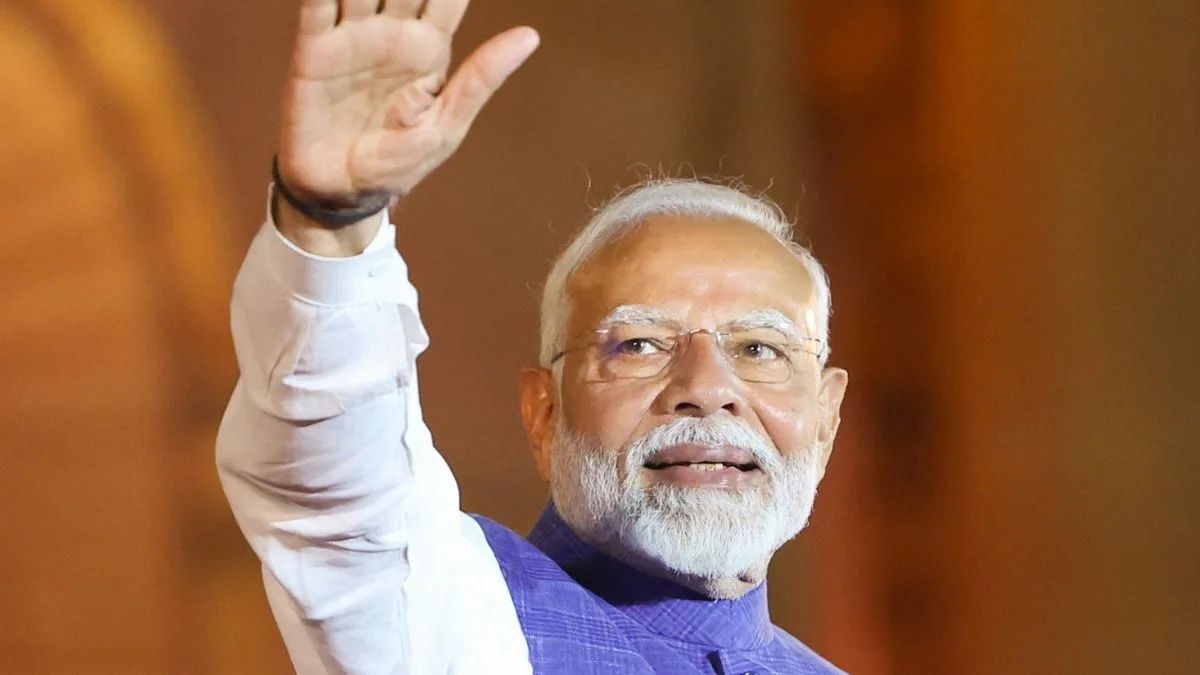
Prime Minister Narendra Modi is set to headline India's 12th International Day of Yoga (IDY) celebrations from Kolkata's historic Red Road on Sunday, June 21, cementing his administration's commitment to promoting holistic wellness through the ancient practice. The choice of venue and timing underscore how yoga has become integrated into India's broader national development narrative, with the event expected to draw thousands of participants and dignitaries for early-morning demonstrations of the Common Yoga Protocol.
The Centre's decision to position Kolkata as the focal point for this year's IDY carries pronounced political significance, arriving as it does in the aftermath of the Bharatiya Janata Party's commanding performance in recent West Bengal Assembly elections. Senior BJP officials have openly signalled that the state will command substantial attention from the Modi government going forward, with implications for development spending and administrative focus. By selecting Kolkata for this high-profile national event, the administration reinforces its presence in a region where it has only recently consolidated electoral gains, using a wellness initiative to simultaneously advance governance visibility and reinforce state-level political messaging.
Red Road itself holds symbolic weight as a venue. The sprawling public space embodies Kolkata's democratic character, hosting everything from peaceful civic assemblies to military commemorations and environmental innovation projects. As one of eastern India's most recognisable gathering points, it provides an appropriately grand stage for what organisers anticipate will be record-breaking attendance. The selection reflects careful consideration of how to showcase the event's scale while anchoring it within the city's cultural and historical fabric.
The Ministry of Ayush has orchestrated an expansive promotional architecture leading up to the main event. The Yoga Sangam Portal has registered 600,000 organisations nationwide, an unprecedented figure that testifies to institutional enthusiasm across government departments, educational establishments, and community groups. This digital infrastructure enables simultaneous participation across dispersed locations, transforming what might otherwise be a single-site celebration into a nationally coordinated movement. The scale of registered participation demonstrates how yoga advocacy has evolved from niche wellness practice into mainstream institutional priority.
This year's theme, "Yoga for Healthy Ageing," reflects evolving demographic realities and public health priorities across Asia's aging populations. Union Minister of State for Ayush Prataprao Jadhav has articulated the underlying concern: extending longevity without ensuring quality of life improvement represents an incomplete victory for modern medicine and development. Yoga, framed through this lens, addresses a gap that conventional healthcare infrastructure has struggled to bridge—maintaining physical capability, cognitive sharpness, and psychological resilience across advancing age groups. For Malaysian and Southeast Asian readers confronting similar demographic transitions, India's emphasis on integrated wellness approaches offers instructive parallels.
The geographic reach of IDY celebrations has expanded dramatically. Approximately 2,500 organised events will unfold across the globe, with participation coordinated through 211 Indian diplomatic missions abroad. This extension beyond national borders positions yoga as a soft-power instrument, integrating wellness promotion with cultural diplomacy. Regional governments and community organisations from Southeast Asia to Western Europe have incorporated IDY into their public health calendars, normalising yoga within diverse cultural contexts.
The Ministry of Culture has complemented health-focused initiatives by anchoring yoga demonstrations at 100 iconic locations nationwide, deliberately fusing wellness practice with cultural heritage preservation. This dual approach acknowledges that yoga's contemporary appeal rests partly on its positioning as an authentic expression of Indian civilisational values rather than merely a fitness trend. The cultural dimension adds legitimacy while potentially attracting participants motivated by heritage engagement rather than exclusively health concerns.
West Bengal's government has made IDY participation compulsory for state employees, requiring attendance at designated venues or workplace locations. This administrative mandate transforms an ostensibly voluntary wellness initiative into an employment expectation, raising questions about the distinction between health promotion and bureaucratic compliance. Mandatory participation frameworks have become increasingly common across Indian states during public health campaigns, reflecting how governance structures absorb wellness objectives.
The emphasis on healthy ageing resonates particularly across Southeast Asia, where rapid demographic aging has commenced straining healthcare systems. Countries including Malaysia, Thailand, and Vietnam face similar pressures as life expectancy extends while chronic disease prevalence increases. India's promotion of yoga as a preventive and maintenance tool for older populations offers an accessible, low-cost intervention model that aligns with public health priorities across the region. The Indian government's investment in scaling yoga participation suggests confidence that the practice can achieve meaningful public health impact at population levels.
The International Day of Yoga has evolved substantially since its inception. What began as an attempt to crystallise yoga's global recognition into an officially designated observance has transformed into a comprehensive platform for integrating wellness into governance, institutional practice, and public consciousness. The exponential growth in participating organisations and the expansion of geographic reach indicate that yoga has transcended its earlier status as a minority wellness interest to become embedded within mainstream institutional activity across multiple sectors.
For observers tracking India's soft power projection and domestic health policy, the Kolkata celebration represents convergence between electoral consolidation, wellness advocacy, and cultural nationalism. The coordination across multiple government ministries, the engagement of diplomatic networks, and the participation of hundreds of thousands of registered organisations demonstrate institutional capacity to mobilise around unified themes. The model offers insights into how developing democracies can deploy cultural practices and wellness initiatives simultaneously to advance health outcomes while reinforcing state presence and legitimacy.
As yoga continues globalising and institutional participation deepens, questions emerge about accessibility, sustainability of engagement beyond inaugural enthusiasm, and whether participation in coordinated demonstrations translates into sustained individual practice. The sheer scale of this year's IDY suggests that yoga has transcended niche wellness circles to become a legitimised component of public health strategy. Whether the 600,000 registered organisations can maintain momentum and convert one-day participation into lasting lifestyle modification will determine whether IDY celebrations represent symbolic gestures or catalysts for genuine population-level health transformation.