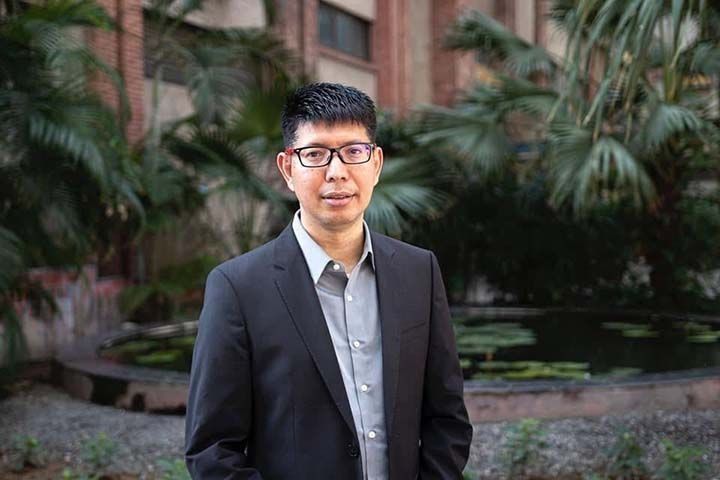
An American scholar specialising in Myanmar policy was arrested in China's southwestern city of Kunming in early June while travelling to participate in an academic workshop, according to the think tank he founded. The Institute for Strategy and Policy (ISP) - Myanmar issued a statement on Wednesday calling for the immediate and unconditional release of Min Zin, its executive director, following confirmation of his detention by Beijing authorities on suspicion of espying and threatening national security. The arrest has sparked international concern about academic freedom and research activities in the region, with both the think tank and the United States State Department rejecting the allegations as groundless.
China's foreign ministry confirmed last week that Min Zin had been taken into custody, characterising him as engaged in espionage activities that violated Chinese law. The timing of his detention, occurring on June 3, preceded by several weeks a planned five-day state visit to China by Myanmar's military leader Min Aung Hlaing, then-junta chief and now president. This proximity has raised questions about whether the arrest was connected to broader diplomatic manoeuvres between Beijing and Naypyidaw, given China's substantial influence over Myanmar's ruling military establishment. The ministry reiterated in response to international inquiries that the case would be handled according to legal procedures, offering no further details on the charges or evidence.
The US State Department moved quickly to assert that consular officers had visited Min Zin and that the government was providing appropriate assistance while engaging directly with Chinese officials. A department spokesperson categorically rejected the espionage accusations, underscoring Washington's concern about the scholar's treatment and detention circumstances. This diplomatic response reflects broader American anxiety about the treatment of citizens abroad and the potential weaponisation of national security charges against academics and researchers engaged in legitimate scholarly work. The statement signals that the matter has become a point of friction between Washington and Beijing at a time of already-strained bilateral relations.
Min Zin's background underscores his credibility as a serious scholar and policy analyst. A former student activist who participated in Myanmar's pivotal 1988 democracy movement—a watershed moment in the country's political history—he pursued advanced education at the University of California, Berkeley, where he studied political science. His trajectory from youthful dissident to established academic mirrors the evolution of Myanmar's civil society movement. Following the February 2021 military coup that overthrew the elected government of Aung San Suu Kyi, Min Zin and colleagues established or expanded the ISP as a platform for independent research and analysis on Myanmar's political and economic situation.
The Institute for Strategy and Policy-Myanmar, initially based within the country, relocated abroad following the 2021 coup—a pattern replicated by numerous Myanmar civil society organisations seeking to maintain autonomy and safety. The think tank has built a reputation for publishing rigorous analysis on several interconnected issues affecting Myanmar: the ongoing armed conflict between the military and coordinated pro-democracy forces, economic deterioration and reconstruction challenges, and the complex bilateral relationship with China. These research areas are politically sensitive within Myanmar, as they directly address failures of military governance and external dependencies that the junta wishes to control the narrative around.
The detention occurs within a broader context of Myanmar's descent into armed conflict since the coup. What began as street demonstrations against the military's seizure of power evolved into an extensive nationwide armed insurgency, with newly-formed pro-democracy militias coordinating alongside long-established ethnic armed organisations that had previously fought the government. This multi-front conflict has created profound humanitarian challenges and rendered Myanmar increasingly unstable. China, as one of Myanmar's most significant foreign partners and a permanent supporter of the military regime within international forums, maintains considerable leverage over the junta's actions and strategic calculations.
Minority scholars and analysts working on Myanmar have become increasingly vulnerable as the country's political situation deteriorates and international scrutiny intensifies. Think tanks and research organisations focusing on Myanmar's governance, human rights, and geopolitical position occupy a precarious space, facing pressure from multiple directions. Beijing's detention of Min Zin on espionage charges sends a chilling message to the broader research and academic community working on Myanmar and China-related issues, particularly those based in Southeast Asia or operating transnationally. The arrest suggests that participating in cross-border academic activities can now carry substantial personal risk for researchers, particularly those critiquing military rule or examining China's regional influence.
The think tank's statement emphasising that Min Zin travelled solely to attend an academic workshop attempts to frame the detention as an unjustified interference with legitimate intellectual work. However, Chinese authorities' willingness to detain a foreign national on national security grounds while engaged in academic activities reflects broader tensions over academic freedom in the region. The incident highlights how authoritarian governments increasingly view independent research on sensitive topics as potential security threats, particularly when that research challenges official narratives or examines controversial relationships. The ISP-Myanmar's explicit rejection of the allegations and call for unconditional release underscores the think tank's conviction that the charges lack substantive foundation.
For Malaysia and other Southeast Asian nations, this incident carries implications extending beyond academic concern. The region hosts numerous international researchers, analysts, and policy professionals who study government, economics, and regional affairs. If scholars can be detained on vague national security grounds while attending legitimate academic events, the consequences for research independence across Southeast Asia could be significant. Malaysian universities and think tanks, alongside regional counterparts, must consider how to protect their researchers while maintaining international academic collaborations. The incident also reflects how Myanmar's crisis increasingly intersects with broader regional security concerns, drawing in external powers and complicating the operating environment for those studying the country.
The convergence of Min Zin's detention with Min Aung Hlaing's planned diplomatic visit to China suggests that academic matters may become entangled with high-level political considerations. Beijing's actions regarding the scholar could be interpreted as sending signals to various stakeholders about China's priorities and willingness to employ coercive measures against those it deems threats. The junta's relationship with China depends heavily on Beijing's continued support, including military assistance and diplomatic backing, making it unlikely that Myanmar will advocate aggressively for Min Zin's release. This power dynamic creates a troubling situation where a detained scholar becomes essentially voiceless in the diplomatic arena most relevant to his case.
The principle articulated by the ISP-Myanmar—that research and policy organisations require freedom from intimidation to function effectively—represents a fundamental precondition for informed public discourse and policy-making. Academic research on sensitive geopolitical topics requires intellectual space to function meaningfully. Scholars must be able to gather information, attend conferences, collaborate internationally, and publish findings without fearing detention or persecution. When governments instrumentalise national security laws to suppress independent analysis, they diminish the information available to the public and policy makers, ultimately undermining evidence-based decision-making. The detention of Min Zin therefore represents not merely an individual injustice but potentially a broader assault on the infrastructure of critical thinking in the region.