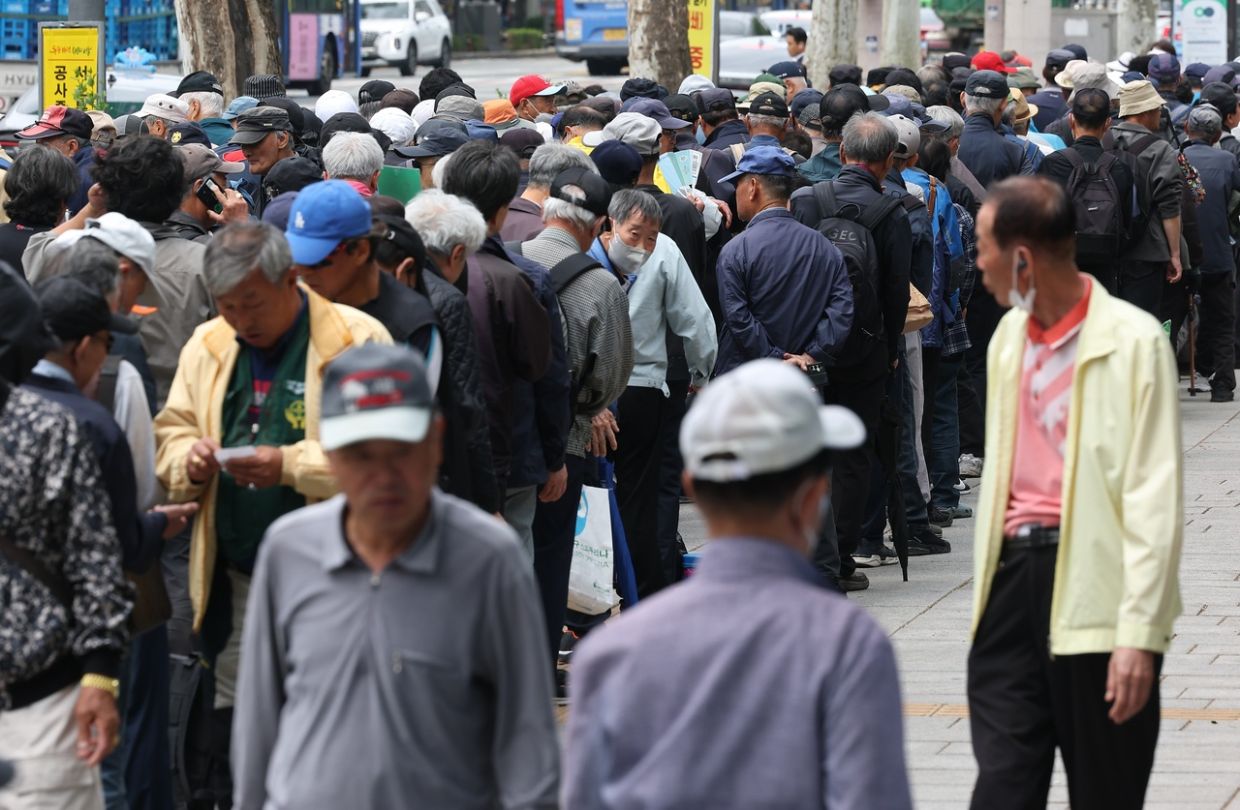
South Korea's capital is grappling with a significant policy question: can it afford to extend transportation subsidies to an ageing population that already strains municipal finances? Seoul is considering free or reduced-cost bus fares for residents aged 70 and older, building on a longstanding system that has provided complimentary subway access to citizens aged 65 and above. The proposal, introduced by Seoul Metropolitan Council Transportation Committee Chair Lee Byeong-yoon of the People Power Party, passed a council committee on June 15 and faces a plenary vote scheduled for June 17. If approved, the benefit would apply to ordinary city and neighbourhood buses, though express and intercity services would remain excluded from any subsidy scheme.
The initiative represents a campaign commitment made by Seoul Mayor Oh Se-hoon during local elections held in June, reflecting broader political recognition that transport accessibility matters to voters. However, the proposal has provoked considerable debate within the city government and among fiscal analysts. Opponents voice serious concerns about whether Seoul can sustain another major transportation benefit when seniors already comprise 21.2 per cent of the city's population—a proportion expected to grow substantially in coming years. The underlying tension reflects a wider challenge facing many developed Asian economies: how to balance expanding welfare provision with fiscal sustainability.
The financial arithmetic is sobering. Seoul Metropolitan Council Secretariat estimates suggest that providing free bus rides to all residents aged 70 and older would require approximately 104.7 billion won (around US$68 million) in the first year, assuming implementation begins in 2027. As the elderly population swells from roughly 1.27 million currently to a projected 1.63 million by 2031, annual costs would balloon to 127.5 billion won. Over a five-year period, total expenditure could approach 579 billion won. These figures arrive atop Seoul's existing transportation support commitments, which already include compensation to private bus operators for operating losses—the city disbursed more than 450 billion won to bus companies in the previous fiscal year alone.
The debate unfolds against a backdrop of mounting losses at Seoul Metro, the municipal subway operator. The organisation has consistently attributed its financial difficulties to free and reduced-fare travel provided to seniors, persons with disabilities, and national merit recipients. According to Seoul Metro's accounts, these concessionary fares generated average annual transportation losses of 364.5 billion won over the past five years, with the figure climbing to 448.8 billion won in 2025. The operator has repeatedly petitioned the central government to help shoulder this burden, arguing that the cost of honouring such benefits should not rest entirely on the municipal transport authority. This ongoing dispute illustrates how local welfare provision can create unintended fiscal consequences for other public services.
Other South Korean municipalities have already charted this territory, offering a patchwork of precedents. Daegu initiated free bus rides for seniors in 2023 and intends to progressively lower the age threshold from 75 to 70 by 2028. Daejeon has already extended free bus fares to residents aged 70 and older, while Incheon plans to launch a similar programme for those aged 75 and above in the current year. These regional initiatives suggest that municipal authorities increasingly view bus-fare subsidies as an expected component of senior welfare provision, even as fiscal pressures mount. Yet each expansion raises the question of whether other cities can actually afford such commitments without compromising other municipal services or requiring central government support.
Proponents of Seoul's bus-fare subsidy argue that the current transportation system creates inequitable outcomes for elderly residents. While subway access is free for those aged 65 and above, bus rides remain charged, creating a two-tier system that disadvantages seniors living in areas with limited subway coverage or those who depend primarily on buses for daily mobility. In a sprawling metropolis like Seoul, access to reliable affordable buses is essential for seniors who need to reach healthcare facilities, shopping districts, and community centres. The existing asymmetry between free subway and paid bus fares, supporters contend, leaves vulnerable elderly citizens bearing transport costs that younger or more affluent residents can more easily absorb. This argument resonates particularly in neighbourhoods where ageing populations predominate and public transport options are limited.
Yet policymakers must confront uncomfortable questions about reversibility and political economy. Sohn Jong-pil, a senior researcher at the Fiscal Reform Institute, warns that cash-type welfare programmes become exceptionally difficult to curtail once established. "Cash-type welfare programmes are difficult to reverse once they begin, so policymakers need to proceed cautiously," Sohn observed, noting that "simply expanding support without strengthening the public accountability of the semi-public bus system has limitations." This insight reflects broader experience in welfare policy: once constituencies become accustomed to benefits, politicians face intense pressure to maintain or expand them regardless of fiscal circumstances. Seoul's ongoing disputes with Seoul Metro over free subway fares suggest that such pressure indeed materialises, making initial policy decisions consequential for decades.
Another complication may emerge from recent court rulings concerning ordinary wages in the transport sector. These judgments are expected to elevate labour costs across the bus industry, adding another expense layer precisely when municipal authorities contemplate expanding service subsidies. Combined with existing operator compensation requirements, rising wages could significantly increase the total fiscal burden of bus transportation on city finances. This timing illustrates how seemingly unrelated labour decisions can interact with social policy to create unforeseen fiscal pressures. Municipal planners must therefore account not only for the direct cost of fare subsidies but also for downstream labour-cost inflation that amplifies the overall burden.
Critics furthermore question the logical consistency of Seoul's transport policy. The city has repeatedly argued that it cannot absorb the cost of free subway rides for seniors, yet simultaneously considers expanding transportation subsidies through free bus fares. How can both positions hold simultaneously? If Seoul genuinely cannot afford existing subway concessions, how can it justify creating new ones? This apparent contradiction highlights the political economy of welfare expansion: benefits that benefit concentrated constituencies—in this case, elderly voters—often advance regardless of fiscal concerns, while services that serve more dispersed populations face tighter cost-containment. The debate thus reveals deeper tensions about whose welfare claims take priority in municipal budgeting.
However, supporters counter that cost estimates may exaggerate the actual financial burden by assuming unlimited free rides for all seniors. The ordinance does not mandate immediate universal provision; instead, it establishes a legal framework granting Seoul discretion to determine eligibility criteria, benefit levels, and support mechanisms. The city could implement the programme selectively—for instance, by targeting low-income seniors, capping the number of subsidised trips per person, restricting support to off-peak hours, or providing partial rather than complete fare reductions. This flexibility potentially allows policymakers to pilot programmes on limited scales before committing to comprehensive coverage. A Seoul city official emphasised that the ordinance should be understood as institutional foundation-building rather than an automatic commitment to unlimited benefits. "The ordinance establishes the institutional basis for the program," the official stated.
The distinction between legislative authorisation and actual implementation proves crucial. Even if the Seoul Metropolitan Council approves the ordinance in mid-June, free bus rides would not commence immediately. The city would require additional time to establish administrative machinery, determine qualification procedures, calculate subsidy levels, and identify funding sources. This implementation lag provides an opportunity for careful deliberation about programme design. Moreover, it creates space for negotiations with the central government about financial support, possibly preventing Seoul from bearing the entire cost alone. The implementation process thus offers a potential off-ramp from unlimited fiscal commitment, assuming policymakers exercise appropriate caution.
For Malaysian observers, Seoul's dilemma offers instructive lessons about welfare policy design and affordability. As Southeast Asian societies age, similar questions will increasingly confront policymakers in the region. Malaysia's own transportation subsidies and healthcare provision for seniors warrant examination through this lens: are current commitments sustainable given demographic projections? How should municipal and national governments apportion responsibility for aging populations? Should central governments provide more financial support to cities managing large elderly populations? Seoul's experience suggests that welfare programmes can expand incrementally, driven by political pressure and campaign pledges, sometimes outpacing fiscal capacity. Careful policy design—including flexibility in eligibility and benefit levels, explicit funding mechanisms, and genuine cost-sharing between government levels—may help avoid the fiscal squeeze that Seoul now confronts.
Ultimately, Seoul faces a version of a problem increasingly common across affluent Asian societies: how to honour commitments to expanding elderly populations without compromising overall fiscal sustainability. The bus-fare proposal exemplifies this tension. Whether the city council approves the ordinance, the underlying challenge will persist. Growing numbers of seniors, combined with political expectations for enhanced welfare provision, will continue pressing municipal budgets. Without clearer frameworks for cost-sharing between national and local governments, and without more disciplined approaches to determining which benefits are truly affordable, Seoul and other cities will struggle to balance compassion toward elderly citizens with fiscal responsibility toward all residents.
%22%2F%3E%3C%2Fpattern%3E%3C%2Fdefs%3E%3Crect%20width%3D%22100%25%22%20height%3D%22100%25%22%20fill%3D%22url(%23phb3yeg)%22%2F%3E%3Crect%20width%3D%22100%25%22%20height%3D%22100%25%22%20fill%3D%22url(%23phb3yep)%22%2F%3E%3Ctext%20x%3D%2250%25%22%20y%3D%2250%25%22%20text-anchor%3D%22middle%22%20dominant-baseline%3D%22central%22%20fill%3D%22rgba(255%2C255%2C255%2C0.95)%22%20font-family%3D%22Georgia%2C%20'Times%20New%20Roman'%2C%20serif%22%20font-weight%3D%22700%22%20font-size%3D%22194%22%20letter-spacing%3D%22-0.02em%22%3EMALBATT%3C%2Ftext%3E%3C%2Fsvg%3E)
%22%2F%3E%3C%2Fpattern%3E%3C%2Fdefs%3E%3Crect%20width%3D%22100%25%22%20height%3D%22100%25%22%20fill%3D%22url(%23ph5giing)%22%2F%3E%3Crect%20width%3D%22100%25%22%20height%3D%22100%25%22%20fill%3D%22url(%23ph5giinp)%22%2F%3E%3Ctext%20x%3D%2250%25%22%20y%3D%2250%25%22%20text-anchor%3D%22middle%22%20dominant-baseline%3D%22central%22%20fill%3D%22rgba(255%2C255%2C255%2C0.95)%22%20font-family%3D%22Georgia%2C%20'Times%20New%20Roman'%2C%20serif%22%20font-weight%3D%22700%22%20font-size%3D%22320%22%20letter-spacing%3D%22-0.02em%22%3EUS%3C%2Ftext%3E%3C%2Fsvg%3E)
%22%2F%3E%3C%2Fpattern%3E%3C%2Fdefs%3E%3Crect%20width%3D%22100%25%22%20height%3D%22100%25%22%20fill%3D%22url(%23ph31wd2g)%22%2F%3E%3Crect%20width%3D%22100%25%22%20height%3D%22100%25%22%20fill%3D%22url(%23ph31wd2p)%22%2F%3E%3Ctext%20x%3D%2250%25%22%20y%3D%2250%25%22%20text-anchor%3D%22middle%22%20dominant-baseline%3D%22central%22%20fill%3D%22rgba(255%2C255%2C255%2C0.95)%22%20font-family%3D%22Georgia%2C%20'Times%20New%20Roman'%2C%20serif%22%20font-weight%3D%22700%22%20font-size%3D%22194%22%20letter-spacing%3D%22-0.02em%22%3ESpeaker%3C%2Ftext%3E%3C%2Fsvg%3E)