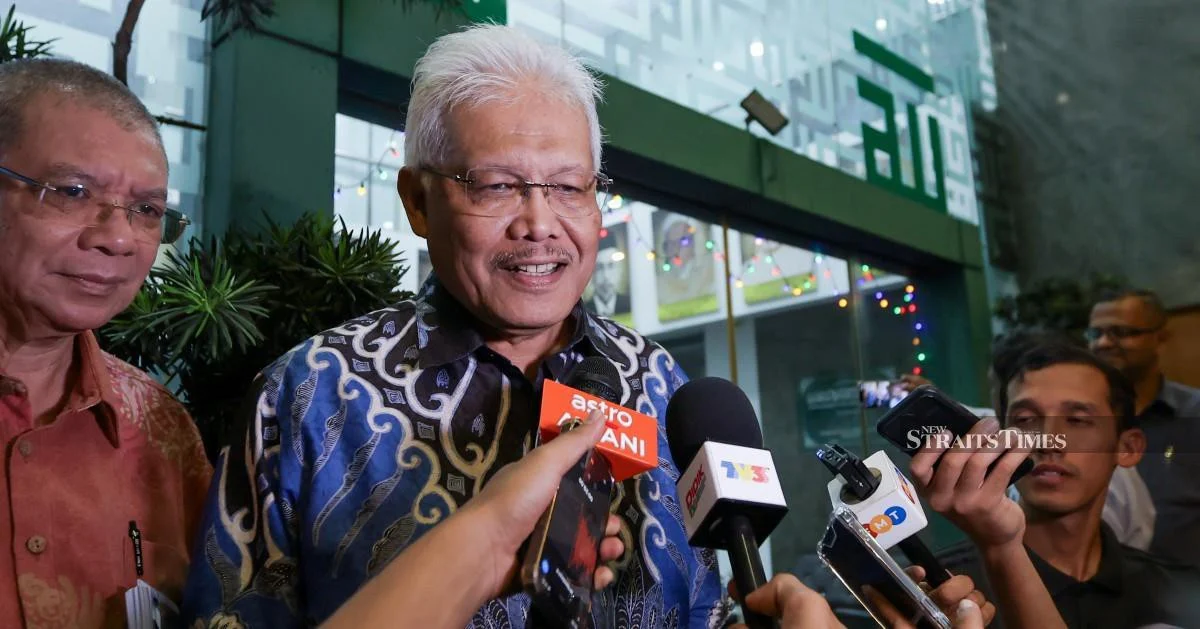
Datuk Seri Hamzah Zainudin is set to reclaim the opposition leader's position in the Dewan Rakyat from Monday onwards, according to the latest parliamentary seating arrangement released by parliament officials. The move will see Tan Sri Muhyiddin Yassin, the Bersatu president, relocated further along the opposition benches, marking a notable shift in the internal dynamics of Malaysia's opposition bloc.
The seating chart adjustment reflects the ongoing reconfiguration within opposition ranks, where control of parliamentary opposition mechanics carries significant procedural and symbolic weight. The opposition leader's seat carries formal recognition under parliamentary convention and influences parliamentary speaking order, priority in posing questions, and the ability to trigger procedural mechanisms including votes of no confidence. For Malaysian readers unfamiliar with Westminster-style parliamentary practice, this positioning determines who leads interrogations of government policy from the opposition benches.
Hamzah's repositioning signals developments within the broader opposition coalition that has evolved considerably over the past parliamentary term. The realignment comes at a juncture when Malaysia's political landscape continues to experience fluidity, with various coalitions and counter-coalitions shifting their strategic positioning. This particular change in parliamentary seating suggests internal consolidation or agreement among opposition parties regarding formal representation and parliamentary leadership roles.
The implications for opposition effectiveness in parliament are noteworthy. Control of the opposition leader's designation influences the framing of parliamentary discourse, particularly during question time and major debates on government policy. It also positions the holder to coordinate opposition responses to major government announcements and legislative initiatives. For the broader Malaysian public, this matters because the opposition's parliamentary role is vital in scrutinising government spending, policy implementation, and accountability.
Bersatu's relative positioning in this reconfiguration warrants attention given the party's trajectory since its formation in 2016 and its subsequent evolution through various political alignments. Muhyiddin's move from the formal opposition leader's seat does not necessarily diminish Bersatu's parliamentary strength, but it does reflect a redistribution of symbolic and procedural leadership roles within the opposition framework. The party's 31 parliamentary seats remain intact regardless of seating arrangements.
For Malaysian political observers, such changes often precede or follow broader coalition discussions about parliamentary strategy, policy alignment, or negotiations regarding potential future government formation. Opposition benches in many Westminster-derived parliaments serve as staging grounds for future political transitions, making these seemingly technical adjustments potentially significant for longer-term political positioning.
The Monday effective date suggests this represents a formalised decision rather than a procedural oversight, indicating coordination among relevant parliamentary stakeholders. The announcement through the seating chart itself—rather than through a formal statement—follows parliamentary convention where such administrative matters are documented through official parliamentary records.
For Southeast Asian readers assessing Malaysian political stability, these shifts demonstrate the continued vitality of Malaysia's parliamentary institutions and the mechanisms through which different political forces negotiate influence even from opposition positions. The fluidity also reflects how Malaysia's multi-ethnic, multi-party system requires continuous negotiation and adjustment among various political actors.
Hamzah's return to the opposition leader's role comes amid broader conversations about opposition coalition cohesion and strategy heading toward potential future electoral contests. The timing and specific parliamentary mechanics involved suggest coordination between relevant stakeholders, though public statements clarifying the rationale behind this reshuffle remain forthcoming.
Parliamentary seating arrangements, while appearing technical, carry weight in Malaysia's political culture and practice. The opposition leader's seat has hosted various political figures across different parliamentary sessions, each bringing distinct approaches to opposition oversight and scrutiny of executive action. Hamzah's resumption of this position represents another chapter in that ongoing narrative.
The adjustment also underscores how formal parliamentary recognition often trails broader political developments and negotiations. Opposition coalitions frequently reorganise their formal parliamentary representation following internal discussions about strategy, resource allocation, or consensus on future direction. These conversations typically occur beyond public view, with parliament's official documentation revealing outcomes rather than the negotiations themselves.
Looking ahead, observers will monitor whether this parliamentary repositioning signals broader shifts in opposition coalition dynamics, potential negotiations regarding legislative priorities, or realignment on key policy matters. Such changes often correlate with evolving calculations about parliamentary strategy, electoral positioning, and longer-term political objectives within Malaysian politics' multi-layered landscape.