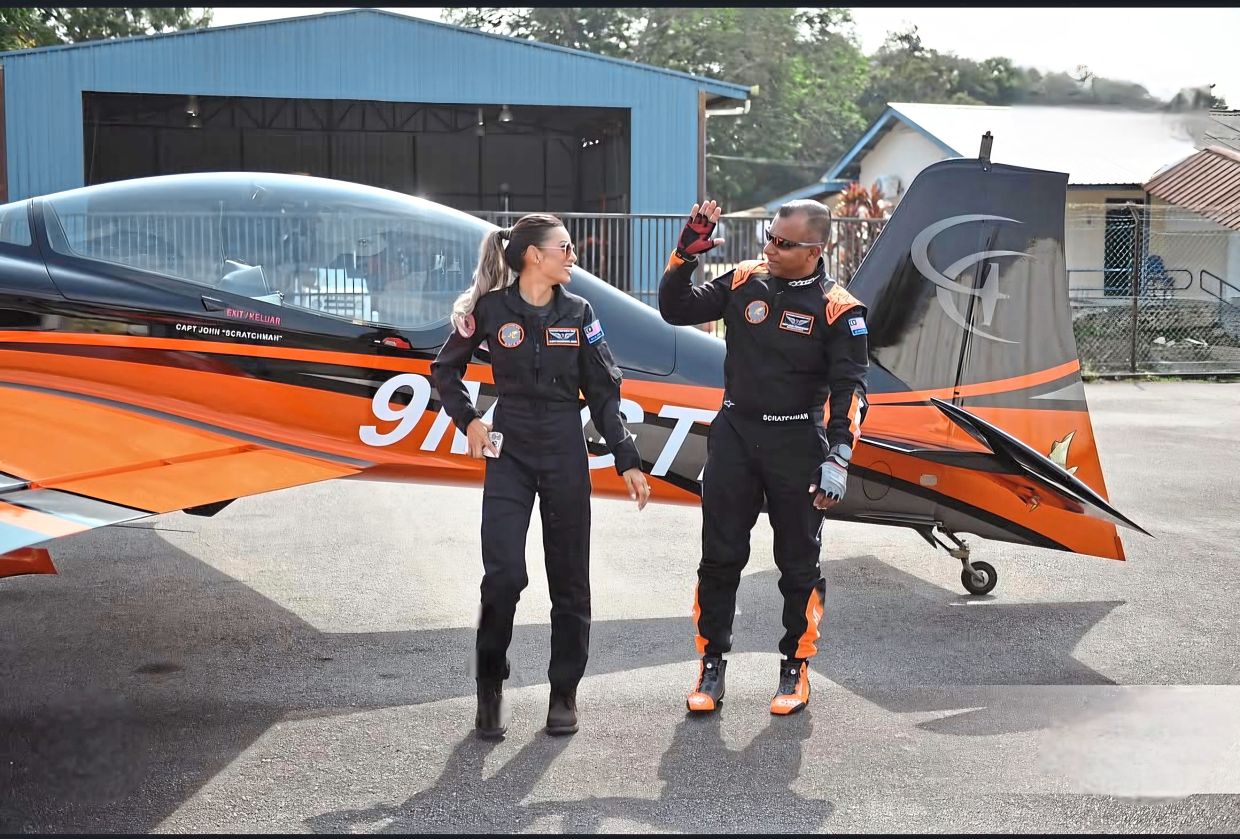
Samantha Laura John's path to the cockpit was written long before she earned her pilot's licence in 2025. As the daughter of Lieutenant-Colonel (R) John Sham Alagarsamy, a decorated Royal Malaysian Air Force fighter pilot who spent 26 years protecting Malaysia's skies, she inherited more than just a surname—she inherited a passion for aviation that would define her adult ambitions. Growing up watching her father prepare for combat readiness exercises and navigation missions instilled in her a deep admiration for his dedication to national service, setting the stage for her own pursuit of the profession.
John Sham Alagarsamy's illustrious career in military aviation laid the foundation for his household's aviation-centric values. During his quarter-century with the RMAF, he served as a fighter pilot, instructor, and examiner, accumulating the experience and credibility necessary to guide the next generation. His influence extended beyond formal training; his everyday commitment to discipline and responsibility created an environment where Samantha naturally gravitated toward aviation. When he transitioned to commercial aviation in 2019, he established himself further as a recognized expert, becoming Malaysia's first and only civil aviator certified by the Civil Aviation Authority of Malaysia for aerobatics—a distinction that underscores his technical mastery and innovative spirit in the field.
The elder John's achievements encompass more than pilot certifications. At major international airshows including the Langkawi International Maritime and Aerospace Exhibition (Lima), he has captivated audiences performing aerobatic displays in the GB1 GameBird aircraft, demonstrating the precision and artistry demanded of elite pilots. Beyond the cockpit, he channels his creative energy as a professional musician and deejay performing under the moniker "Scratchman," a talent that earned him the Malaysian Open DJ Competition title in 1992 during the golden age of vinyl and turntablism. This multifaceted identity—combining military discipline with artistic expression—reveals a personality that values both structured excellence and creative exploration, qualities he consciously transmitted to his children.
Samantha's journey toward aviation, however, was not a straight trajectory. Despite her childhood fascination with aeroplanes and uniformed service personnel, she initially charted a different course. After completing her International General Certificate of Secondary Education, she enrolled in a two-year cadet pilot programme with an airline based in Sepang, Selangor, in 2018. Though the role proved rewarding, she found it misaligned with her deeper calling. Rather than viewing this detour as failure, Samantha recognized it as an essential part of her self-discovery process. Her determination ultimately led her back to formal pilot training in Ipoh, where she graduated as a fully qualified pilot in 2025, validating years of contemplation about her true professional identity.
Yet Samantha's current life reflects the complex realities facing many qualified professionals in Malaysia. Based in Kota Kinabalu, she operates an event management company alongside her husband, David Chong, while providing vocal coaching instruction. Though she holds a valid pilot's licence—a credential representing thousands of hours of study, practice, and rigorous examination—she has not yet transitioned to commercial flying operations. This situation mirrors broader patterns in Southeast Asia's aviation sector, where gender barriers and career timing constraints sometimes delay or redirect qualified pilots from active flying roles. Samantha has expressed her intention to eventually return to commercial aviation, signaling that her current pursuits represent a chapter rather than the final story of her aviation career.
The family's geographic journey profoundly shaped Samantha's worldview and professional orientation. Her father's military postings took the household across Malaysia's strategic locations—Labuan, Kuantan, Alor Setar, and Butterworth in Penang—before she reached primary school. These frequent relocations, though occasionally challenging for a developing child, exposed her to the disciplined environment endemic to military bases and fostered an intimate understanding of national defence priorities. Living among RMAF personnel permitted her to witness firsthand the responsibility that pilots carry in safeguarding Malaysia's airspace and maritime borders, transforming abstract patriotism into concrete appreciation for her father's profession.
A transformative period arrived in 2012 when the family relocated to Canberra while John pursued a master's degree in military and defence studies from the Australian National University. During this posting with the Australian Defence Force, Samantha's perspective broadened considerably. Exposure to international defence frameworks and comparative aviation systems equipped her with contextual understanding of Malaysia's position within regional defence cooperation networks. This formative experience demonstrated how military and commercial aviation operate within broader geopolitical contexts, enriching her comprehension of her father's career and the sector's strategic importance.
Research from Universiti Teknologi Malaysia's social science journal, titled "Parental Influence and Undergraduates' Career Choice Intentions," validates what the John family exemplifies through lived experience. The study establishes that robust parent-child relationships characterized by open communication and mutual trust substantially influence career decisions by encouraging exploration and facilitating long-term planning. Rather than imposing a predetermined path, John deliberately avoided coercion while encouraging ambitious thinking. His philosophy—"if they aim for the stars, at least they'd reach the sky"—encapsulates a parenting approach that balances guidance with autonomy, allowing children to internalize ambitions rather than merely comply with paternal expectations.
Samantha's relationship with aviation has evolved from childhood admiration to professional competency to something more philosophical. In recent conversations reflecting on her pilot's licence, she describes the cockpit experience as profoundly therapeutic—a state of heightened awareness where situational consciousness operates across multiple dimensions simultaneously. This characterization of piloting transcends technical proficiency; it reveals how aviation satisfies deeper psychological and intellectual needs for focus, responsibility, and purposeful action. Her description of working "in six dimensions" suggests that flying represents for her not merely employment but a form of existential engagement that aligns with her values and temperament.
The father-daughter dynamic reflects deep mutual respect undergirded by shared values. When Samantha addresses her father, observers note a particular quality combining filial warmth with evident deference—a manifestation of discipline and manners cultivated throughout her upbringing on military bases. John attributes this comportment to his long-held conviction that children absorb behavioral and ethical lessons primarily through observation rather than explicit instruction. His receipt of the Most Gallant Order of Military Service (Kesatria Angkatan Tentera) during his RMAF tenure validated his service to the nation, yet he measures his broader legacy not through decorations but through the positive impact on those closest to him, particularly his children.
The John family narrative intersects with broader patterns in Malaysian aviation. Sisters Safia Amira Abu Bakar and Safia Anisa Abu Bakar followed their father Captain Abu Bakar Shafie into aviation careers, demonstrating that aviation dynasties operate within Malaysia's professional landscape. These examples challenge historical gender disparities in pilot recruitment while simultaneously revealing how family influence, institutional access, and early exposure create pathways into specialized careers. Samantha's achievement as a qualified female pilot in 2025 occurs within a context where such accomplishments remain noteworthy, though increasingly normalized as younger generations pursue previously male-dominated aviation roles.
Looking forward, Samantha's journey encapsulates contemporary questions about career fulfillment, family legacy, and professional timing in Malaysia's evolving aviation sector. Her intention to eventually return to commercial flying suggests that her current entrepreneurial and coaching activities represent intentional choices rather than career abandonment. This flexibility—maintaining her qualifications while exploring adjacent professional domains—reflects modern career patterns where individuals synthesize multiple interests rather than pursuing single-track progressions. Whether she ultimately commands commercial aircraft or remains based in Kota Kinabalu, her achievement of a pilot's licence represents the fulfillment of a lifelong aspiration and a fitting continuation of her father's legacy of excellence, discipline, and service to Malaysia's aviation community.