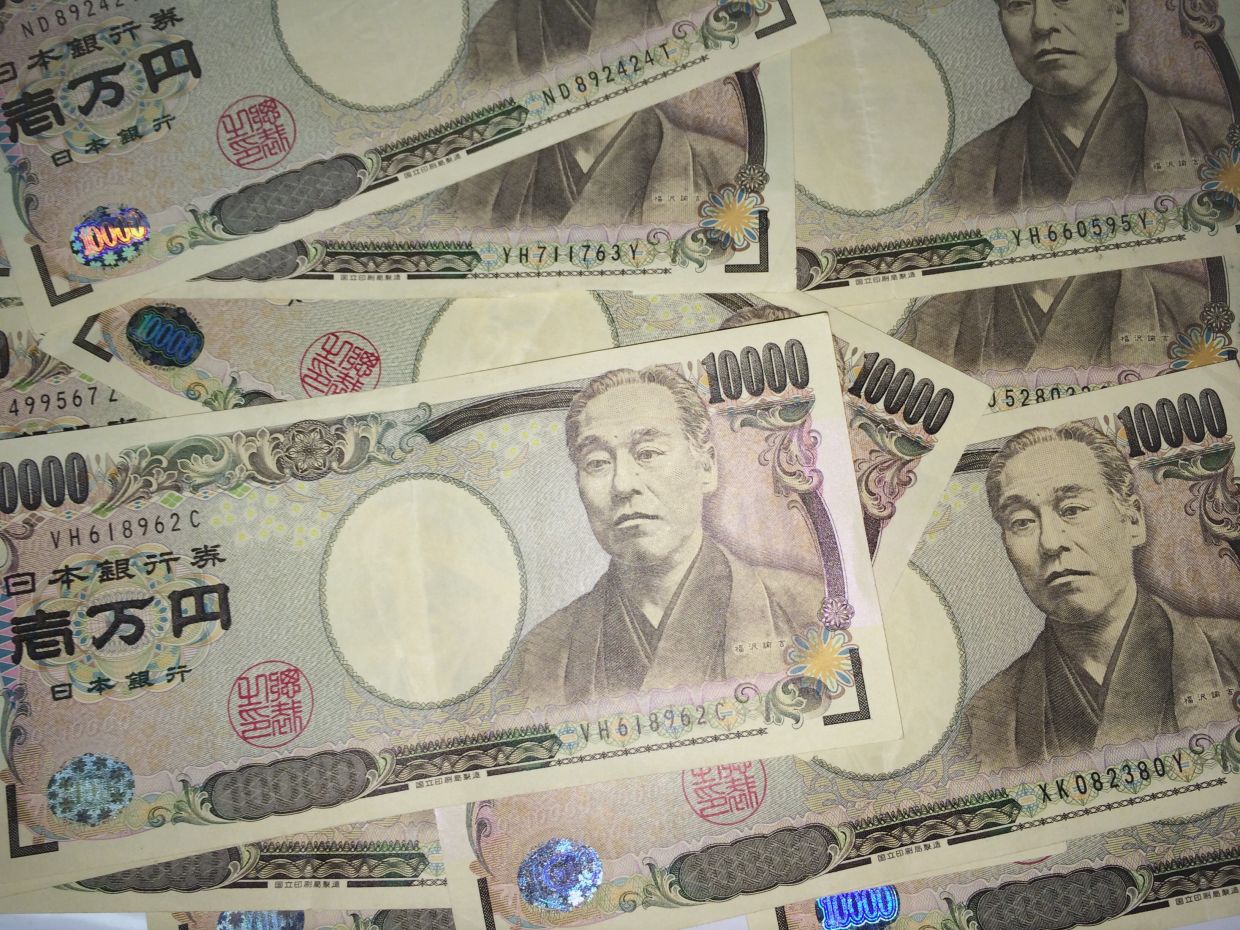
Japan's currency is trading at its weakest level in four decades, a troubling development that has resisted both central bank policy tightening and direct government intervention. The yen hovered near 161.205 against the U.S. dollar on Friday, having tumbled to a two-year nadir the previous day. The magnitude of this depreciation underscores deeper structural challenges facing the Japanese economy that monetary policy alone appears unable to address, raising serious questions about the effectiveness of further government action and the sustainability of current exchange rates.
The failure of conventional policy tools to stabilise the yen is particularly striking given recent efforts by Japanese authorities. The Bank of Japan lifted interest rates to their highest level in 31 years in the previous week, a significant tightening designed to make yen-denominated assets more attractive to international investors. The Ministry of Finance has also deployed direct intervention, selling dollars to prop up the yen. Yet these measures have proven largely ineffective, suggesting that market forces driving yen weakness run deeper than typical cyclical fluctuations. Investors appear unconvinced by current policy settings, interpreting them as insufficient to address Japan's underlying economic problems.
Political turbulence surrounding Prime Minister Sanae Takaichi's spending proposals has emerged as a critical factor eroding investor confidence. Rather than providing reassurance during a period of currency volatility, the government's fiscal stance has generated uncertainty about Japan's medium-term economic direction and fiscal sustainability. This loss of confidence in policy coherence, combined with thin trading volumes over the holiday period in the United States and much of Asia, has left the yen vulnerable to sharp moves with limited institutional demand to stabilise prices. Market participants are now speculating whether additional intervention lies ahead, effectively a vote of no confidence in the resilience of current policy settings.
Analysts tracking intervention capacity have begun calculating how much firepower the Japanese authorities have remaining. According to assessments from financial institutions monitoring the situation, the Ministry of Finance will likely defend the 161.95 level in the coming period, deploying comparable resources to its April and May operations totalling approximately 11.7 trillion yen. However, such intensive intervention would consume roughly 11 to 12 percent of Japan's total foreign exchange reserves within a relatively compressed timeframe, with noticeably limited success thus far. This mathematics presents a difficult strategic choice: authorities can rapidly deplete their reserves with minimal impact, or they must adopt a far more selective and cautious approach to preserve credibility and maintain sufficient ammunition for future crises.
Unfortunately for Japanese policymakers, inflation dynamics are not cooperating with efforts to normalise rates and support the currency. Core inflation in Japan remained below the Bank of Japan's two percent target for the fourth consecutive month in May, constrained by government fuel price subsidies that have masked the pass-through of elevated raw material costs stemming from Middle East tensions. This disconnect between policy intentions and inflation outcomes creates a policy bind: the central bank may need to raise rates further to combat imported inflation, yet doing so without underlying domestic price pressures could further strengthen the dollar against the yen if markets view tightening as defensive rather than reflecting genuine economic strength.
Central bank officials have signalled awareness of these risks. Minutes released from the Bank of Japan's April meeting revealed that some board members have advocated for more aggressive rate increases if Middle East tensions persist, seeking to prevent underlying inflation from overshooting the two percent target. Bank of Japan Deputy Governor Ryozo Himino reiterated on Friday that the central bank remains focused on that same inflation risk, indicating the institution views further tightening as potentially necessary. Yet this hawkish positioning has not yet translated into currency support, suggesting investors harbour doubts about Japan's capacity to deliver the kind of sustained monetary tightening that would fundamentally alter the yen's trajectory.
Capital Economics analysts have projected that despite current government price controls, inflation will likely accelerate sharply to around 3.5 percent by early 2027 as energy cost increases flow through to utility bills and broader consumer goods and services. This trajectory would force the Bank of Japan's hand, requiring more sustained and aggressive rate hikes than currently priced into financial markets. The lag between policy changes and inflation responses creates an awkward interval during which the yen may face continued depreciation pressure as the market doubts official resolve.
Regional currency markets have remained largely subdued following the week's diplomatic developments in the Middle East. The signing of a U.S.-Iran peace accord early in the week stabilised energy markets and shipping in the Strait of Hormuz, removing one significant source of volatility and risk premiums from regional asset prices. Most currencies other than the yen have held steady as this geopolitical risk abated and normalcy returned to global trade flows. The Australian dollar edged down 0.1 percent to 0.7011, while the New Zealand dollar remained flat at 0.5756.
Sterling has shown little movement following the Bank of England's decision to hold interest rates steady at 3.75 percent on Thursday. Policymakers at Britain's central bank judged that the current rate environment remains appropriate given lingering uncertainty about inflation persistence, effectively signalling patience with the current stance. Market attention has shifted toward British domestic politics, with traders monitoring an upcoming by-election contested by Greater Manchester Mayor Andy Burnham, who could potentially mount a challenge to Prime Minister Keir Starmer's leadership of the ruling Labour Party should he prevail. The U.S. dollar index meanwhile held at 100.81, having climbed 0.5 percent to a one-year peak on Thursday.
Cryptocurrency markets have shown minimal movement, with Bitcoin trading marginally weaker at 62,868.18 dollars, down 0.2 percent for the session, while Ether remained essentially flat at 1,708.98 dollars. These nascent asset classes typically exhibit greater sensitivity to expectations about U.S. monetary policy and geopolitical risk, and their relative stability suggests traders perceive near-term stability in both dimensions. Nonetheless, the persistent yen weakness remains the principal story dominating currency markets, raising questions about whether conventional policy levers retain sufficient power to manage exchange rate dynamics in an era of elevated capital mobility and divergent monetary policy trajectories across major economies.