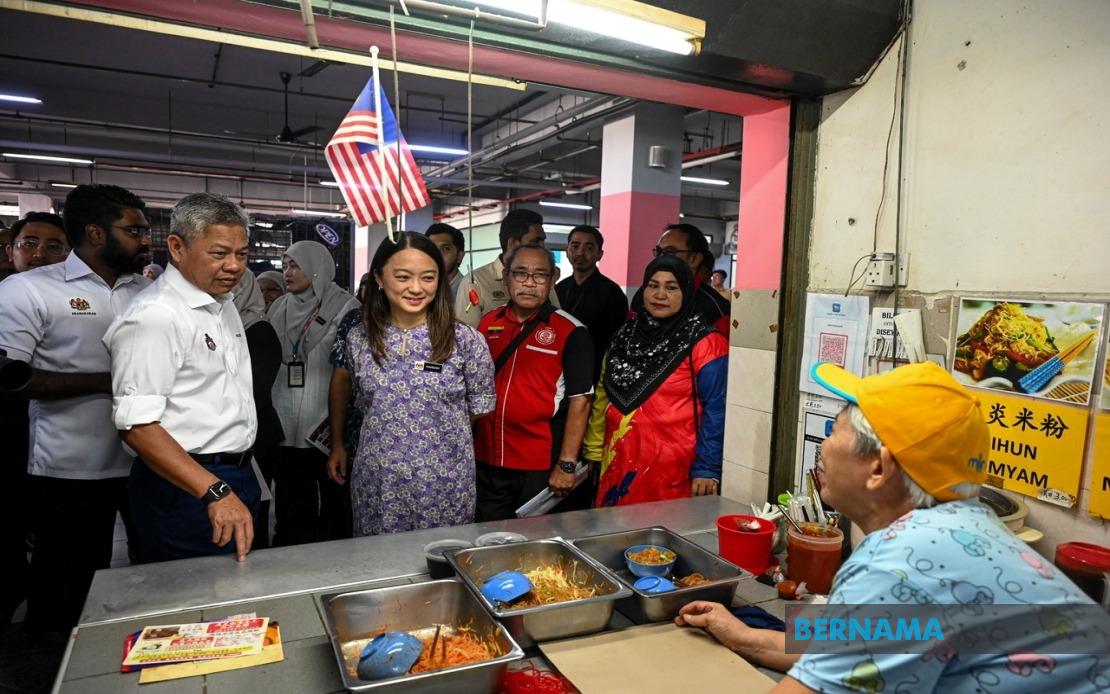
Kuala Lumpur's municipal authority has committed RM200 million towards a comprehensive overhaul of the city's hawker sector, with the Lestari Niaga @ Kuala Lumpur 2026 initiative set to transform operational conditions across 287 trading locations. The programme represents one of the largest coordinated efforts to upgrade informal food and street trading infrastructure in the capital, addressing longstanding concerns about safety, hygiene, and workspace organisation while simultaneously supporting the livelihoods of more than 11,000 individual traders and small business operators who depend on these sites.
Minister in the Prime Minister's Department Hannah Yeoh, who oversees federal territory affairs, stressed that the initiative reflects a collaborative approach to urban development that carefully weighs the interests of multiple stakeholders. Rather than imposing top-down decisions, DBKL has prioritised dialogue with residents concerned about traffic congestion and pedestrian safety, the traders themselves who rely on consistent customer flow and affordable operating costs, and building owners and tenants seeking unobstructed commercial access. This multi-stakeholder consultation framework acknowledges the inherent tension between urban planning objectives and the survival needs of informal sector workers who often operate on slim profit margins.
The UTC Sentul hawker project exemplifies this balanced approach in practice. Recently gaining public attention through social media discussions about trader relocation, the RM1.6 million upgrade programme demonstrates DBKL's commitment to replacing ad-hoc structures with purpose-built infrastructure. Twenty modern modular kiosks will replace existing stalls, with construction expected to conclude within three months, positioning completion for late September or early October. Critically, Hannah emphasised that this redevelopment does not constitute an eviction strategy but rather an opportunity to provide traders with improved facilities that enhance their operational efficiency and customer experience.
To cushion the financial impact on the 20 affected vendors during the construction interval, DBKL has introduced an unprecedented monthly subsidy of RM1,500 per trader. Kuala Lumpur Mayor Datuk Seri Fadlun Mak Ujud explained that direct cash assistance proves more practical than establishing temporary relocation sites, which typically incur substantial operational expenses and suffer from poor visibility and reduced foot traffic. This innovation addresses a persistent challenge in urban renewal projects where traders face genuine income loss during transition periods, often resulting in community backlash and implementation delays.
The financial assistance model extends beyond UTC Sentul as similar simultaneous projects expand to multiple locations including Jalan Dato Senu, Pudu Ulu, and Bandar Tun Razak. This coordinated rollout across several neighbourhoods simultaneously suggests DBKL is attempting to build momentum and demonstrate consistent programme delivery, potentially reducing resistance by showing equitable treatment across different communities. The geographic diversity of participating sites also reflects the distributed nature of hawker activity throughout Kuala Lumpur, from established commercial clusters to emerging neighbourhood trading nodes.
The broader Lestari Niaga framework encompasses significant structural variation within the hawker community itself. Of the 287 targeted sites, the initial phase will prioritise 224 locations representing different trading formats and regulatory categories. Approximately 4,000 of the affected traders operate as mobile street vendors without fixed premises, representing the most vulnerable and least formalised segment of the sector. Another 5,000 conduct business from structures owned and managed by the Kuala Lumpur City Hall, indicating a formal licensing relationship. The remaining approximately 1,000 individuals fall within a reapplication category, suggesting they previously held operating permits that either expired or required renewal following regulatory changes.
This demographic composition reveals important dynamics within Kuala Lumpur's informal economy. Street hawkers, despite comprising the smallest proportion of traders, often occupy the most contentious spaces where pedestrian flow, parking availability, and residential tranquility intersect with livelihood concerns. Traders operating from DBKL-managed assets occupy an intermediate position, with greater stability than street vendors but less autonomy than independent operators. The reapplication category suggests DBKL has implemented regulatory tightening that may have temporarily displaced some traders, and this initiative appears designed partly to reintegrate them into formalised structures.
The programme's phased implementation reflects pragmatic recognition of DBKL's administrative and financial capacity constraints. Rolling out simultaneous upgrades across multiple sites requires substantial project management, coordination with construction contractors, and ongoing stakeholder communication. Staging the work allows the municipality to refine processes based on early learnings from UTC Sentul and other pilot locations, potentially improving efficiency and cost-effectiveness as the initiative expands. This incremental scaling approach also distributes the financial outlay across the fiscal year, reducing budgetary strain on any single period.
For Malaysian readers and Southeast Asian observers, the Lestari Niaga initiative carries broader implications for how rapidly urbanising cities balance informal economy vitality with modernisation imperatives. Hawker sectors contribute substantially to employment, food security, and cultural identity across the region, yet they frequently conflict with contemporary urban planning standards emphasising zoning, infrastructure codes, and aesthetic uniformity. Rather than criminalising or marginalising informal traders, DBKL's investment-intensive approach attempts to formalise and upgrade the sector while preserving operational continuity and trader dignity.
The financial commitment of RM200 million, while substantial, represents a calculated investment in social stability and economic inclusion. When distributed across 287 sites and 11,000 traders, the per-location average is approximately RM696,000, and the per-trader average is roughly RM18,182. These figures suggest moderate but meaningful infrastructure investment sufficient for facility improvements, service upgrades such as electricity and water supply connections, and waste management systems that existing structures typically lack. The temporary assistance payments, meanwhile, constitute a direct income replacement mechanism that acknowledges trader vulnerability during transition periods.
However, the initiative's success depends substantially on implementation quality and sustained trader engagement. Previous hawker upgrading programmes in Malaysia and across Southeast Asia have occasionally faltered when new facilities did not adequately match trader needs or preferences, when rental charges or operational requirements increased beyond previous levels, or when improved infrastructure attracted different customer demographics or competing formal businesses to previously informal areas. DBKL's emphasis on stakeholder consultation and its flexibility in programme design suggest awareness of these risks, but execution challenges invariably emerge.
The Lestari Niaga programme ultimately reflects evolving governance approaches to informal sector integration in major Asian cities. Rather than viewing hawkers as urban problems requiring elimination, DBKL frames them as community assets deserving modernisation investment and operational support. This perspective aligns with growing recognition that informal traders employ millions across Southeast Asia and provide affordable food and goods access that formal retail cannot fully replace. Whether Kuala Lumpur's RM200 million commitment translates into sustained trader prosperity and improved urban amenities will offer instructive lessons for other regional cities confronting similar challenges.
As the initiative unfolds through 2026, monitoring trader income outcomes, customer satisfaction, and neighbourhood reception will be crucial. The programme's success metrics should extend beyond infrastructure metrics such as modular kiosk completion to encompass trader economic security, business continuity, and community acceptance. These dimensions ultimately determine whether modernisation translates into genuine improvement for the livelihoods of 11,000 Kuala Lumpur residents who depend on hawking for survival.