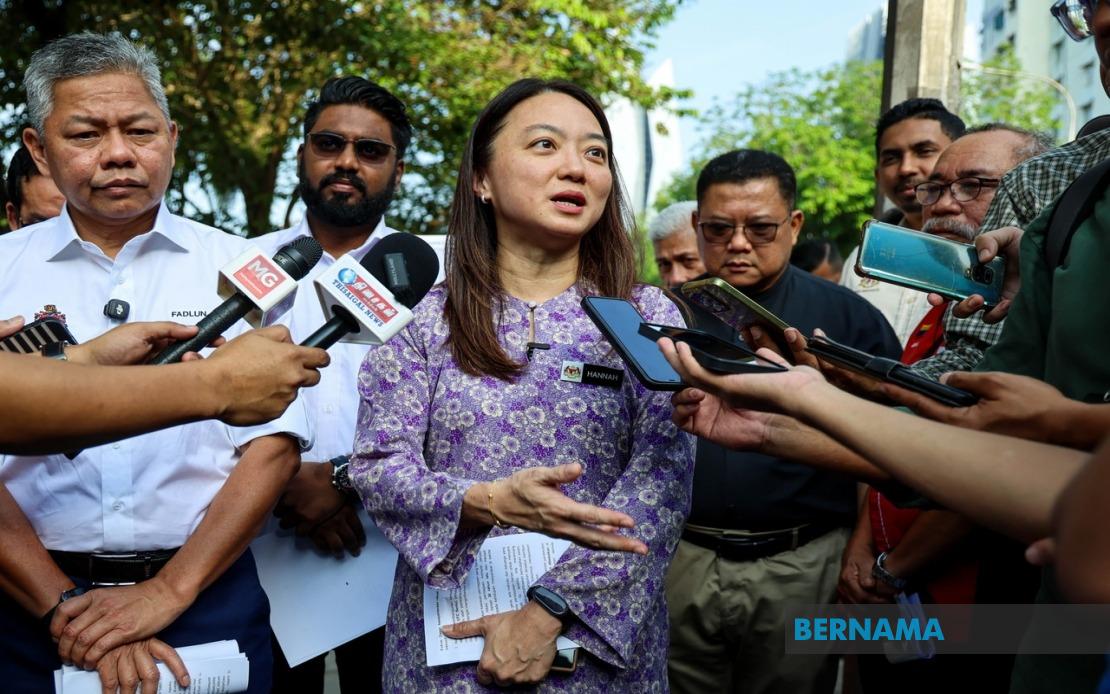
All Malaysian local authorities must demonstrate greater initiative in ensuring their public facilities remain clean and safe, rather than waiting for citizen complaints to escalate on social media platforms, according to Minister in the Prime Minister's Department (Federal Territories) Hannah Yeoh. The call comes amid recent complaints from residents and visitors regarding deteriorating conditions in Putrajaya, a major tourist and administrative hub, where equipment including lifts and escalators have fallen into disrepair. Speaking at an inspection of hawker facilities improvements in Sentul, Yeoh emphasised that fundamental maintenance obligations should never be neglected or deferred.
The maintenance backlog in Putrajaya and other municipalities reflects a broader challenge facing Malaysia's urban governance infrastructure. While major renovation or infrastructure upgrade projects often justify budget constraints, Yeoh insisted that baseline cleaning and safety protocols fall into a different category entirely. These routine housekeeping responsibilities require minimal additional resources compared to large-scale capital expenditure, making them non-negotiable elements of municipal administration. The minister's intervention signals growing frustration within government about the reactive rather than preventive approach many local authorities have adopted towards facility maintenance.
Yeoh highlighted that Putrajaya Corporation leadership had already mobilised repair operations following the social media outcry, demonstrating that remedial work becomes feasible once public pressure intensifies. However, this pattern represents a governance failure in itself, according to the minister. Authorities should establish and maintain systematic inspection schedules that identify problems before they become public grievances. By the time complaints reach viral status online, the damage to both public safety and institutional credibility has already occurred. She called on all local authorities to conduct more regular on-site inspections to detect and address issues promptly.
The push for greater proactivity comes at a time when citizen monitoring through social media has become an informal but powerful accountability mechanism. Rather than resisting this dynamic, Yeoh suggested that local authorities should leverage it by maintaining such high standards that complaints become rare. This perspective recognises that in the digital age, public perception of government efficiency is shaped significantly by visible civic infrastructure conditions. Shabby or broken public facilities in tourist destinations like Putrajaya send negative signals about Malaysian administration to both international visitors and domestic residents.
Yeoh's ministry has already taken direct action by contacting Putrajaya Corporation management to ensure repairs commence without delay. This intervention demonstrates how federal oversight can accelerate municipal responses when local leaders prove insufficiently proactive. However, the minister stressed that such top-down pressure should become unnecessary if local authorities internalise their maintenance obligations. The infrastructure management challenges facing Putrajaya are not unique, suggesting that systematic reforms to maintenance practices across all municipalities would yield significant dividends.
The minister also addressed the broader question of information reliability on social media, cautioning digital users to apply critical judgment before amplifying unverified claims. She noted that viral videos often capture only a fragment of a situation, potentially misrepresenting the broader context or timeline of events. Her comment reflects legitimate concerns about how online information ecology can distort public perception and create pressure for reactive rather than evidence-based decision-making. Nevertheless, Yeoh's primary message targeted authority officials rather than social media users, placing responsibility squarely on government institutions to maintain standards that leave no room for legitimate complaints.
For Malaysian municipalities grappling with maintenance backlogs and budget pressures, Yeoh's directive suggests a reordering of priorities toward preventive rather than corrective maintenance. This approach offers long-term fiscal advantages, as proactive repairs and cleaning are substantially cheaper than emergency interventions or facility replacement. Local authorities that adopt rigorous inspection protocols and maintain cleaning schedules will reduce overall maintenance expenditure while simultaneously improving public satisfaction and safety outcomes. The integration of digital monitoring tools and scheduled inspection systems could enable municipalities to identify deterioration early and allocate resources efficiently.
Putrajaya's status as a high-visibility destination makes it a bellwether for municipal performance standards. Visitors and international observers often assess a nation's development trajectory partly through the condition of its showpiece cities and administrative centres. Allowing core infrastructure in such locations to deteriorate undermines Malaysia's development narrative and professional image. Conversely, municipalities that demonstrate excellence in facility maintenance become models for peer institutions and sources of operational pride for residents. Yeoh's emphasis on consistency suggests that maintaining high standards should become the unremarkable norm rather than an aspirational goal.
The tension between reactive and proactive governance revealed in this situation extends beyond maintenance issues to encompass broader questions about institutional capacity and political will. Many local authorities possess adequate funding and technical expertise to maintain public facilities consistently, yet organisational inertia and dispersed accountability allow standards to slip. Yeoh's intervention signals that federal government expects municipalities to overcome these obstacles independently. Sustained improvement will require local leaders to establish clear ownership of maintenance outcomes, invest in management systems, and empower staff to respond to emerging issues without awaiting superior approval.
Moving forward, Malaysian municipalities should establish quantifiable maintenance benchmarks and regular public reporting of compliance metrics. This transparency approach would shift accountability dynamics by making maintenance performance visible and measurable rather than relying on social media complaints to expose problems. Public authorities in other regional jurisdictions have adopted such systems with measurable improvements in infrastructure conditions and resident satisfaction. The approach also aligns with contemporary governance standards that emphasise accountability, transparency, and citizen engagement. By making maintenance records accessible and facility inspection schedules public, local authorities would demonstrate commitment to continuous improvement while creating mutual accountability between officials and residents.